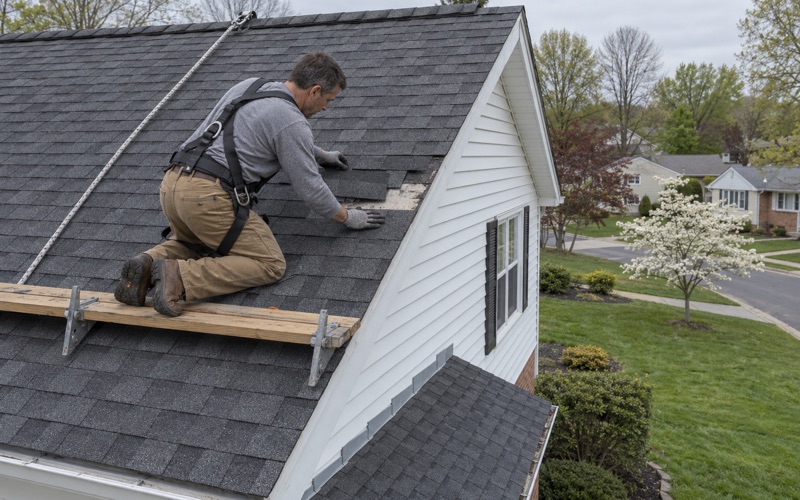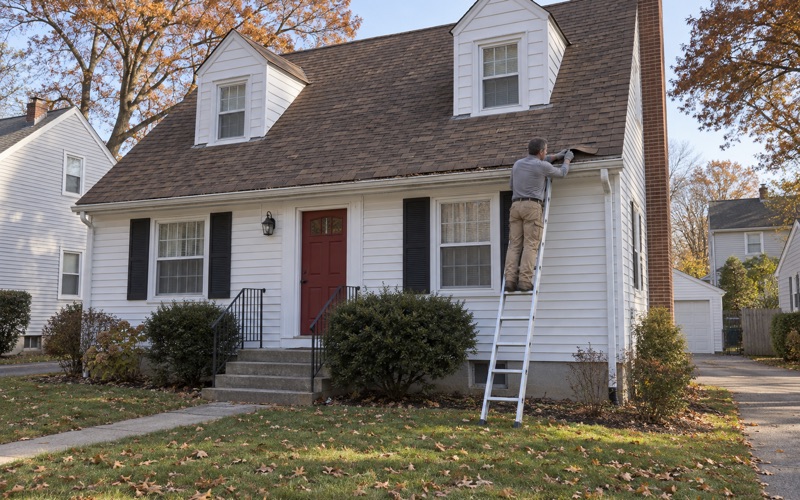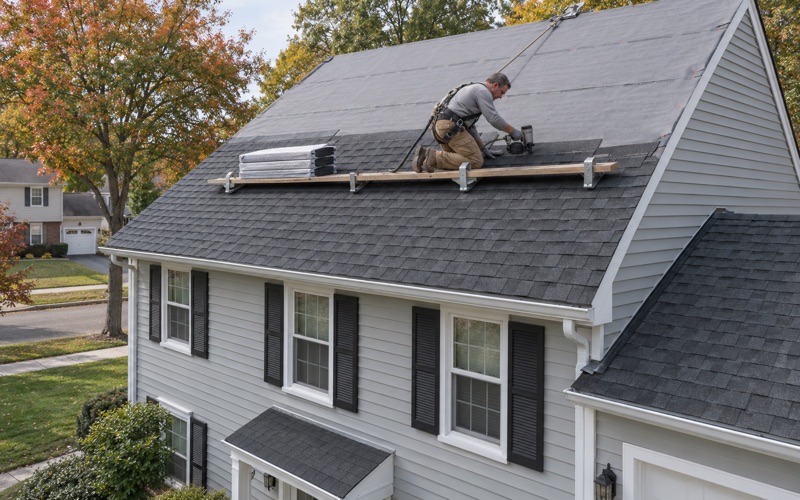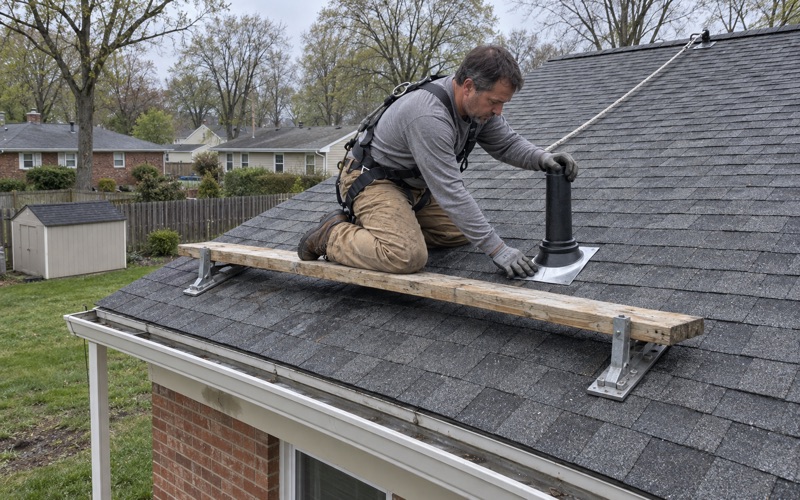
Hamilton Elite Roofing brings more than 20 years of work to roofing in Warwick Township, and most of the calls we take here start the same way: a branch came down, a gust lifted a row of shingles, or a stain showed up on a ceiling after a hard storm. We repair what can be repaired, replace what cannot, and tell you which one you are looking at before any number is written.
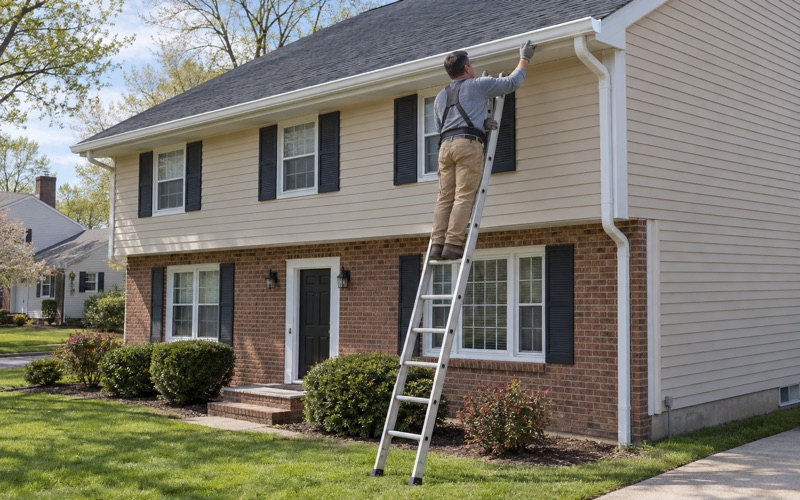
When a roof leaks after wind, we look from both sides. A crew member goes up on the roof and another goes into the attic, because water that enters at a cracked shingle near the ridge can show up on a ceiling ten feet away. Tracing it to the real entry point is what keeps a repair from becoming a second visit.
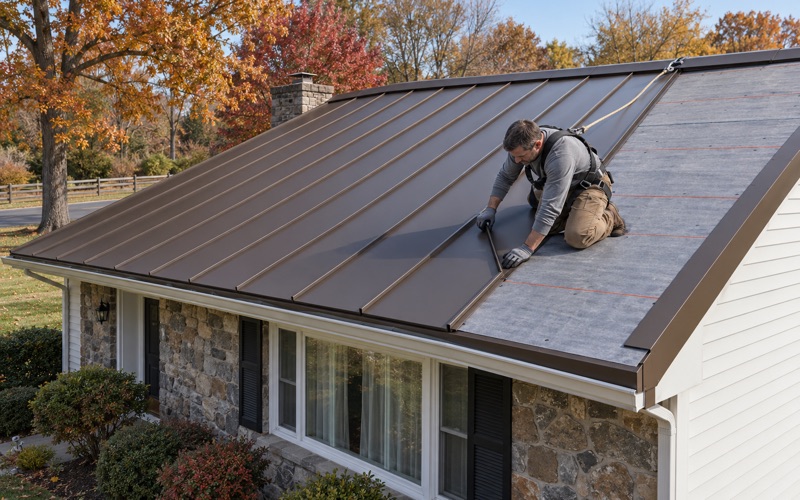
If a full replacement does turn out to be the right call, you get a written scope with tear-off, decking, underlayment, flashing, ventilation and gutters each on its own line. That lets you set our estimate beside anyone else’s and compare the work item by item instead of guessing at a single total.
The 2021 EF-1 Tornado That Began in Warwick Township
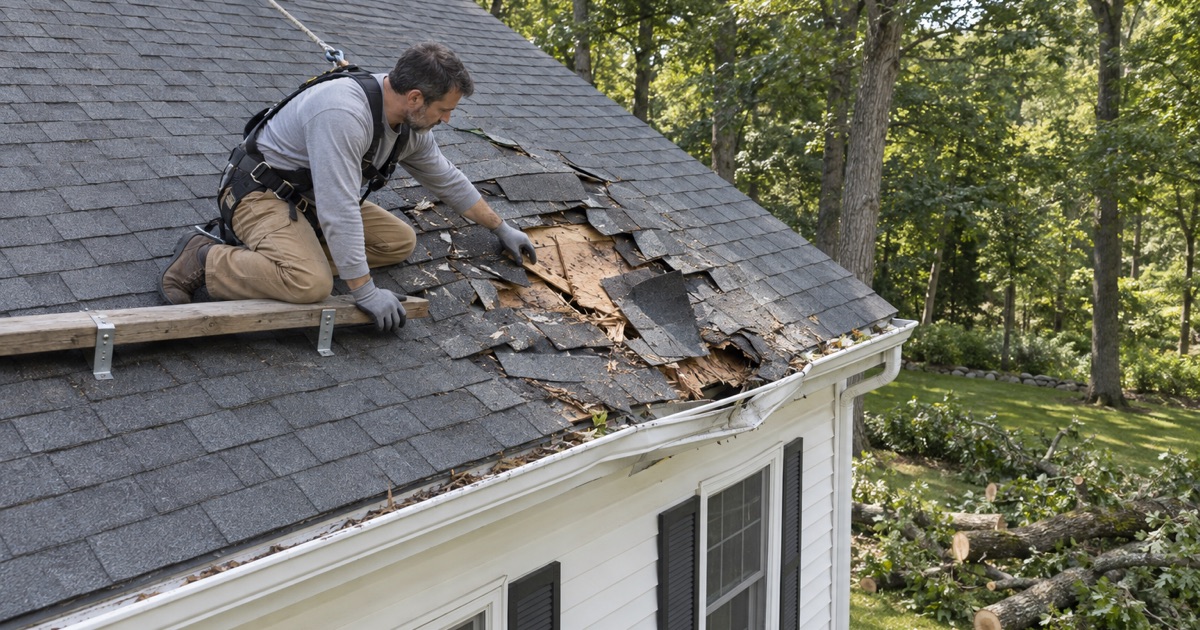
Tree damage is not a hypothetical in this part of Bucks County. On September 1, 2021, as the remnants of Ida moved through, a tornado touched down at 5:59 PM, and the starting coordinates in the National Weather Service survey fall inside Warwick Township. It ran northeast to Buckingham Township and lifted at 6:06 PM.
What the survey recorded
The NWS office in Mount Holly rated it an EF-1 tornado with estimated peak winds of 100 mph. The path ran 4.4 miles and reached a maximum width of 300 yards, and no one was killed or injured.
The survey filed it as the Doylestown-Buckingham Township tornado, so you will not find Warwick or Jamison named in the statement itself. The start point is what places it here: the Census Geocoder puts those coordinates in Warwick Township.
Why a wooded path matters for roofs
The survey found that damage was mainly confined to trees and was fairly extensive at times, with much of the path heavily wooded. That detail is the useful one for a homeowner. In a storm like this, the wind itself is only part of the risk to a roof; the larger share often comes from what the wind brings down onto it.
We do not know, and the survey does not say, which streets or homes sat along that path. What it does show is that 100 mph wind through mature trees is a real event in this township, not a story from somewhere else. That is reason enough to know what a limb strike does and how to record it.
Looking for roofing closer to Cinnaminson? See Roofing in Cinnaminson.
What a Tree or Limb Strike Does to Shingles, Decking and Gutters
A falling limb rarely leaves one clean hole. The damage spreads out from the point of impact in ways that are easy to miss from the driveway, which is why we walk the whole slope and then check the same area from the attic.
Shingles and the layer under them
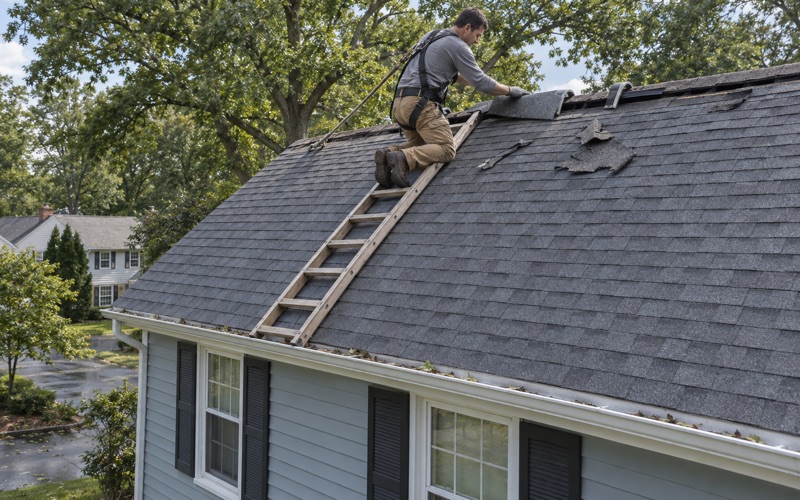
On architectural shingles, a strike can crack the mat, break the seal strip on several courses, or drive granules off in a patch that looks like a scuff. A broken seal is the quiet problem: the shingle still lies flat today, but the next strong wind can lift and fold it back.
Under the shingles, the underlayment may be torn where a branch stub punched through. Once that layer is opened, rain that gets past the shingle has a direct line to the wood, so we treat any puncture as a decking question, not a cosmetic one.
Decking, rafters and the attic side
A heavy limb can crack or depress a sheet of decking even when the shingles above it look intact. From the attic, we look for daylight, split boards, bowed sheathing, fresh water staining and any rafter that has shifted. Damage on that side decides whether the job is a patch or a section rebuild.
When decking has to come out, we photograph it and show it to you before it is replaced. The per-sheet price is already set in the contract, so a soft or cracked sheet found during the work does not turn into an open-ended charge.
Gutters, flashing and the edges
Gutters take a lot of storm punishment. A limb that slides off the eave can bend a run of gutter, pull hangers loose, or crimp a leader so it backs up into the fascia. We set gutters and leaders with the roof, sized and pitched so they carry water away rather than spilling it against the house.
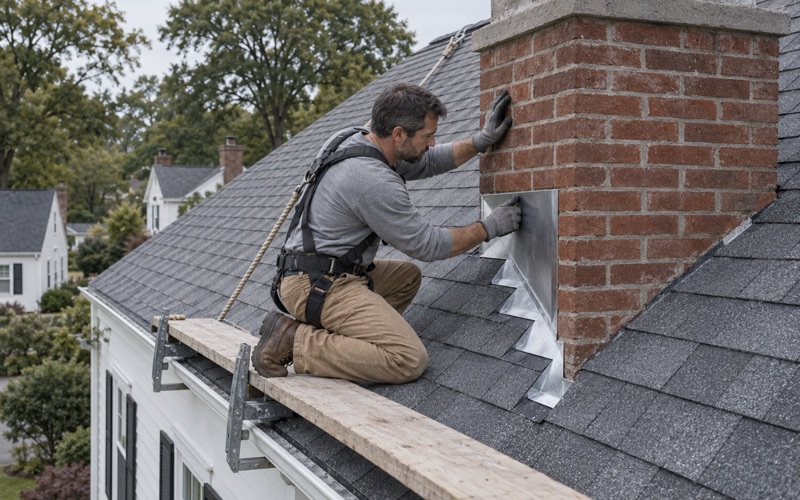
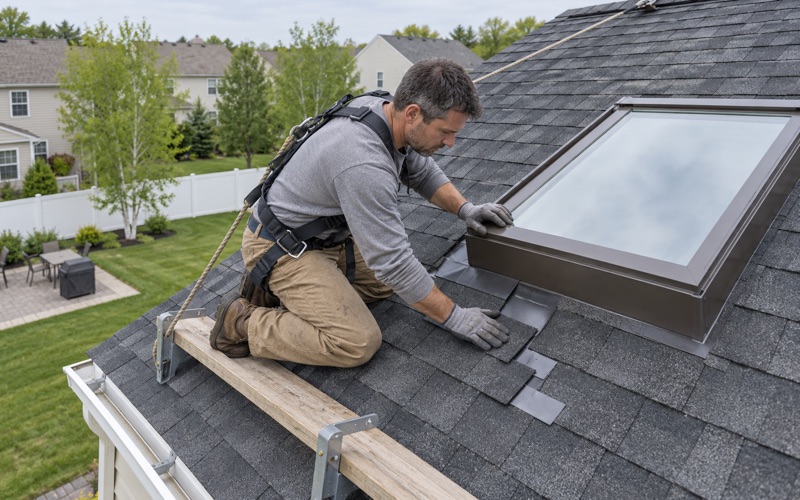
Flashing at chimneys, walls and skylights can be knocked loose by the same impact. If a strike leads to replacement, step, counter and chimney flashing are replaced with the roof instead of being bent back and reused under new shingles.
Documenting Wind Damage Before a Claim or a Repair
The hours after a storm are when a homeowner’s record is easiest to build and easiest to lose. Once a tree service clears the limb or a tarp goes on, some of the evidence an adjuster would want to see is gone.
Good documentation also helps the repair itself. Photos taken before cleanup show the crew where the limb landed and which slopes took the load, which narrows the attic and roof inspection to the right places.
What to record yourself, safely
From the ground, photograph the limb where it landed, the roof slope it hit, and any shingles, gutter pieces or flashing in the yard. Note the date and time, and take a picture of any interior stain or drip as soon as you see it. Stay off the roof; a wet, damaged slope is no place for a ladder.
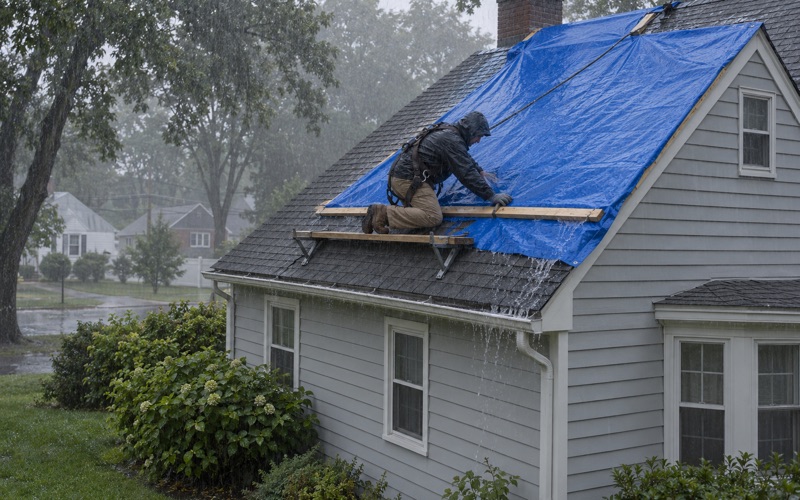
Keep receipts for anything you pay to prevent further damage, such as tree removal or an emergency tarp. Most policies expect an owner to protect the property after a loss, and those receipts show that you did.
What our storm write-up covers
When you ask, we inspect the roof and attic and put the damage in writing with photographs: what was hit, where water can now get in, and what repair or replacement it calls for. That write-up is for your own claim, and the claim stays yours to file and manage with your insurer.
If you want us there when the adjuster visits, we will meet them on site and walk the roof with them so the damage is seen in person. We do not negotiate settlements; in Pennsylvania that is work for a licensed public adjuster, and we keep to the roof.
Repair first, replacement only if it is warranted
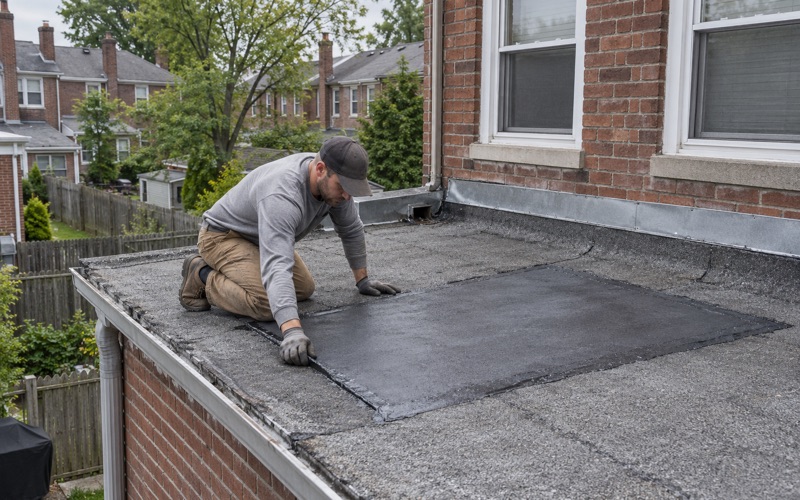
Plenty of limb strikes are repairable: a few courses of shingles, a strip of underlayment, a sheet of decking and a section of gutter. We will tell you plainly when a repair is the honest answer, before replacement comes up at all.
Where a storm has damaged an older roof across several slopes, replacement can make more sense than patching. Even then, the scope lists every component separately so you and your adjuster can see what each line covers.
Reroofing in Warwick Township: The Permit Line and Jamison’s Homes
A full replacement here has a paperwork step that owners sometimes do not expect. Pennsylvania leaves much of this to each township, so the rule that matters is the one Warwick Township writes for itself.
The township permits page and the Roofing Supplement
The township’s permits page says building permits are required for all structural interior and exterior changes, and it lists reroofing and roof dormers among that work. It also publishes a Roofing Supplement and accepts roofing applications through its online system. We did not find a threshold or exemption for re-roofing on that page, so we plan every replacement here around that permit line.
The township building is at 1733 Township Greene in Jamison, and the administration office can be reached at (215) 343-6100. We build the permit filing into the schedule so the job does not stall on the first morning.
Contracts written to Pennsylvania’s rules
Pennsylvania has no state roofing license; contractors who do home improvement work register with the Attorney General under the Home Improvement Consumer Protection Act. Our contracts for homes in Pennsylvania are written to that act, including the three-day cancellation notice.
The contract also carries the decking price per sheet, the flashing and ventilation work, and the gutter scope, so nothing you discuss at the kitchen table is left out of what you sign.
Roofs on Jamison’s 1990s and 2000s homes after a storm season
Most of the housing in the township is owner-occupied, and much of it went up between 1980 and 2009, with the 1990s the single largest decade. Around Jamison, along York Road (PA 263) and toward Neshaminy Creek on the northern edge, many roofs of that era are now old enough that a storm season shows where they are tiring.
A roof installed in the late 1990s on architectural or three-tab shingles has been through more than two decades of wind and sun. Lifted tabs, brittle seal strips and worn granules make it more likely that the next limb strike or gust turns into a leak, which is worth weighing before deciding between another repair and a replacement.
On every replacement we check attic ventilation, matching ridge vent to soffit intake, because a roof that cannot breathe ages from underneath. For attached homes, we plan the work around the neighbor’s roof and the shared wall, and if solar panels sit on the roof, the removal and reinstall go into the schedule from the start. At the end of each day, the driveway, yard and gutters are cleaned and swept with a magnet for nails.
- 20+ Years on the Roof
- Free Written Estimates
- NJ and PA Contracts