Hamilton Elite Roofing has spent more than 20 years on roofing in Southampton and the surrounding part of Burlington County, and the question we hear most on wooded lots here is not about wind or snow. It is about fire. Owners want to know whether the roof over their heads would hold up with embers drifting through the trees, and what they can change at the next repair or replacement to improve the odds.
This page is our answer for Southampton homes. It covers how a roof actually catches during a wildfire, which parts of it collect fuel, where embers find a way in, and what a fire-rated covering does and does not do. None of it calls for an exotic roof. Most of it comes down to materials chosen at re-roof time and maintenance done between visits.
Every visit starts with a straight answer on whether your current roof can be repaired, before replacement comes up at all. If you have a leak, we look in the attic as well as on the shingles, so the water is traced to where it really gets in before we put a price on anything.
The Pine Barrens Reach Into Southampton
Most of the township sits inside the Pinelands Preserve
Southampton Township covers about 44 square miles, and its 2024 Community Resilience Plan states that 74 percent of the township lies within the Pinelands Preserve. That places it among the 56 municipalities in the Pinelands National Reserve. The plan is direct about what follows: the areas of town within the Pine Barrens are susceptible to wildfire.
It also keeps that risk in proportion. Wildfire is described as rare within the township’s own boundaries, while the plan notes that the Pine Barrens as a whole are no stranger to it. For a homeowner, that is the right frame. The goal is not alarm but a house that is harder to ignite on the day it matters.
Who answers a fire call here
The same plan lists fire protection by the volunteer members of Vincent Fire Company and Hampton Lakes Fire Company, together with the New Jersey Forest Fire Service. It coordinates with a Community Wildfire Protection Plan and a LeisureTowne Firewise Plan, both aimed at local wildfire risk and the ignition resistance of homes. LeisureTowne also appeared on a 2020 list of New Jersey communities in the Firewise program.
We have not read those two plans, and we do not speak for them. What we offer is the roofing side of ignition resistance: the parts of a roof a contractor installs, cleans and repairs, and how each one behaves when burning debris lands on it.
Where a Forest Fire Service warden starts
In a 2020 New Jersey 101.5 report on the Firewise program, an assistant division warden with the New Jersey Forest Fire Service said residents should start by moving the leaves and gutters around the home, and warned that embers can set mulch on fire during a wildfire. That advice was about the yard, but the logic carries straight up to the roof. Dry debris anywhere on a house is fuel waiting for a spark.
Looking for roofing closer to Warwick Township? See Warwick Township Roofing.
Embers, Not Flames: How a Roof Catches
Why the fire front is rarely the problem
Most people picture a wall of flame reaching a house. On wooded lots, roofs are far more often threatened by embers, the burning bark, needles and twigs that a fire throws ahead of itself on the wind. They can arrive before any flame is visible and keep landing after the main front has passed.
An ember on a bare, sound roof covering usually burns out. An ember that lands in a drift of dry pine needles, wedges under a lifted shingle or slips through an open vent has fuel and shelter, and that is where a roof fire begins. Hardening a roof means taking those footholds away.
Where embers settle on a roof
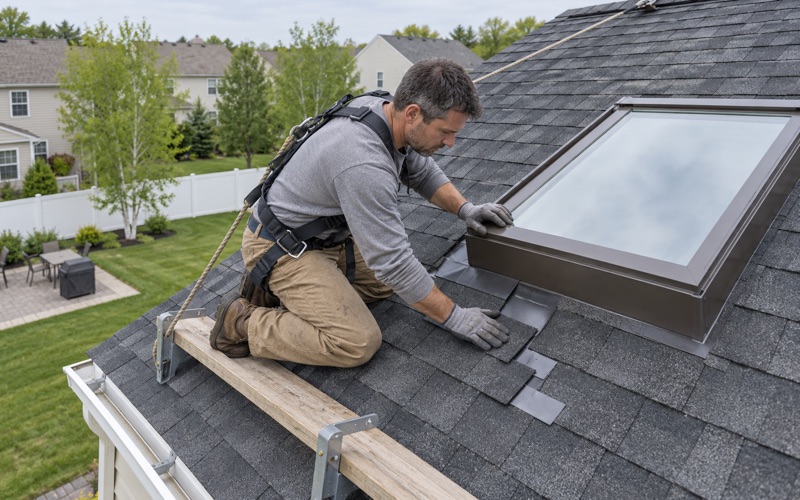
Embers behave a lot like leaves. They roll down slopes, collect where two roof planes meet, and pile up against anything that sticks up: chimneys, dormer walls, skylight curbs and the base of a solar array. Those are the same places needles gather between storms, so the spots most likely to catch are also the spots most likely to be loaded with fuel.
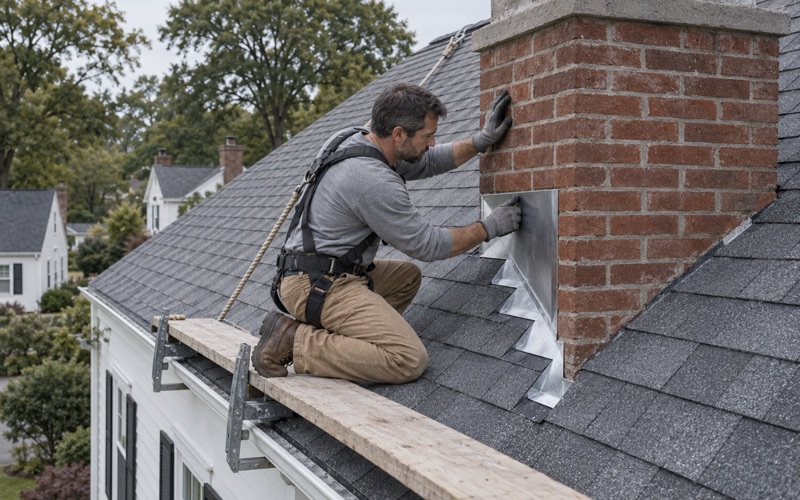
When we inspect a Southampton roof under tall pines, we spend extra time on those collection points. Loose flashing at a chimney or sidewall is a leak risk on any house, and here it is also a gap where an ember can lodge.
Repairs that close the openings
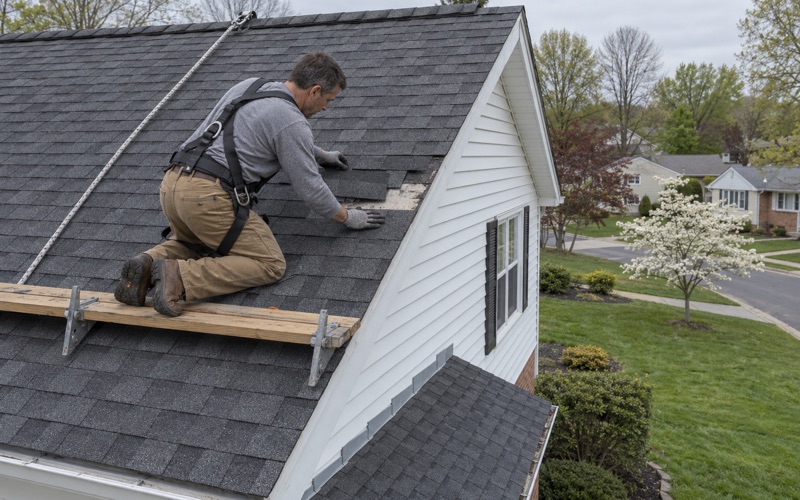
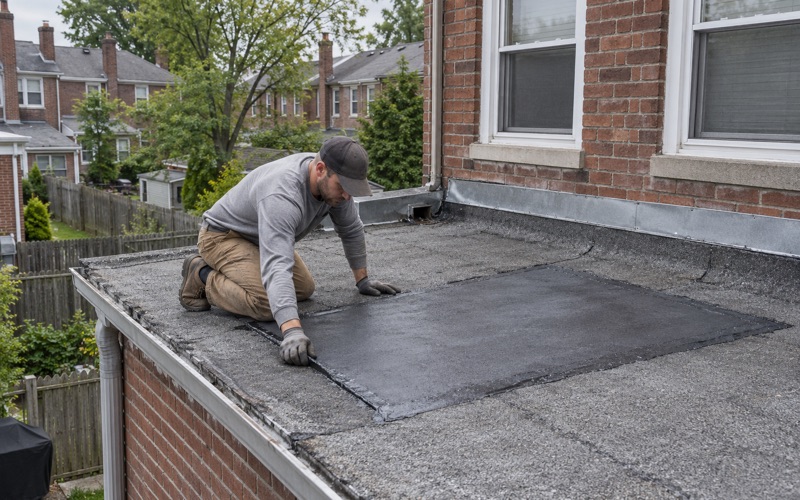
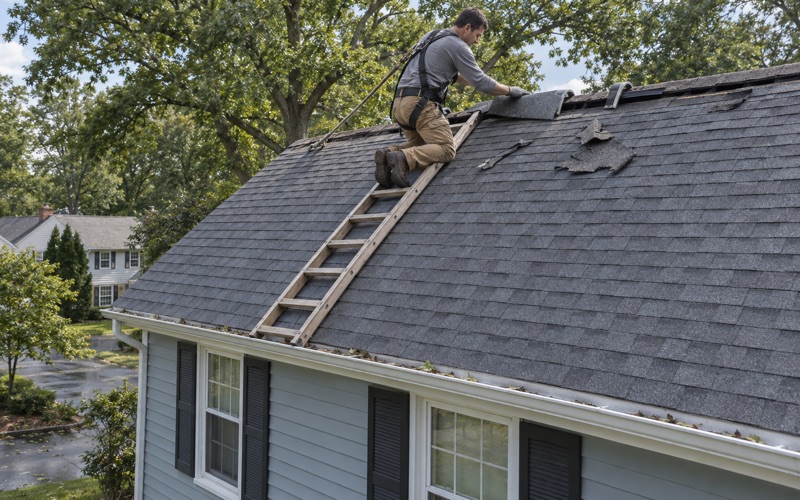
Cracked shingles, lifted tabs, missing ridge caps and gaps at the roof edge are ordinary repair items, but each one exposes wood underneath. Fixing them promptly restores the covering’s ability to shed both water and embers.
Where step, counter or chimney flashing is worn, we replace it with the roof rather than reusing it under new material. Old flashing is where these openings tend to start, and a new covering laid against tired metal inherits its gaps.
Gutters, Valleys, Vents and Eaves
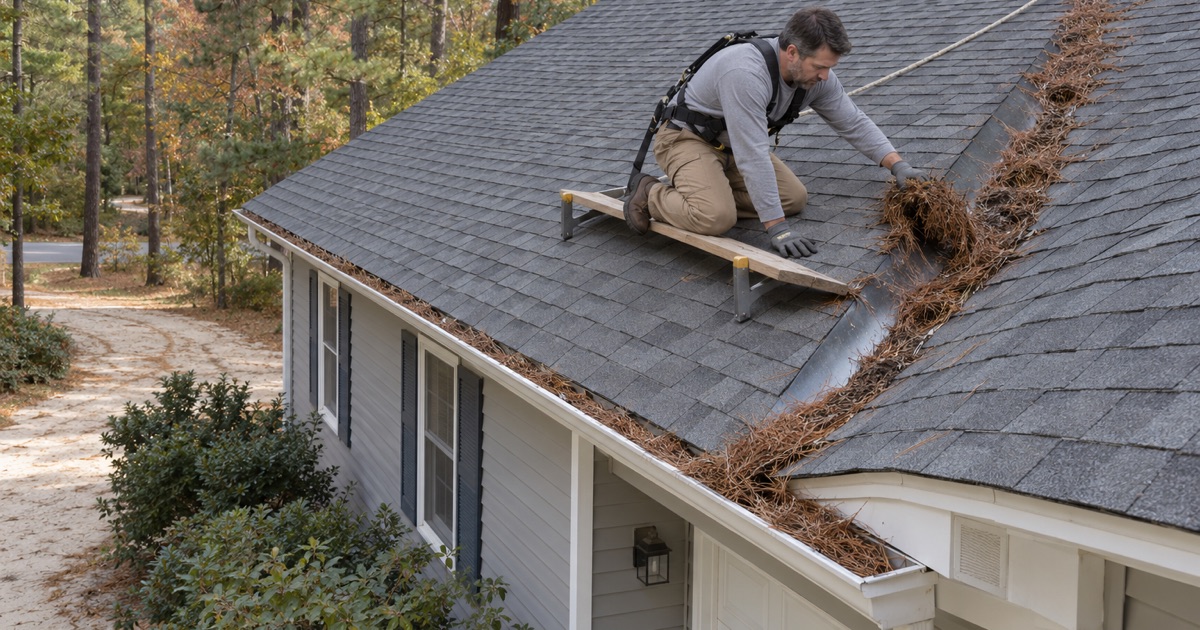
Pine needles in gutters and valleys
Pine needles are the signature debris of the Pine Barrens. They are light, they mat together and they dry quickly, which is exactly what an ember needs. A gutter packed with needles runs the full length of the eave, directly against the fascia and the edge of the roof deck.
Valleys are the other trouble spot, because needles slide off two roof planes and settle in the same channel. Clearing gutters and valleys on a schedule, and again after the fall needle drop, is one of the simplest things an owner can do. When we size and pitch gutters and leaders with a new roof, we also talk through guards that slow needle buildup, with the understanding that any guard still needs checking.
Roof and soffit vents
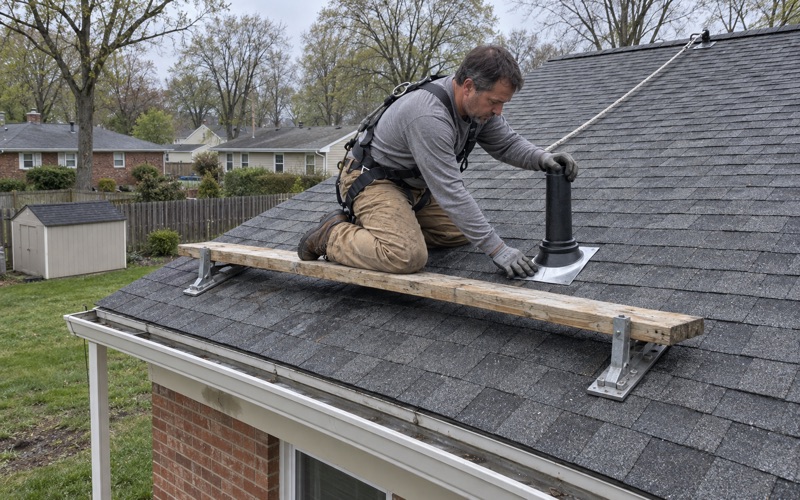
A roof has to breathe, and we check attic ventilation on every replacement because a roof that cannot vent ages from underneath. The openings that let air in, however, can let embers in too. Ridge vents, box vents and soffit intakes with coarse openings are a path into an attic full of dry framing.
Ember-resistant vent products use fine mesh or baffled designs to keep burning debris out while still moving air. At re-roof time, balancing ridge vent and soffit intake by net free area and choosing ember-resistant products for both is a small line item next to the roof itself.
The gaps at the eaves
Open soffit bays, damaged fascia and gaps where the deck meets the trim all give an ember somewhere to settle. A properly installed drip edge at the eaves and rakes closes the edge of the deck, and repairing or screening open soffits removes another entry point.
These details are easy to miss on a quick estimate, because nobody sees them from the driveway. We note each one during the inspection so it shows up in writing rather than as a surprise later.
Fire-Rated Roof Coverings at Re-Roof Time
What Class A means
Roof coverings are tested for fire resistance under ASTM E108, also published as UL 790, and rated Class A, B or C. Class A is the highest rating for resisting fire from outside the roof. Many architectural shingles carry a Class A rating as part of a tested assembly, as do standing seam metal and slate, so choosing one is usually a matter of checking the product rather than changing the look of the house.
A rating describes the covering, not the whole roof. A Class A shingle loses much of its advantage if the gutters are full of needles and the vents are wide open, which is why we treat the covering as one part of the job.
Guidelines, not mandates
Pinelands roofing advice is a guideline a community may adopt, not a requirement placed on your house. We present a fire rating as a choice, not an obligation. We lay out the options, what each one costs and how it fits the rest of the roof, and the decision stays with you.
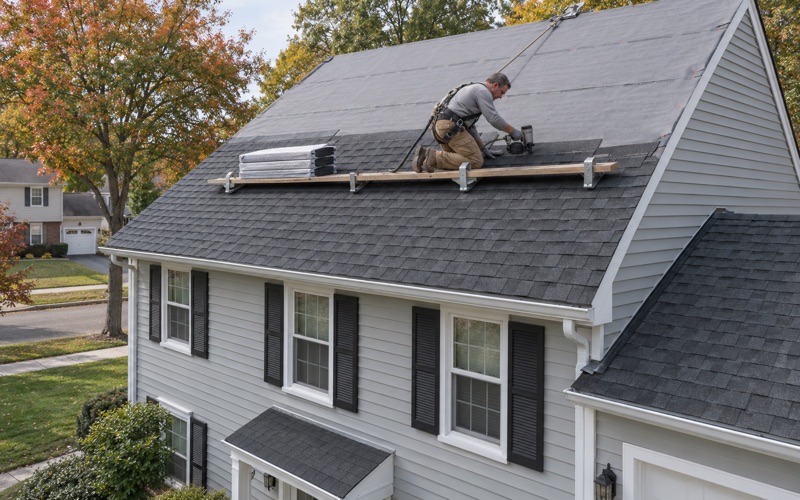
For many owners the deciding factor is timing. A roof with years of life left rarely justifies replacement for fire rating alone, while a roof already due for tear-off is the natural moment to choose a Class A covering and ember-resistant vents.
How we write the estimate
Our written scope lists tear-off, decking, underlayment, flashing, ventilation and gutters as separate lines, so a Class A shingle and an ember-resistant vent package can be compared directly with any other quote. If rotted decking turns up once the old roof is off, we photograph it and show you before replacing it, at the per-sheet price set in the contract.
Contracts follow New Jersey’s home improvement rules, including the three-day cancellation notice. At the end of each work day the driveway, yard and gutters are cleaned and the ground gets a magnet sweep for roofing nails, which matters on a lot covered in needles where a dropped nail is easy to lose.
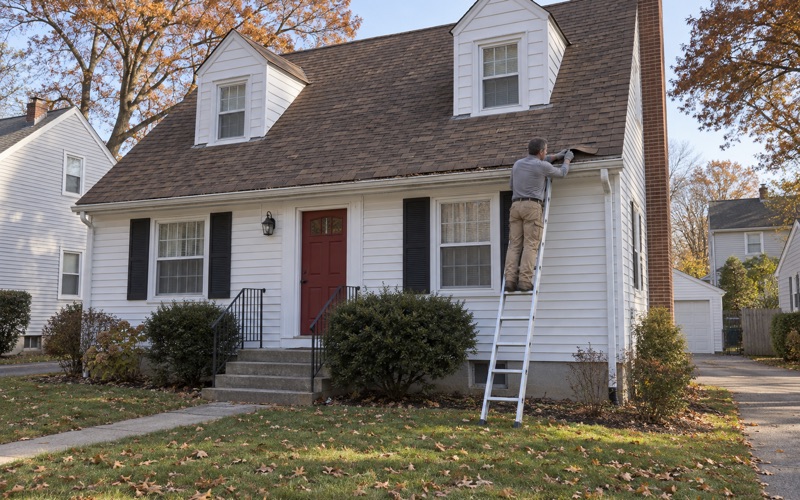
If your Southampton roof sits under pines and you are unsure how it would fare, start with an inspection. We will tell you what can be repaired now, what can wait for the next replacement, and what matters most for keeping embers out.
- 20+ Years on the Roof
- Free Written Estimates
- NJ and PA Contracts