Hamilton Elite Roofing has handled roofing in South River and across central New Jersey for more than 20 years, and the calls from this borough that carry a deadline usually come from owners getting ready to sell. A house here cannot change hands until the borough issues a certificate of continuing occupancy, so a stained ceiling or a patch of missing shingles is better settled before the paperwork starts than after it.
That does not mean every seller needs a new roof. It means the roof deserves an honest look early, while there is still time to choose between a small repair, a larger one, or leaving it alone with the facts written down. We start with the attic and the roof surface together, and we tell you whether a repair will do before replacement comes up at all.
Below we walk through how the resale certificate works in South River, what the borough’s property maintenance code says about roofs and flashing, and how we fit roof work into a sale timeline. The goal is a roof that keeps water out and a seller who is not rushing a project in the last week before closing.
How South River’s Certificate of Continuing Occupancy Works at Sale
Who Has to Apply
South River’s borough code says no owner, real estate agent, broker or anyone else may sell an existing residential or commercial property without first obtaining a certificate of continuing occupancy from the office of the Code Enforcement Official. The language was amended on November 30, 2020, by Ordinance No. 2020-30, and it applies to the resale of existing homes, not just new construction.
The forms are requested and completed by the owner, agent or broker, inspections are arranged and completed, and the certificate is granted before any actual change in occupancy takes place. For a seller, that makes the certificate part of the closing path rather than an afterthought. We are glad to work toward whatever date your agent sets, but the certificate is the borough’s decision, and nothing we write stands in for it.
What the Inspection Is Measured Against
The borough’s 2006 text has the Construction Official or a designee inspect and issue the certificate if the building and property comply with the Building Code and the Property Maintenance Code of the Borough of South River. That property maintenance code is the borough’s adoption of the International Property Maintenance Code, 2000 edition, together with its amendments and updates.
We have not read the borough’s resale inspection checklist, so we do not tell anyone what an inspector will or will not look at. What we can say is that the standard the code names covers the roof, and a seller is better served knowing the roof’s real condition than guessing. Knowing it early also gives you the choice of when and how to deal with it.
Two Versions of the Text
The borough code as indexed carries both the 2006 language and the 2020 amendment, and which wording governs every detail today was not settled in what we read. The 2006 text, for example, made the certificate valid for 60 days from issue and asked for the application at least 10 business days before occupancy.
Because of that, we treat those numbers as planning figures and point sellers to the South River Building Department at 48 Washington Street to confirm timing and any charges directly. It takes one call and removes the guesswork from a closing date.
Looking for roofing closer to Manville? See Roofing in Manville.
What the Property Maintenance Code Says About Roofs, Flashing and Gutters
Sound, Tight and Free of Defects That Admit Rain
Section 304.7 of the International Property Maintenance Code, as quoted in municipal enforcement documents, reads that the roof and flashing shall be sound, tight and not have defects that admit rain. It is a short sentence, but it describes a working roof, not a new one.
In practice we read that standard the way a homeowner would: water stays outside. Curled or missing shingles, a split pipe boot, lifted drip edge at the eaves or a soft spot in the decking are the kinds of defects that let rain in, and each can usually be found and priced on its own.
Flashing Is Named on Purpose
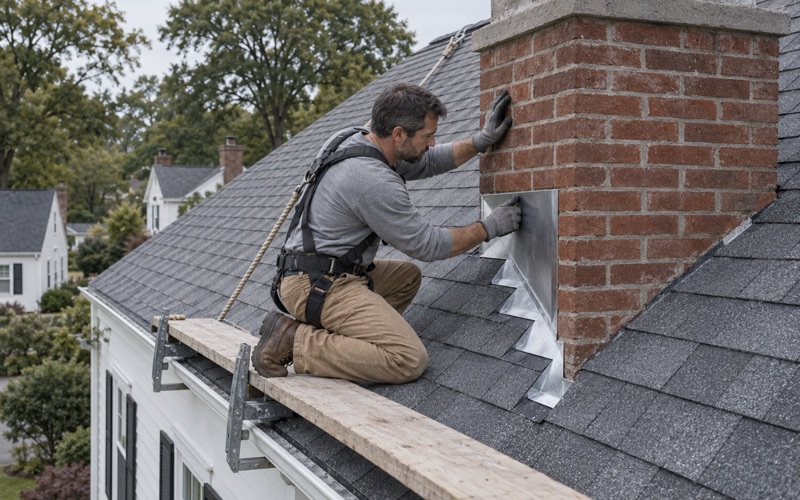
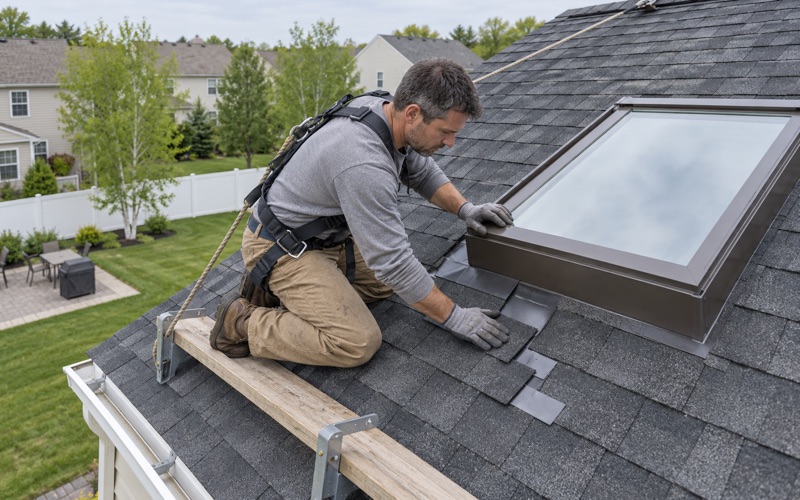
The code calls out flashing alongside the roof itself, and that matches where most leaks we trace actually start. Step flashing along a sidewall, counter flashing set into a reglet, apron flashing under a dormer and the metal around a chimney all move and age differently than the shingles beside them.
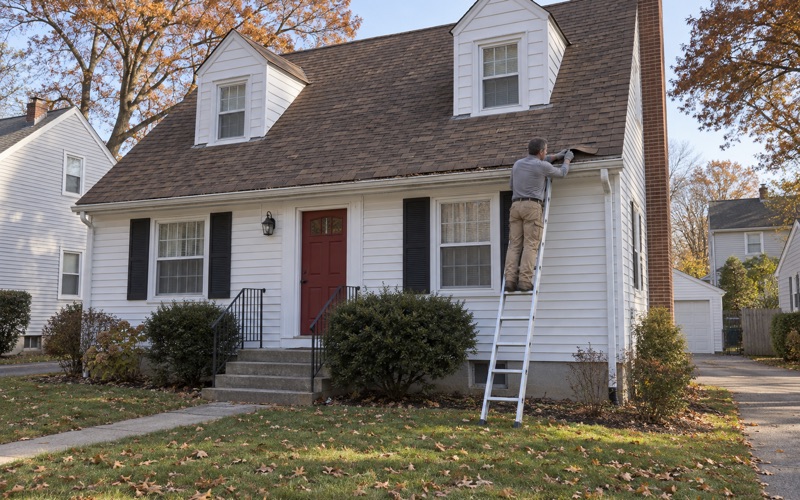
When we look at a leak, we go into the attic as well as onto the roof, because a water stain on a ceiling can sit several feet from the gap that caused it. Finding the real entry point first keeps a pre-sale repair small and keeps the wrong section of roof from being opened. On a full replacement, we replace step, counter and chimney flashing rather than reusing old metal under new shingles.
Gutters and Downspouts in the Same Rule
The same section says roof drainage shall be adequate to prevent dampness or deterioration in the walls or interior, and that roof drains, gutters and downspouts shall be maintained in good repair and free from obstructions. Gutters are part of the roof standard, not a separate chore.
A clogged leader or a gutter pitched the wrong way can back water under the first course of shingles and stain a soffit or a basement wall. We size and pitch gutters and leaders with the roof, so a seller fixing drainage before listing is not undoing a roof repair the next time it rains.
That language about dampness reaches into the attic as well. We check attic ventilation on every replacement, because a roof without balanced soffit intake and ridge exhaust holds moisture underneath, and that can show up as stained sheathing or a musty upstairs closet a buyer notices.
Current Code Versus Sound and Tight
Sellers Are Not Asked to Bring the House Up to Current Code
The Building Department’s FAQ answers a question many South River sellers ask: the borough does require a certificate of occupancy for resale, and a seller does not have to bring the home up to current code. That distinction matters for roofs more than almost any other part of a house.
A roof can be well behind the newest rules for underlayment or ice barrier and still be sound and tight. The maintenance standard asks whether it keeps rain out today, not whether it would match a roof installed this year. That is the line we hold when we advise a seller, and it is why we rarely start a pre-sale visit by talking about replacement.
Repair First, Replacement Only When It Is the Honest Answer
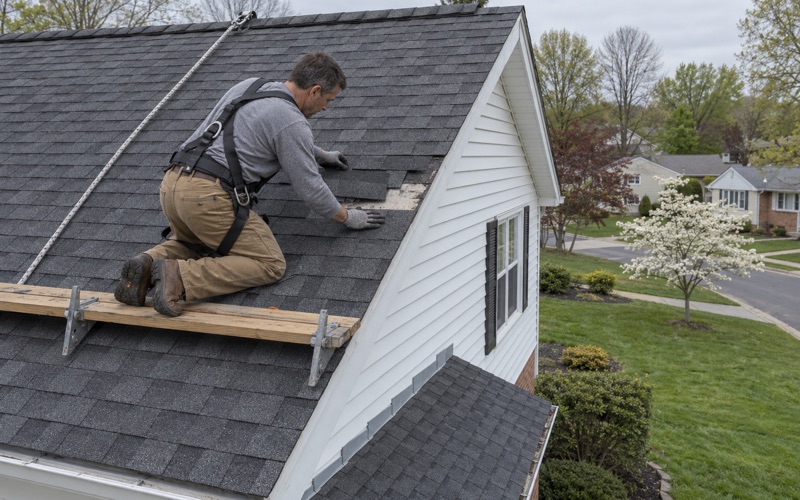
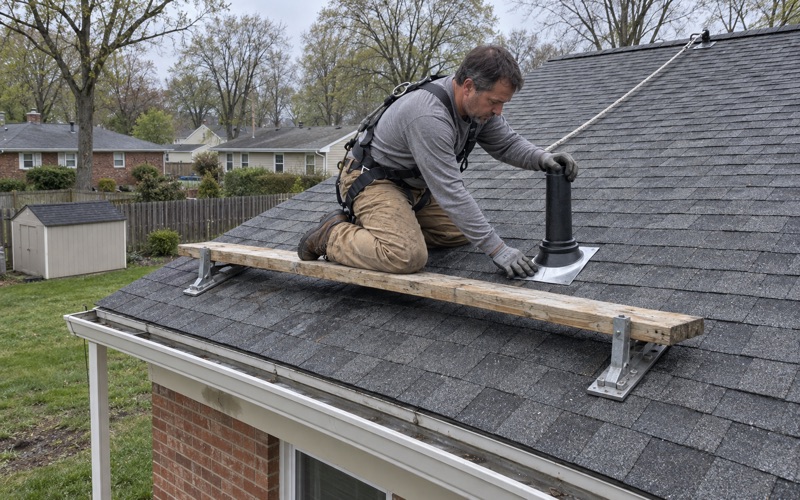
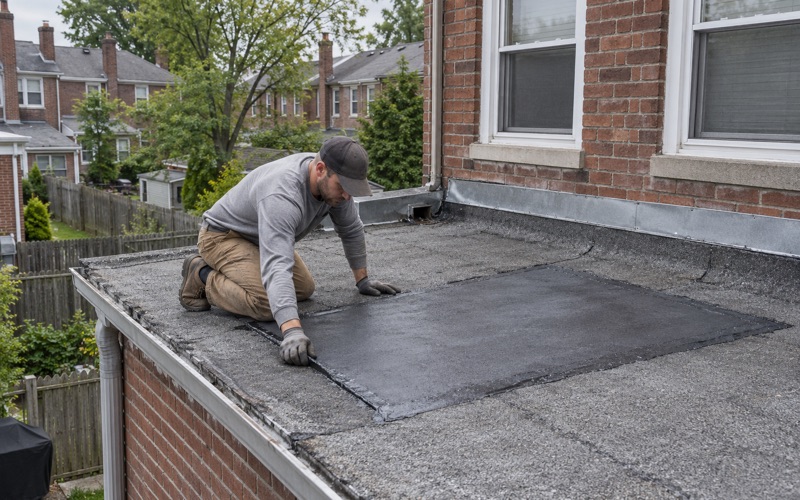
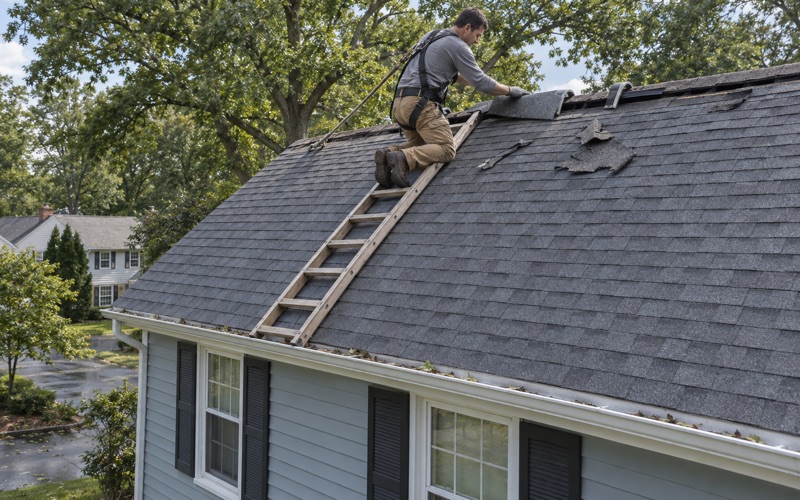
We give a straight answer on whether a roof can be repaired before replacement is ever on the table. For a seller, a targeted fix to flashing, a few courses of shingles or a failed vent boot often settles the visible problem at a fraction of the cost and time of a full tear-off.
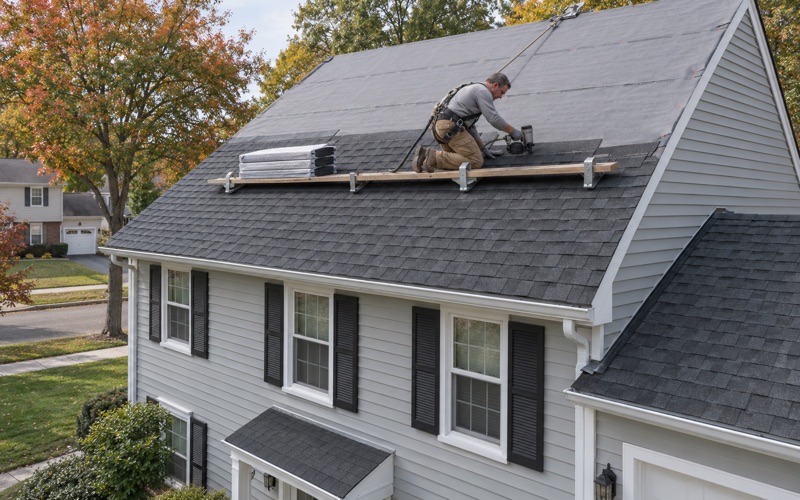
When a roof is past repair, we say so plainly and write the scope with tear-off, decking, underlayment, flashing, ventilation and gutters each on its own line. That lets a seller compare our estimate against another one item by item, which is worth doing when the sale price is on the line.
New Jersey’s rehabilitation subcode also calls for a tear-off when the existing roof already has two or more layers, or is slate, wood shake or tile. If a pre-sale reroof is the right call, we confirm the layer count first so the scope and the schedule are right from the start.
Permits and Ordinary Maintenance
Replacing the roof covering on a detached one- or two-family house is ordinary maintenance in New Jersey under N.J.A.C. 5:23-2.7, with no permit, inspection or notice required. That keeps a pre-sale reroof on a single-family home from waiting in a permit queue.
South River is mostly detached houses, with about three in four housing units in one-unit detached buildings, but it also has apartment buildings of ten to 19 units and other multi-unit properties. Owners of those larger buildings should check with the Building Department before roof work, since the ordinary-maintenance rule is written for detached one- and two-family homes.
Timing Roof Work Before the Resale Application
Start Before the Listing, Not After the Contract
The best time to look at a roof is before the house is listed, when a repair can be scheduled around weather and crew availability rather than squeezed between a signed contract and a closing date. A spring listing usually means a winter or early-spring roof visit.
If you are already under contract, the work can still be done quickly, but the margin shrinks. With the application due ahead of occupancy, and the 2006 text tying the certificate to a fixed window, it pays to have any roof repair finished and cleaned up before the paperwork is filed.
Sometimes the right advice is that nothing needs doing. If the roof and flashing are holding and the gutters drain, we say so, and a seller can put the money toward the rest of the house instead.
A Written Condition Report for the Buyer’s Side
Homes being sold get a written roof condition report from us that the seller can hand to the buyer’s inspector. It describes what we saw on the roof and in the attic, what we repaired, and what we left alone and why.
That report does not replace the borough’s process or speak for it. It gives the buyer’s inspector a starting point and keeps a small, already-fixed stain from turning into a late renegotiation over a problem that no longer exists.
Contracts, Cleanup and Decking Surprises
Our contracts follow New Jersey’s home improvement rules, including the three-day cancellation notice, so a seller can sign with a clear head even on a tight schedule. If damaged decking turns up once old shingles are off, we photograph it and show you before replacing it at the per-sheet price set in the contract.
At the end of every work day the driveway, yard and gutters are cleaned, with a magnet sweep for nails. For a house that may have showings the same week, that matters as much as the repair itself.
- 20+ Years on the Roof
- Free Written Estimates
- NJ and PA Contracts