Hamilton Elite Roofing has handled roofing in South Amboy and across central New Jersey for more than 20 years, and the question we hear most often here is not about shingle color. It is whether a metal roof will actually be covered once it is installed a short walk from the water. That answer lives in the fine print of one product’s warranty, and we read it with you before anything is ordered.
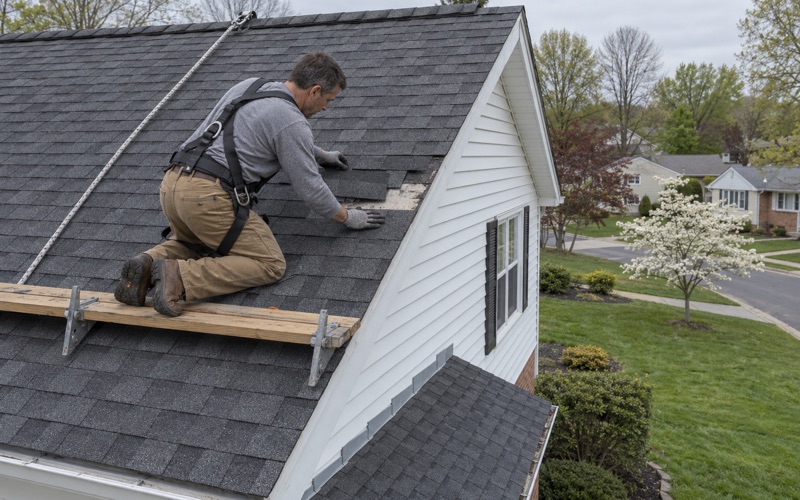
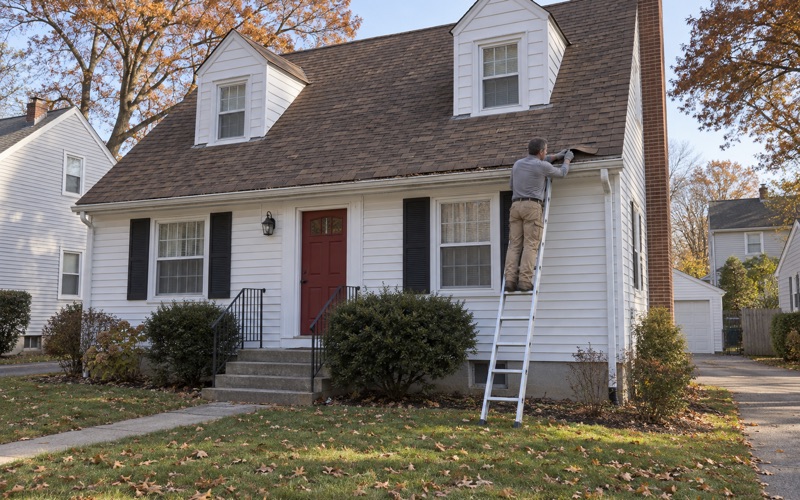
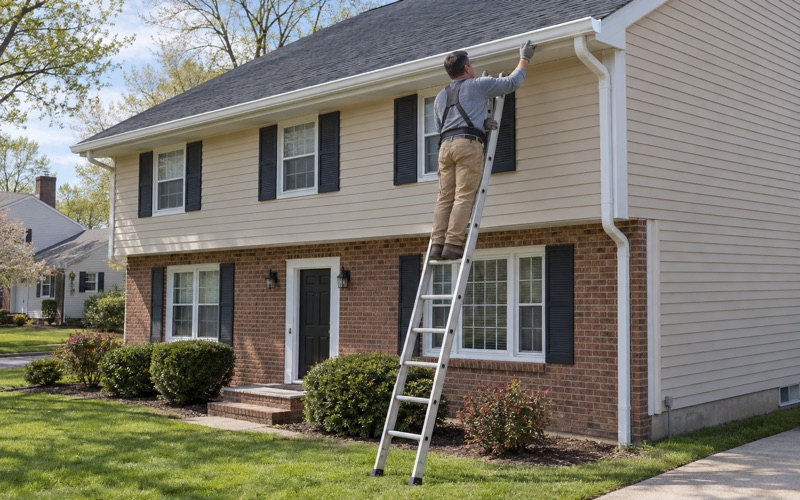
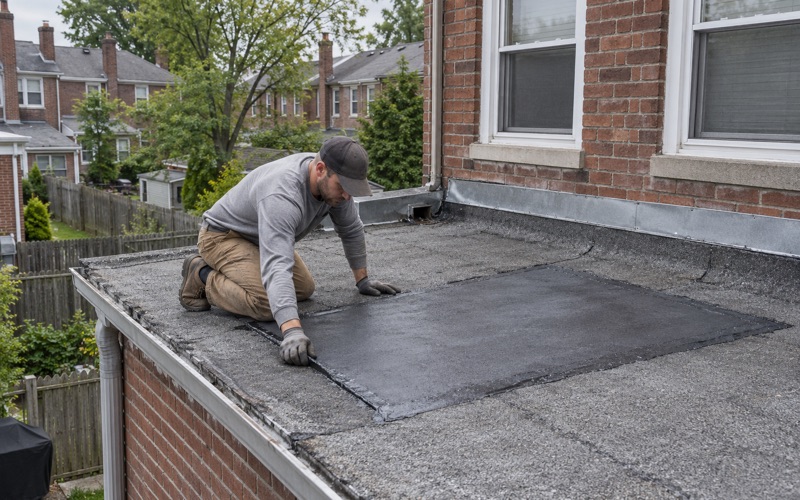
Our first job on any call is the honest one: deciding whether the roof you have can be repaired. If water is getting in, we go up on the roof and into the attic, follow the stain back to the spot where it enters, and only then put a number on the fix. Replacement comes up only when repair would be money spent twice.
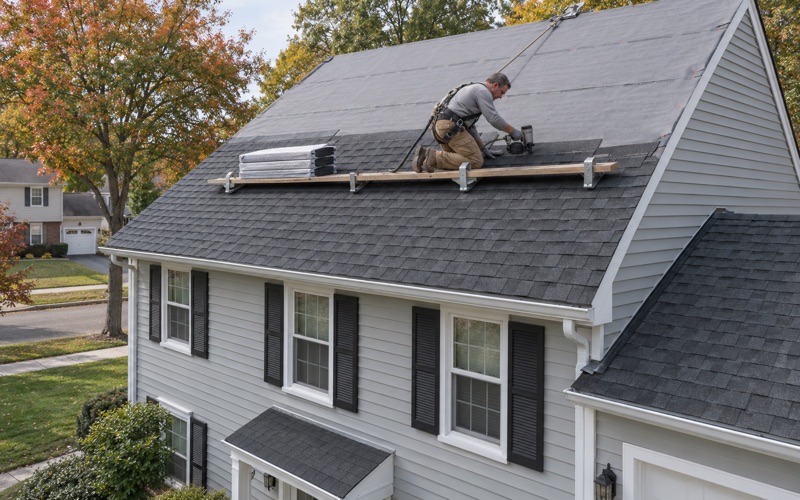
When a new roof does make sense, the written scope breaks out tear-off, decking, underlayment, flashing, ventilation and gutters as separate lines. That lets you lay our estimate beside anyone else’s and see exactly where the prices differ, which matters even more when one bid offers metal and another offers architectural shingles.
A City Between Raritan Bay and the Raritan River
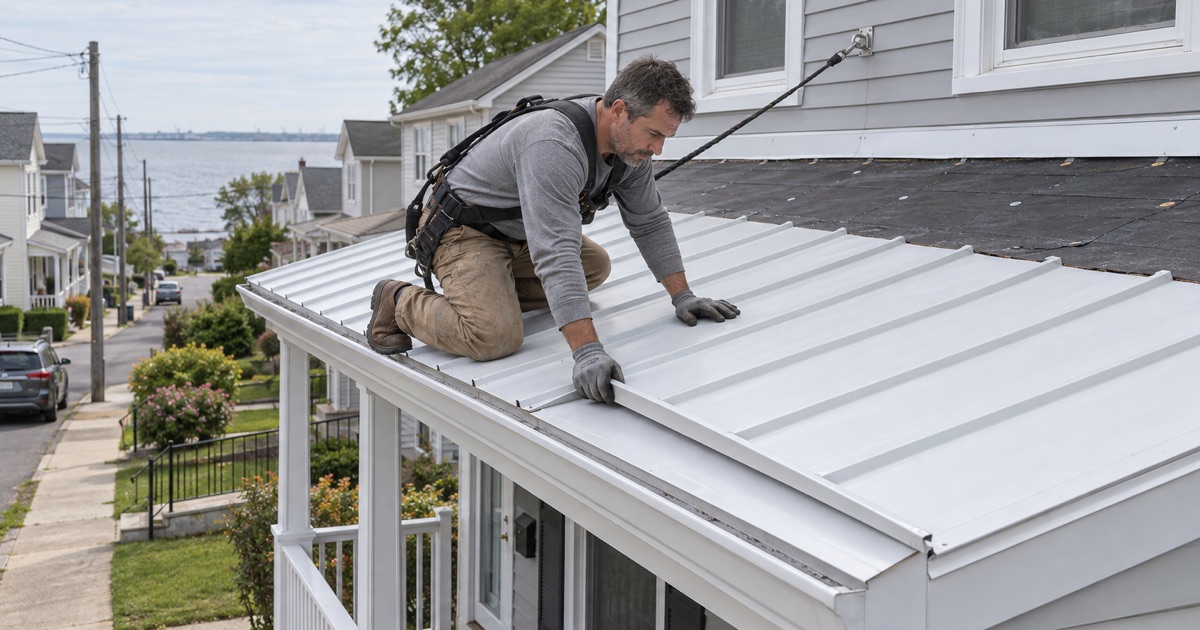
South Amboy is a Middlesex County city with salt water on two sides. Raritan Bay runs along its east edge, and the Raritan River forms its northern line, separating it from Perth Amboy. Of the city’s 2.70 square miles, about 1.16 are water, which is a larger share than most towns we work in. That geography is the reason a roofing conversation here so often turns to coatings, fasteners and warranty distance.
Old houses at the core, new ones at the edge
The housing stock is split in a way that shapes the work. Census estimates put roughly 38 percent of the city’s homes in the 1939-or-earlier group, while a large wave of units arrived between 2000 and 2009. The older houses often carry multiple layers, original chimneys and painted trim, so we plan for lead-safe handling under the EPA RRP rule on pre-1978 fascia and soffits.
The newer homes bring their own questions, mostly about whether the roof is the owner’s to replace at all. In townhouse and attached-home settings we check the association documents for who holds the roof before an estimate is written, and we plan the job around the shared wall and the neighbors’ roofs on either side.
When the Building Department gets involved
Replacing the roof covering on a detached one- or two-family house is ordinary maintenance under N.J.A.C. 5:23-2.7, so no permit, inspection or notice to the city is needed for that work. Detached homes are under half the housing here, though, and the attached single-family units and buildings of three or more units fall outside that wording.
For those, the work goes through the South Amboy Building Department at City Hall, 140 North Broadway. We sort out which category a building falls into during the first visit, so the schedule reflects any filing before a crew is booked rather than after the old roof is already off.
Looking for roofing closer to Haddonfield? See Roofing in Haddonfield.
The 1,500-Foot Salt-Water Line in a Metal Paint Warranty
Metal roofing appeals to a lot of bayside owners for good reasons: long service life, a clean standing seam look and good shedding of snow and rain. What many owners do not hear until later is that the paint finish on those panels is covered by its own warranty, and that warranty can treat a coastal address very differently from an inland one.
What one manufacturer’s warranty actually says
Sheffield Metals’ 40-Year Limited COOLR paint warranty, which covers AZ50 Galvalume, G90 galvanized and aluminum roofing, states in Section 2(b) that no warranty is provided for the coating on any substrate that is subjected to sea spray or installed on a property located 1,500 or fewer feet from a coastline, salt or brackish water, or any salt water environment. That is not a reduced term or a prorated schedule. Within that distance, the coating simply is not covered under that document.
For a city that fronts Raritan Bay, that sentence deserves attention before the panel profile or the color is chosen. We treat the bay as the kind of water the clause describes, and we tell owners plainly that this is our reading of the setting rather than a ruling from the manufacturer. If there is doubt, the manufacturer is the one to settle it in writing.
Distance is measured per address, not per city
We have not mapped which South Amboy addresses fall inside 1,500 feet of the shoreline, and we will not guess at it. The distance from one specific lot to the nearest salt or brackish water is the number that matters, and it is worth measuring for the property in question rather than assuming from a street name or a neighborhood label.
Once that distance is known, it gets compared against the exact warranty for the exact product being quoted. A house comfortably back from the water may sit well clear of the clause, while one nearer the bay may need a different material plan or a frank conversation about what coverage remains.
Other products, other numbers
The 1,500-foot figure belongs to that particular Sheffield paint warranty, and to the WeatherXL and Caribbean paint warranties that use the same salt-water distance. It is not a rule for every metal roof, and it says nothing about asphalt shingles. Sheffield’s own 20-year Painted Coasteel substrate warranty, for example, frames its coastal exclusion around 300 feet from a coastline with breaking surf.
Other manufacturers write their coastal terms their own way, with different distances, different definitions of marine exposure and different remedies. That is why we never quote a coastal rule from memory. We pull the current warranty document for the product on the estimate and read the exclusions section with the owner.
Copper Runoff, Fasteners and Trim Near the Bay
Distance from the water is not the only clause that can quietly remove coverage from a metal roof. How the roof is detailed, and what metals touch it or drain onto it, matters just as much, and those details are within our control during installation.
Copper and lead flashing upslope of metal
The same Sheffield warranty, in Section 4(C), excludes areas subject to water run-off from lead or copper flashing or piping, and areas in contact with lead or copper or lumber containing them. On an older South Amboy house, copper valleys, copper chimney flashing and lead pipe boots can all turn up, and rainwater crossing them carries that metal onto whatever sits below.
When metal panels or metal accents go below existing copper or lead, we map the drainage paths and either change the flashing material or reroute the water. Mixing metals on a roof is a design decision, not something to discover after a stain appears on a panel the warranty no longer covers.
Flashing replaced with the roof
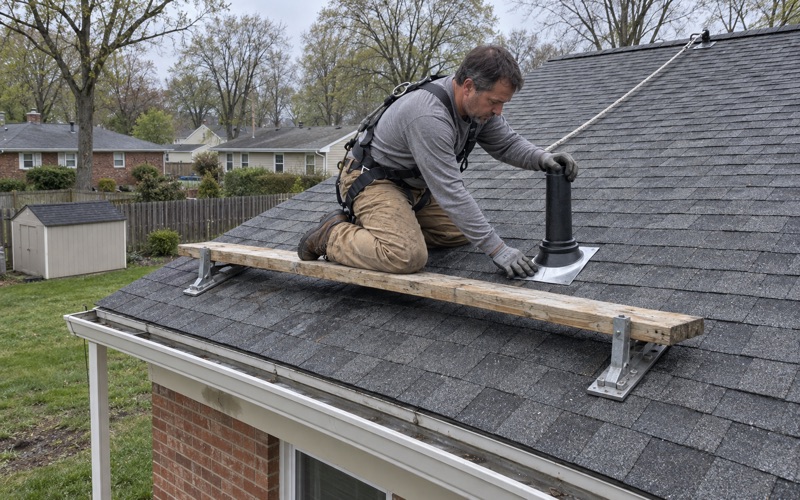
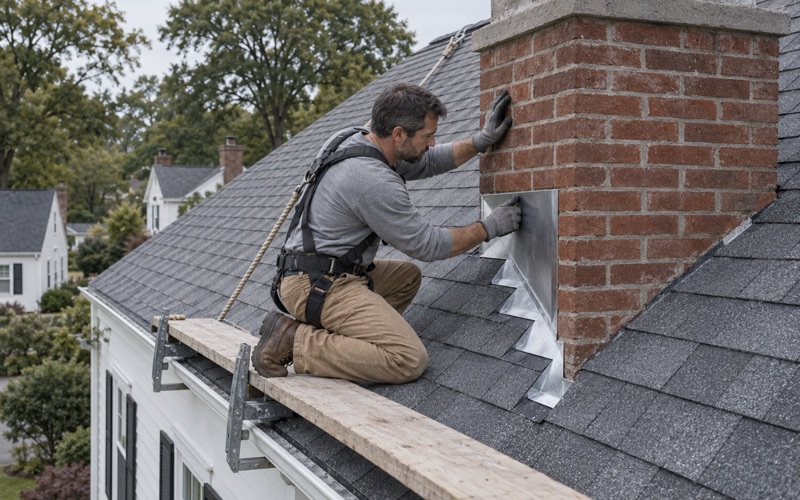
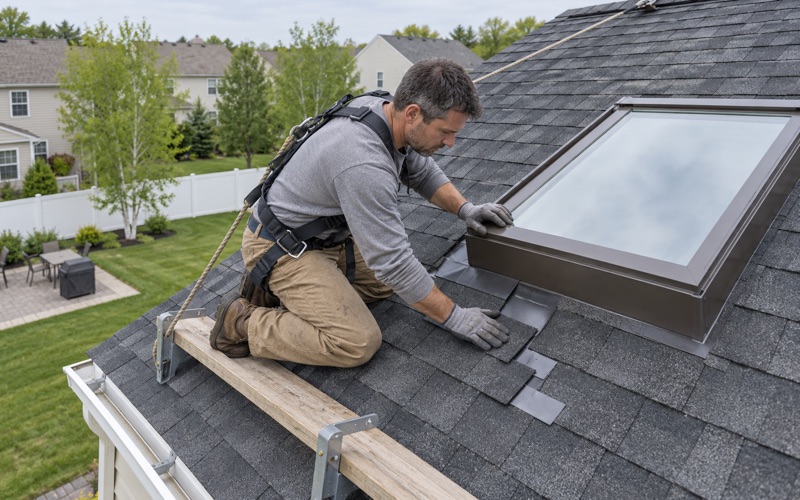
We replace step flashing, counter flashing and chimney flashing as part of every reroof instead of reusing the old pieces under new material. Near salt water that habit matters more, because a tired flashing detail is often where corrosion and leaks begin, and it is far cheaper to replace while the roof is open.
Where a chimney is wider than 30 inches, a cricket goes behind it as the code expects, and kick-out flashing goes at the base of any roof-to-wall line so water lands in the gutter rather than behind the siding.
Fasteners, drip edge and gutters as one system
On a bayside house we pay attention to the small metal parts that carry the roof: fasteners, clips, drip edge at the eaves and rakes, and the gutters and leaders. These are chosen to match the roofing material and the exposure, and the gutters are sized and pitched with the roof plan rather than added as an afterthought.
We check attic ventilation on every replacement, too, balancing ridge vent exhaust with soffit intake. A roof that cannot breathe ages from underneath, and trapped moisture in an attic near the water is one more problem a new roof should not inherit.
Choosing a Roof for a Bayside House
The right roof for a South Amboy home depends on where it sits, what it is made of now and what the owner expects from it. The warranty terms are one input; the condition of the decking and the shape of the house are others.
Weighing metal against shingles honestly
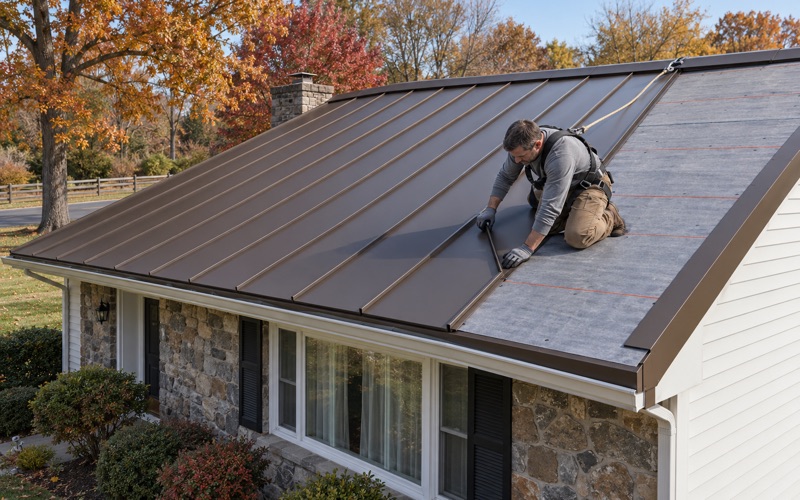
For an owner set on standing seam, we start with the address’s distance from the shoreline and the product’s written coastal terms, then compare panel and coating options that fit. If the coverage picture is weak for a given product, we say so and lay out alternatives, including architectural shingles such as GAF Timberline HDZ, Owens Corning Duration or CertainTeed Landmark.
Shingle warranties have their own conditions, and we read those as carefully as any metal warranty. The goal is a roof whose coverage you understand on the day it is installed, not one you learn about after a claim is turned down.
Older roofs with layers underneath
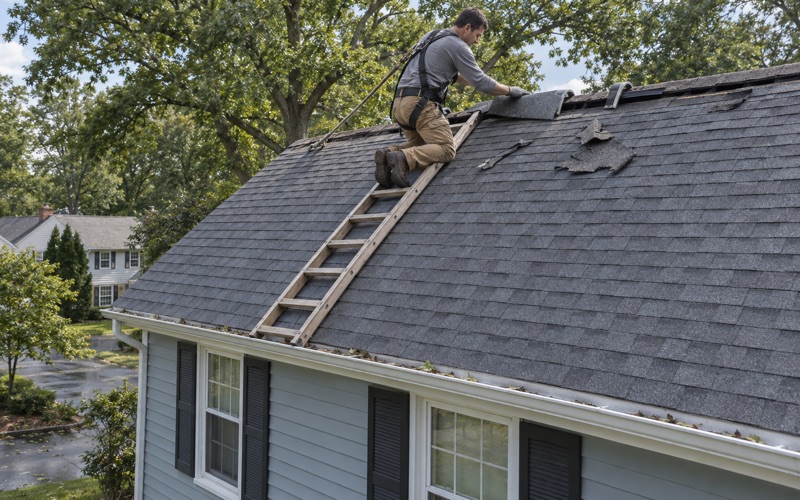
A house built before 1940 may have been reroofed more than once, and those layers matter when the next roof is planned. New Jersey’s rehabilitation subcode calls for a tear-off when a roof already carries two or more layers, or when the existing covering is slate, wood shake or tile. Going down to the deck also lets us see the boards before anything new goes over them.
On a house headed for metal, that tear-off is the moment to settle the details this page has covered: where copper or lead sits upslope, how the flashing will be replaced, and which fasteners and trim suit the exposure. Each of those choices is written into the scope as its own line, so nothing about a bayside roof is left to be decided on the day.
Decking, cleanup and the paperwork
Once the old roof is off, any damaged decking is photographed and shown to you before it is replaced, at a per-sheet price written into the contract. Your contract follows New Jersey home improvement rules, including the three-business-day cancellation notice, so you have time to review it.
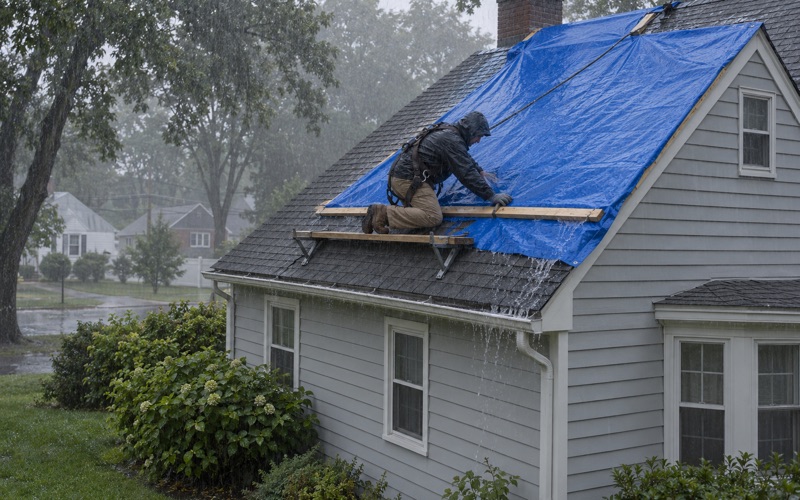
At the end of each work day the driveway, yard and gutters are cleaned and a magnet is run for roofing nails. If you are selling, we can provide a written roof condition report to hand to the buyer’s inspector, and after a storm we photograph damage for your own claim and will meet the adjuster on site when asked.
- 20+ Years on the Roof
- Free Written Estimates
- NJ and PA Contracts