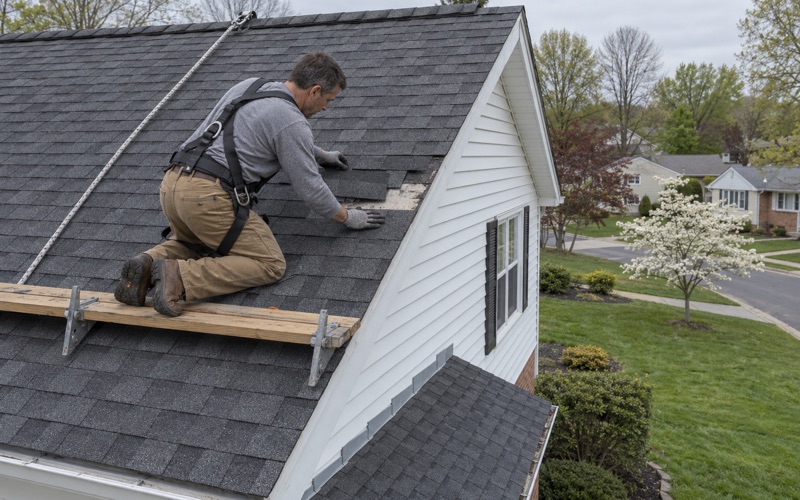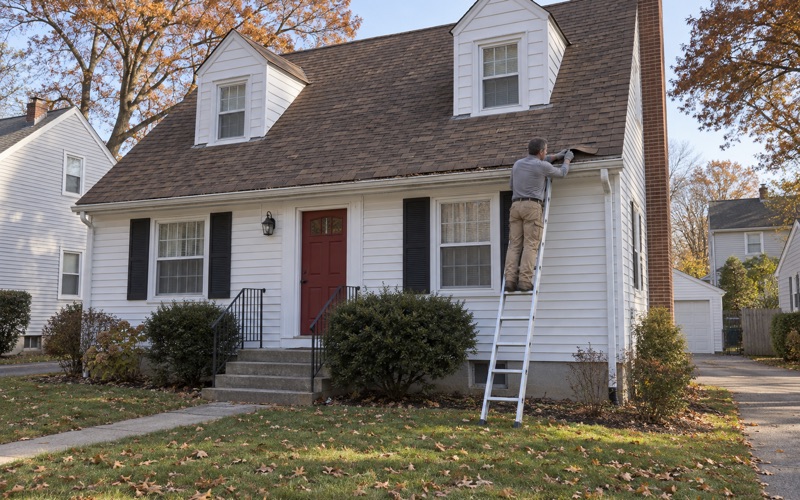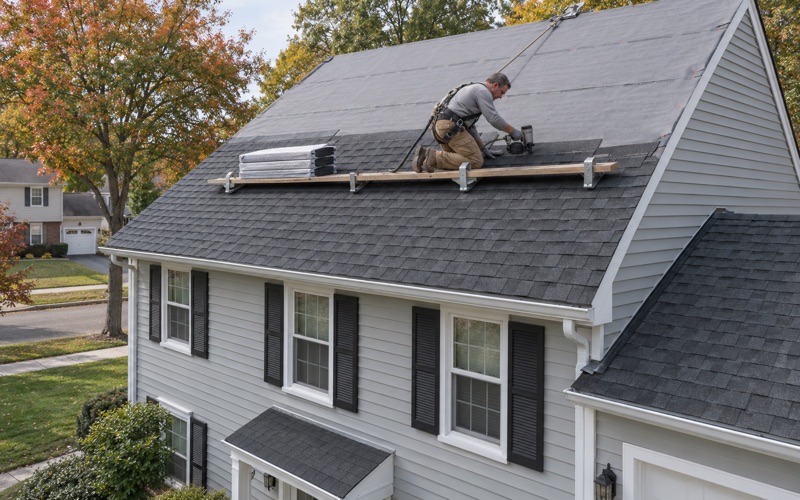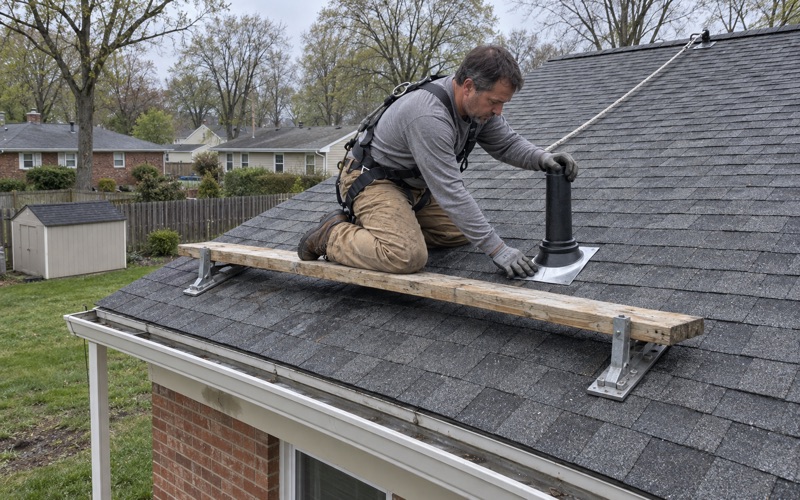
Hamilton Elite Roofing has spent more than 20 years on roofing in Somerville and across central New Jersey, and the question we raise early on an older house here is not about shingles at all. It is about the painted wood along the edges of the roof: the fascia, the soffit, the rake boards and the trim that frame the shingles and often come off with them.
That wood decides more about a re-roof than most owners expect. If it stays in place, the job is a roofing job. If a good share of it is removed and the house was built before 1978, a federal lead-paint rule can come into play, and the estimate should say so in plain words before anyone signs.
So our written scopes treat the trim the way they treat everything else. Tear-off, decking, underlayment, flashing, ventilation, gutters and painted wood each get their own line, which means you can lay our estimate beside another one and see which contractor planned for the boards and which one left them for the day of the job.
Older Somerville Houses and the 1978 Line
Somerville is the county seat of Somerset County, a borough of 2.37 square miles in the Raritan Valley, and much of its housing was standing long before anyone wrote rules about lead paint. That age is the starting point for any honest conversation about a re-roof on one of its streets.
What the Census numbers show
The American Community Survey counts 6,131 housing units in Somerville, and 4,664 of them, or 76.1 percent, fall in the build-year groups of 1979 or earlier. Another 1,485 units date to 1939 or before. Those groups do not split at 1978, so the figure is a ceiling on how many homes are old enough to matter, not an exact count.
What it does tell us is that an older house is the normal case here rather than the exception. When we walk up to a Somerville home for an estimate, we assume the trim may be original or close to it until the paperwork or the owner tells us otherwise.
Why 1978 is the date that matters
The federal rule we are talking about applies to what it calls target housing, defined as housing constructed prior to 1978, with narrow exceptions for housing built for the elderly or for people with disabilities and for 0-bedroom units. The year a house was built is therefore the first fact we want, and a deed, a tax record or a seller’s disclosure usually has it.
A build date before 1978 does not mean the paint on your trim contains lead. Nobody knows that without a test. It means the rule’s questions have to be asked, and they belong at the estimate stage rather than in the middle of a tear-off.
Looking for roofing closer to Doylestown Township? See Roofing Services in Doylestown Township.
When Roof Work Becomes a Renovation Under the Lead Rule
The EPA’s Renovation, Repair and Painting rule covers renovations performed for compensation in target housing. Its definition of renovation is any modification of a structure that disturbs painted surfaces, and it names the removal of building components as one of those modifications. Nothing in the text we have read names roofing by trade.
Shingles are not the trigger
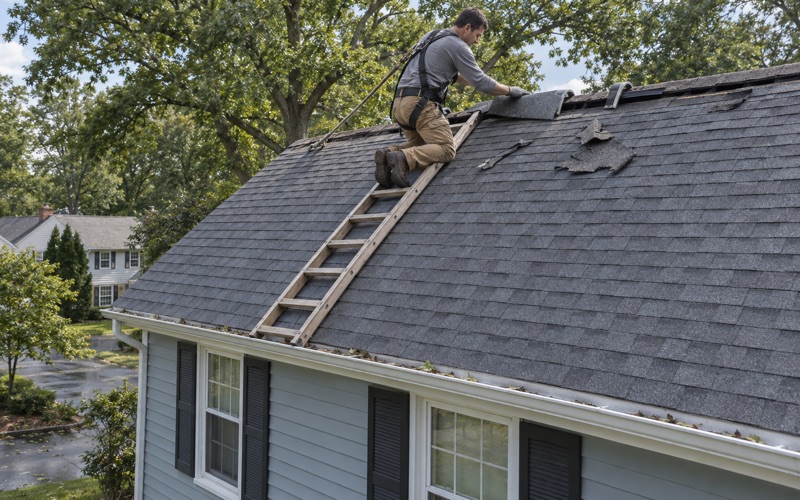
Asphalt shingles, underlayment and roof decking are not painted surfaces, so tearing them off and laying new ones does not by that alone bring a job under the rule. Plenty of re-roofs on pre-1978 houses never disturb a painted board at all, because the fascia and rake are sound and stay where they are.
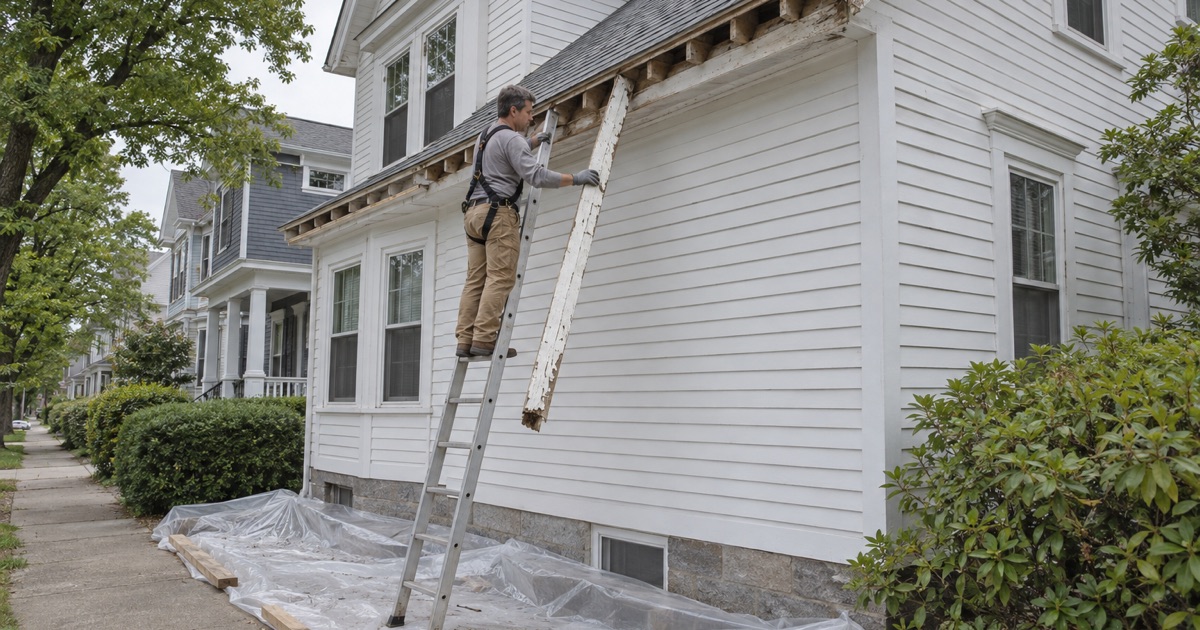
The trouble starts at the edges. New drip edge has to sit tight against the fascia, rotted rake boards have to come off before new ones go on, and a soffit that has been soaking up water from a backed-up gutter rarely survives the job. Each of those is painted wood, and that is where the rule looks.
The minor repair exception
The rule exempts minor repair and maintenance, and for exterior work it draws that line at 20 square feet or less of painted surface. The job also cannot use any of the practices the rule prohibits, involve window replacement, or include demolition of painted surface areas. Go past that figure, and the work counts as a renovation.
Window replacement is the one item on that list a roofer rarely touches, but demolition of painted surface areas is not. Cutting out a painted soffit to reach rotted rafter tails is closer to demolition than to repair, and that is a question to settle before the job, not after the square footage is added up.
That 20 square feet sounds generous until you measure trim. A single fascia run across the front of a modest house can approach it on its own, and a full set of rake boards on two gables adds up faster than most people would guess.
Fascia, Soffit and Rake Boards: Doing the Exterior Math
Two details in the rule’s wording change how the arithmetic works on a roofing job, and both of them tend to push the total upward. We walk owners through them because the number is easy to underestimate standing in the driveway.
Removed boards count in full
When a painted component or part of one is removed, the rule says the entire surface area removed is the amount of painted surface disturbed. A fascia board does not count only where a pry bar touched it. If a twelve-foot board comes off, its whole painted face counts toward the total.
That is why a rake or fascia replacement deserves its own line in our scope, with the boards named and the run measured. You should be able to see from the estimate how much painted wood we plan to remove and whether it is enough to matter.
The figure is a total for the property
The EPA’s own guidance answers a question roofers ask often: whether a crew can disturb less than 20 square feet on each side of a house and stay under the line. The answer is no. To qualify as minor repair, the total amount of exterior paint disturbed across the property must be 20 square feet or less.
So a little fascia on the front, a soffit section in back and a rake board on the side are added together. On a Somerville house where the gutters have been overflowing for years, that combined figure is often where the real decision about the job gets made.
Gutters are part of this too. In our scopes, gutters and leaders are sized and pitched with the roof, and on many older houses the gutter hangs from the fascia, so a new gutter can mean a new fascia board. When we lay out new gutters, we note whether the board behind them is staying, being patched in short sections or coming off entirely, and that note feeds the property-wide total.
Keeping the trim when it can stay
Not every painted board needs to come off. Where the fascia is solid, we can often fit new drip edge, gutters and flashing against it without removing it, and the straight answer on what can be saved comes before anything is priced as a replacement.
When boards do have to go, the estimate should also say how the work will be contained: what goes down on the ground under the eaves, how debris is bagged, and how the area is cleaned at the end of the day. Our crews already clean the driveway, yard and gutters daily and sweep for nails with a magnet, and an older house deserves that care at the trim line too.
Testing, Rented Homes and Multi-Family Buildings
The rule leaves room for a house to be shown free of lead-based paint, and Somerville’s housing mix means the people affected by a trim job are often tenants rather than the owner who signs the contract.
Testing painted trim before it comes off
The rule does not apply where the components being disturbed are found free of lead-based paint, either by a written determination, by a certified renovator using an EPA-recognized test kit, or by a lab analysis of paint chips. Lead testing is outside what our company does, so we tell owners about these routes early rather than offering a test we do not perform.
If a determination already exists for your house, bring it to the estimate. If none does, knowing before the job whether the trim is coming off gives you time to arrange testing or to hire work on the painted wood from someone who handles it under the rule.
Renters, two-family houses and larger buildings
Somerville is a renter-majority town: 3,411 of its 5,980 occupied homes, or 57.0 percent, are rented. The same survey counts 398 rented units in two-unit buildings and 502 in buildings of three or four units, the small-landlord houses where a single re-roof covers several households.
On a rented house, the trim plan matters to people who did not hire the roofer and may be home during the work. Owners of these buildings should expect the same thing from our scope that a homeowner gets: painted wood named and measured, containment described, and the cleanup spelled out, so the plan can be shared with tenants before the crew arrives.
What the rest of the estimate covers
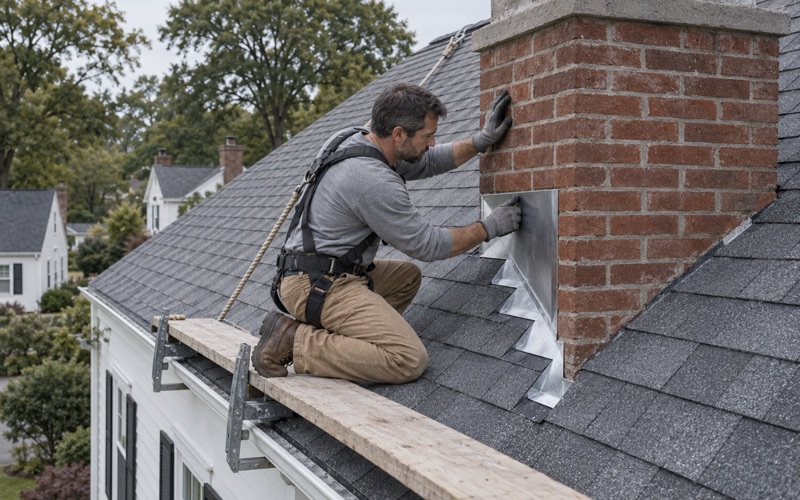
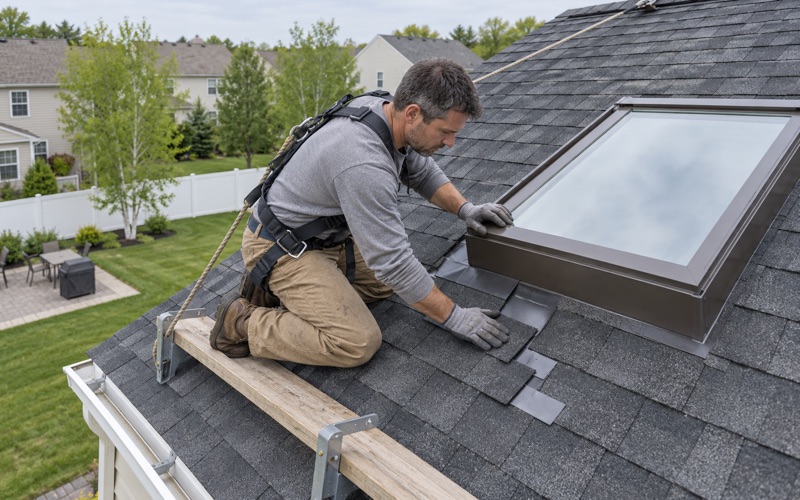
The trim is one line among many. We still look in the attic on any leak call before pricing, replace step, counter and chimney flashing with the roof rather than reusing it, check attic ventilation on every replacement, and photograph any damaged decking for you before it is swapped out at the per-sheet price written into the contract.
Our contracts follow New Jersey’s home improvement rules, including the three-day cancellation notice. That gives you time to read the trim line alongside the rest, ask questions, and decide how you want the painted wood handled before any work begins.
- 20+ Years on the Roof
- Free Written Estimates
- NJ and PA Contracts