
Hamilton Elite Roofing installs and replaces skylights in Hamilton, NJ, and we bring the same work to homeowners in Robbinsville, Hopewell Township, Florence and Bordentown Township. In more than 20 years of roofing, the skylights we have been called to fix were rarely bad products; they were installed with improvised flashing or held together with caulk.
A skylight puts a hole in the roof on purpose. Getting daylight without water depends on framing the opening correctly, using the manufacturer’s flashing kit for that exact unit and wrapping the curb with ice barrier before the shingles go back on. We treat each of those steps as part of the roof.
We also replace skylights that have reached the end of their life, rebuild leaking curb flashing on units that are still sound, and advise when condensation rather than a leak is the real problem.
Skylight Types
Deck-Mounted Skylights
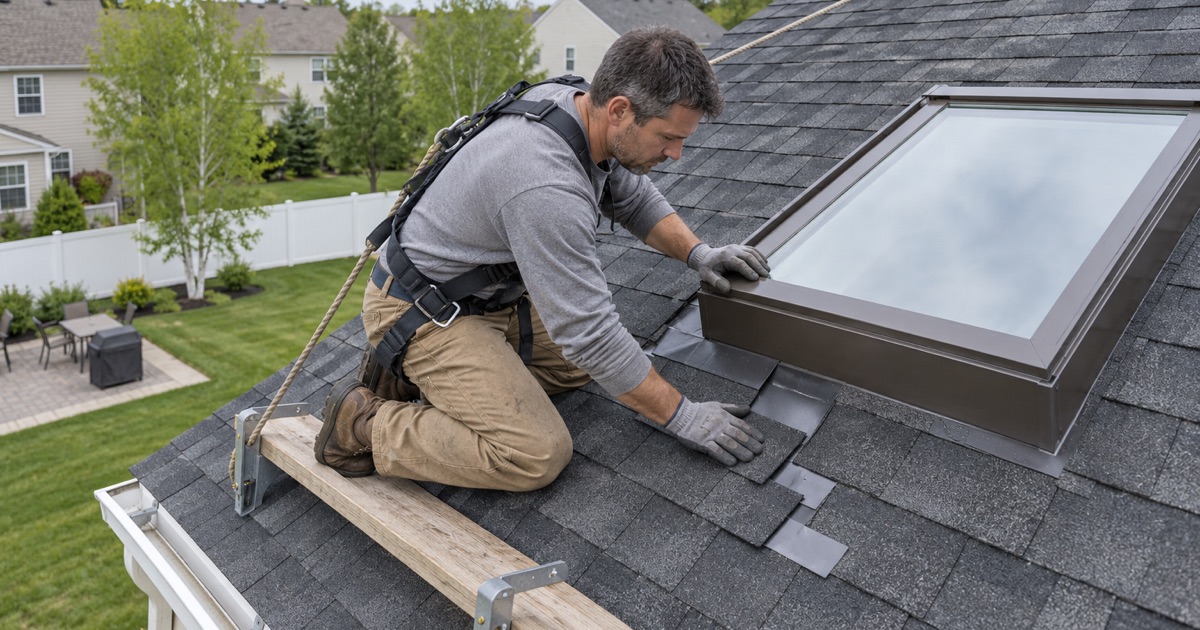
Deck-mounted skylights attach directly to the roof deck and sit low against the roof surface. They come with step flashing kits designed for that unit and integrate neatly with asphalt shingles. On most pitched residential roofs they give the cleanest look and the most reliable seal when the kit is installed as the manufacturer intends.
Curb-Mounted Skylights
Curb-mounted skylights sit on a raised wooden frame built on the roof. The curb lifts the glass above the roof surface, which suits low-slope roofs and flat sections where a low-profile unit would sit in water. The curb itself is flashed like a small chimney, with step or membrane flashing up its sides and a counter flashing from the skylight frame over it.
Venting and Fixed Units
Fixed skylights only admit light. Venting skylights open, manually or with a motor, to let warm, moist air escape from kitchens and bathrooms. Some include rain sensors that close them automatically. We help you choose based on the room, since a venting unit over a bathroom can reduce the condensation problems a fixed unit might cause.
Tubular Skylights
A tubular skylight uses a small dome on the roof and a reflective tube to carry daylight into hallways, closets and bathrooms without a full light shaft. The roof opening is small and the flashing is simple, which makes them a practical way to brighten interior rooms.
Glazing Options
Modern skylights use insulated, low-emissivity glass that limits heat gain in summer and heat loss in winter, and laminated inner panes that hold together if broken. Tinted or shaded glazing reduces glare in rooms that face south. We go through the glazing options for the room and the direction the roof faces, since a skylight over a home office needs different glass from one over a stairwell.
How We Install a Skylight
Framing the Opening
Cutting a new skylight opening means cutting rafters or trusses, so the opening has to be framed with headers to carry the load around it. Because this changes the structure, a new skylight generally needs a construction permit, and we confirm the requirement with the township before starting.
On a replacement in an existing opening, we check the framing and the deck around the old unit for rot, since a leaking skylight often soaks the wood beneath it for years before anyone notices.
Flashing and Ice Barrier
We wrap the curb or the unit’s frame with self-adhering ice and water barrier, lapped so water flows out over the shingles, then install the manufacturer’s flashing kit piece by piece: a sill flashing at the bottom, step flashing up the sides woven with the shingles, and a head flashing at the top. Sealant is a backup, never the primary seal.
The Light Shaft Inside
Inside, the shaft from the ceiling to the skylight is framed, insulated and finished. An uninsulated shaft in a cold attic is a major source of condensation, because warm room air meets cold surfaces all the way up. We insulate the shaft walls and seal them so moist air does not leak into the attic around the opening.
A splayed shaft, wider at the ceiling than at the roof, spreads more daylight into the room than a straight one. Where the framing allows, we discuss that option before building, since it is far easier to frame the shaft that way from the start than to change it later.
Skylights and Roof Replacement
Replacing Skylights With a New Roof
When a roof is replaced, skylight flashing comes off anyway. If the skylight is old, replacing it at the same time is usually the right choice, because an aging unit is likely to fail before the new shingles do, and replacing it later means cutting into a new roof. We list skylight work on its own line in the roof estimate so you can see the cost and decide.
Removing a Skylight
Some owners decide they no longer want a skylight. We can remove it, frame and deck over the opening, and roof it to match, then patch the ceiling inside. This removes a leak point permanently and is often simplest during a full roof replacement.
Skylight Leak Repair
Leak or Condensation?
Water on a skylight in winter is often condensation: warm, humid indoor air meeting cold glass. A true leak usually appears during or after rain and runs down the shaft wall. We check which it is before recommending any work, since the fixes are completely different.
Flashing Repairs on Sound Units
If the skylight itself is in good condition but water gets in around it, we lift the surrounding shingles and replace the flashing with a proper kit, adding ice barrier where it was missing. That repair often saves a skylight that someone has been sealing with caulk for years.
When the Unit Has Failed
Fogged double glazing, cracked domes and frames that have warped or rusted mean the unit itself has reached the end of its life. Resealing the flashing will not help. We replace the skylight with a new unit sized to the existing opening where possible, which keeps the interior finish work to a minimum.
- 20+ Years on the Roof
- Free Written Estimates
- NJ and PA Contracts