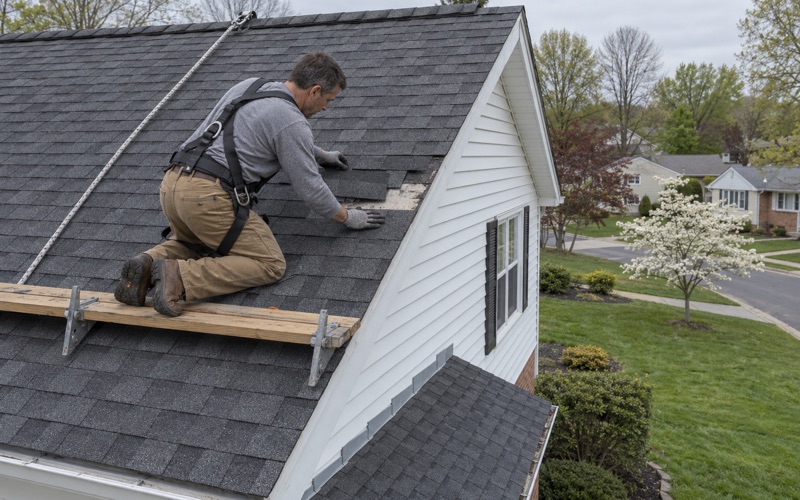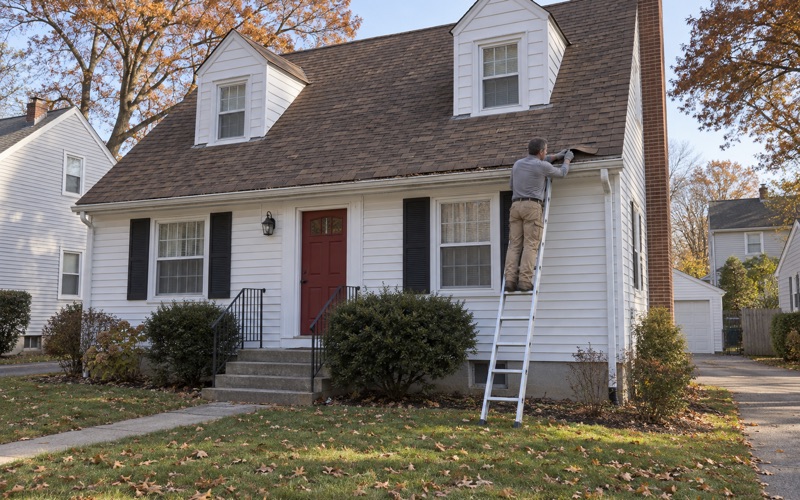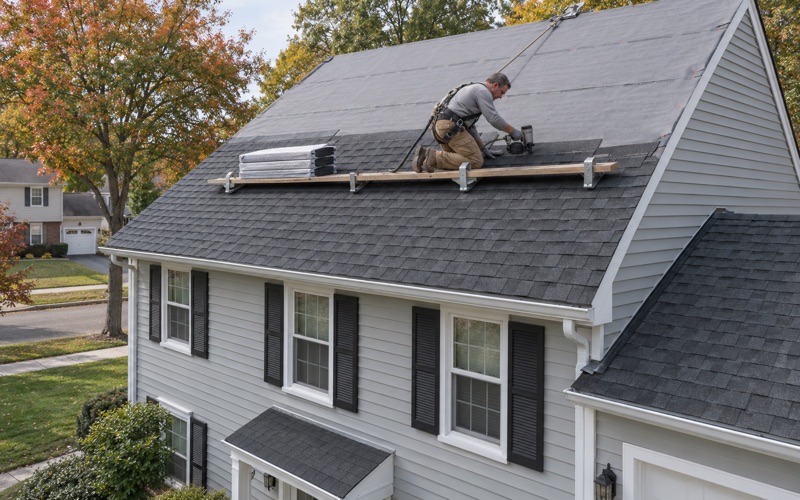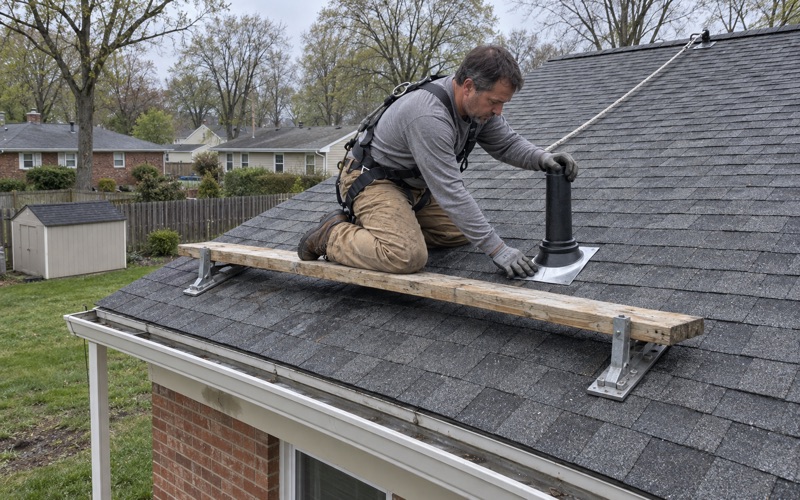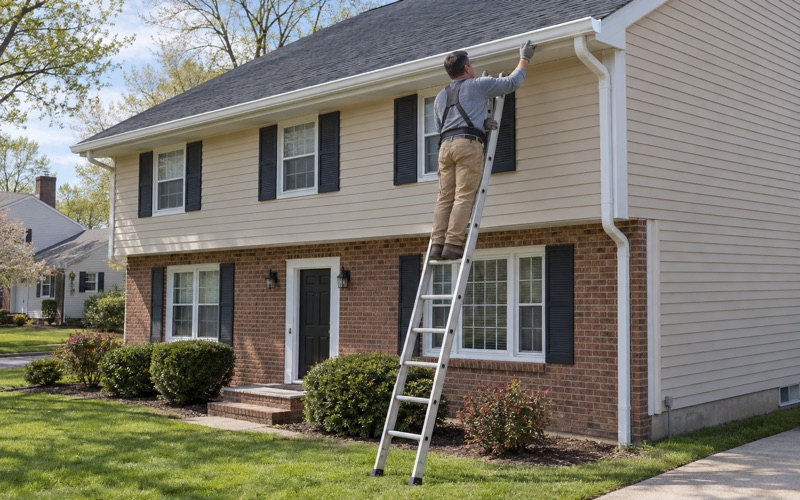
Hamilton Elite Roofing has spent more than 20 years on roofing in Robbinsville and the rest of the Hamilton area, and the homes here do not all ask the same questions of a roofer. Some are detached houses, some share a wall with a neighbor, and some are factory-built homes sitting on a rented lot. We start each job by working out which of those a roof belongs to, because that decides who signs off, who pays and how the work gets scheduled.
Every leak call gets two looks: one on the roof and one in the attic or ceiling cavity, so we can trace water to the spot where it actually enters before we price anything. Then you get a plain answer on whether the roof can be repaired, and only after that do we talk about replacement if it is truly needed.
Our written scopes break tear-off, decking, underlayment, flashing, ventilation and gutters into separate lines. That lets you hold our estimate next to anyone else’s and compare the two item by item instead of guessing at a lump sum. Any decking found rotten once the old roof is off is photographed and shown to you before it is replaced, at a per-sheet price already written into the contract.
Newtown Village, Robbinsville’s Township-Owned Community
Your Home, the Township’s Lot
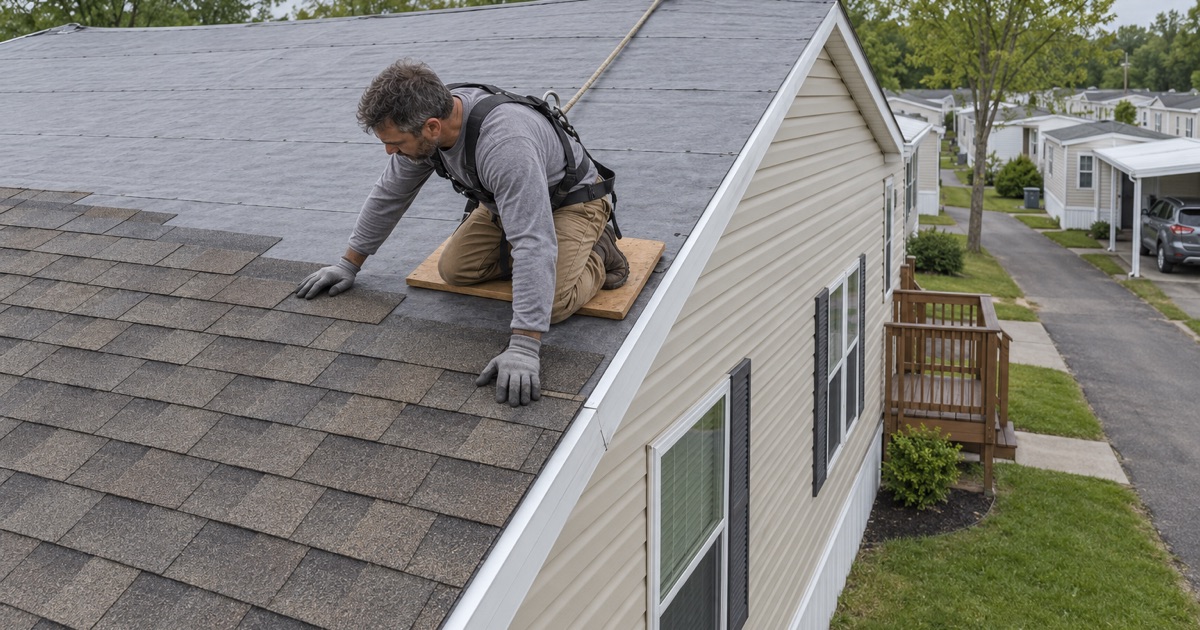
Newtown Village sits at 199 Maple Street, and it is an unusual arrangement: a manufactured home community whose landlord is the township itself. It was known for years as the Mercer Mobile Home Park, and Robbinsville took control of its 149 lots on July 1, 2019, as part of its court-approved affordable housing plan. In March 2019 a state appeals court ruled that the township could use eminent domain to take the property in furtherance of that plan.
The split is simple to say and easy to forget when a roof starts leaking. Residents own the home; they rent the ground under it from the township. The roof, like the walls and windows, belongs to the person who owns the house.
Who Is Responsible for the Outside
The township’s community rules, adopted December 4, 2025 and effective January 1, 2026, say it plainly: the tenant has the obligation to maintain the exterior of the manufactured home. The township, as landlord of the lot, does not take on the repair of a resident’s house, and its rules state that it cannot recommend contractors for work that is the tenant’s responsibility.
So when a ceiling stain shows up in Newtown Village, the call is yours to make, and so is the choice of who climbs the ladder. We think that choice should be made with the facts in hand rather than from whoever knocks first after a storm.
A Community, Not a Subdivision
Newtown Village is a key part of Robbinsville’s affordable housing plan, and the township’s own page notes that improvements there were named a 2025 Municipal Project of the Year. None of that changes who answers for a leak. The roof over your kitchen is still a private matter between you and whoever you hire.
Because each home sits on a rented lot beside its neighbors, a roof problem on one house can quickly become a conversation with the people next door. That is part of why the rules on access and hours matter, and we cover those further down.
Looking for roofing closer to Bordentown Township? See Roofing Services in Bordentown Township.
What the 2026 Community Rules Say About Outside Work
Permits, Approvals and Construction
Section VI of the rules says no additions or construction of any kind may be made to a manufactured home or lot without the required permits and/or approvals from the township. That language reaches the home itself as well as the lot, and it applies whether the owner or a hired crew does the work. Additions, where allowed, are to be built to the standards HUD sets for manufactured housing.
The rules never mention the roof by name, and we will not pretend they do. Whether a particular re-roof, roof-over or structural repair counts as construction under that section is a question for the township before work starts, and we would rather ask it than guess. If the answer is that an approval is needed, we build the time for it into the schedule instead of starting first and asking later.
Licensing and Insurance for Anyone but the Owner
The same section adds a second condition. Anyone other than the tenant who performs construction on a home must possess the proper licensing and be insured, and must produce proof of that if the landlord asks. The township can ask for that proof at any point, so it should be ready before the job begins.
Whoever you hire, ask for those documents before a ladder goes up, and keep a copy with your lot paperwork. Our contracts follow New Jersey’s home improvement rules, including the written notice of your three-business-day right to cancel, so you have a clear record of what was agreed.
Skirting, Anchoring and Other Exterior Items
The rules also ask that homes stay properly anchored or secured, and that skirting be pre-finished aluminum or vinyl with vent panels. Awnings, sheds and other improvements need written approval from the Robbinsville Township Zoning Division.
None of these are roof rules, but they shape a roof job all the same. A gutter run that dumps water against vinyl skirting, or a ladder footing set on an anchor strap, creates a new problem the owner then has to answer for. We keep runoff, ladders and debris clear of both before the first piece of old roofing comes off.
How a Manufactured Home’s Roof Is Built
A Factory Assembly, Not a Site-Framed Roof
A manufactured home leaves the factory with its roof already framed, sheathed and covered, and it is built to be light enough to travel. Rafters or trusses are often spaced and sized differently from a house framed on site, and the roof may be nearly flat or shallow-pitched depending on the model and its age. That is why methods that suit a two-story colonial do not always transfer to a factory-built roof.
We have no record of what roof sits on any given Newtown Village home, so we do not assume one. The first visit is for finding out: the slope, the covering, how many layers are on it, and what the framing underneath can reasonably carry. That inspection also tells us whether the decking is sound enough to fasten into.
Repair, Roof-Over or Replacement
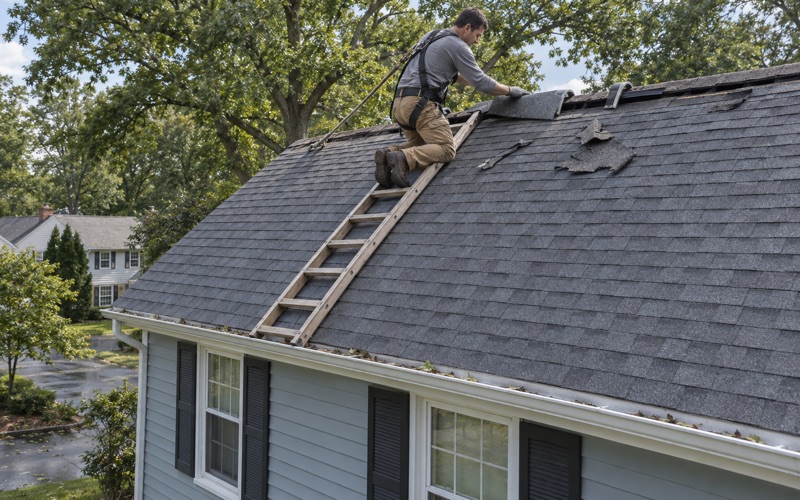
On many manufactured homes the honest first step is a repair: a split seam, a lifted edge, a cracked pipe boot or a vent flashing that has pulled loose. A small fix done well can buy years on a roof whose surface is still sound. We tell you whether that will hold before any larger job comes up.
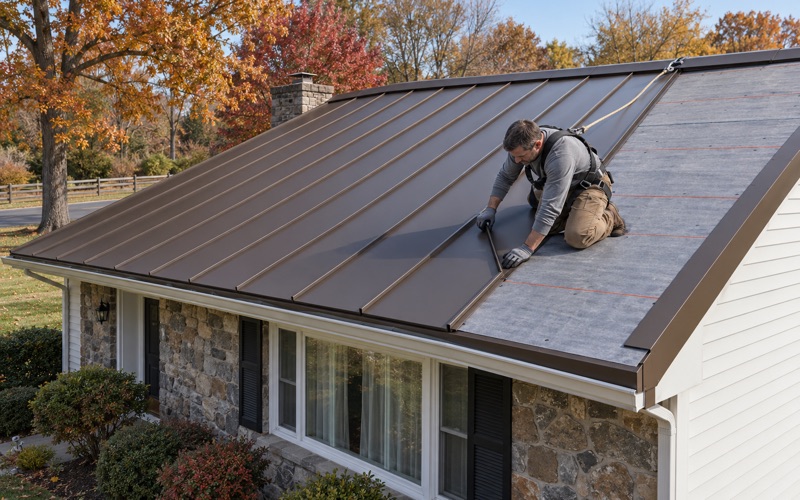
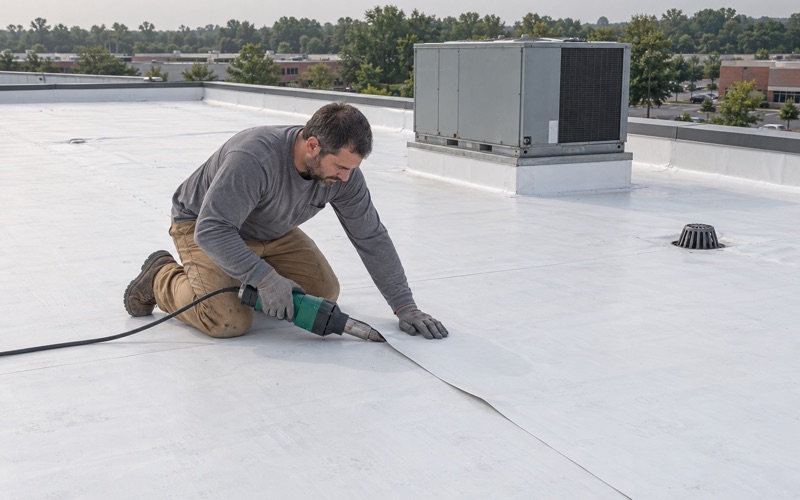
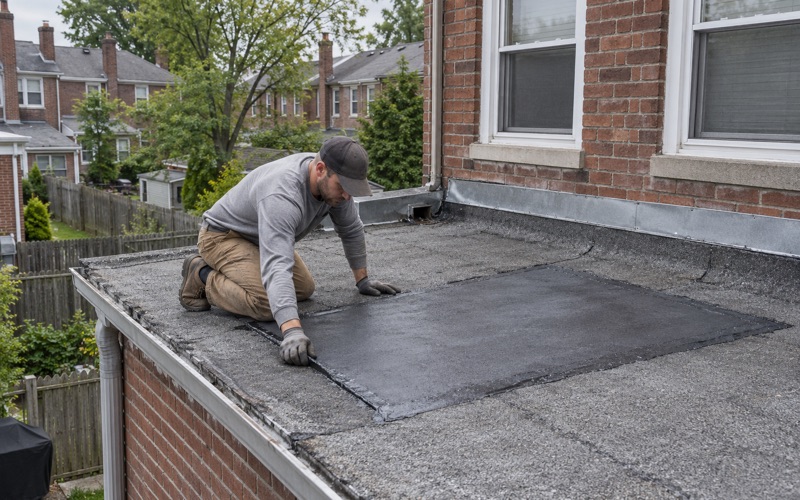
When a covering is worn out, manufactured home roof-over systems are one option, adding a new insulated layer and a fresh membrane or metal surface over the old roof. Other homes are better served by stripping the old covering and installing EPDM rubber, TPO, or shingles where the pitch allows them. Which one fits depends on the slope, the framing and what is already up there.
Either way, added weight is the question we answer first, because a roof-over on light framing is not a free upgrade. We also check the attic or roof cavity ventilation, since a roof that cannot breathe ages from underneath no matter what is on top.
Edges, Seams and Penetrations
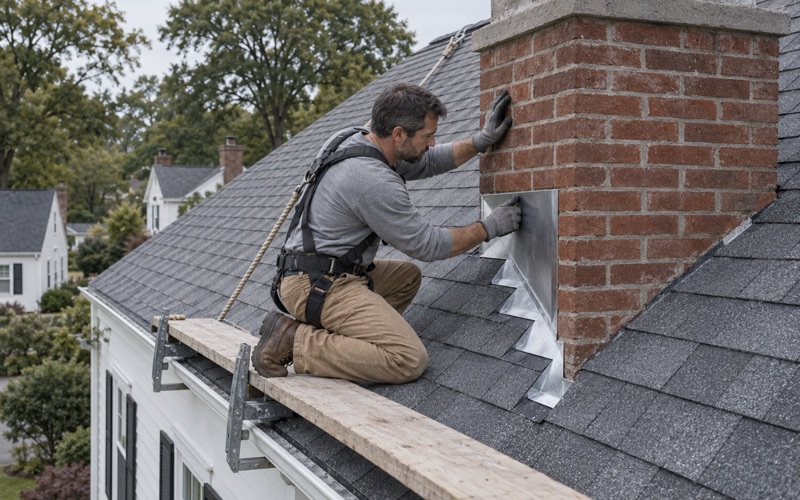
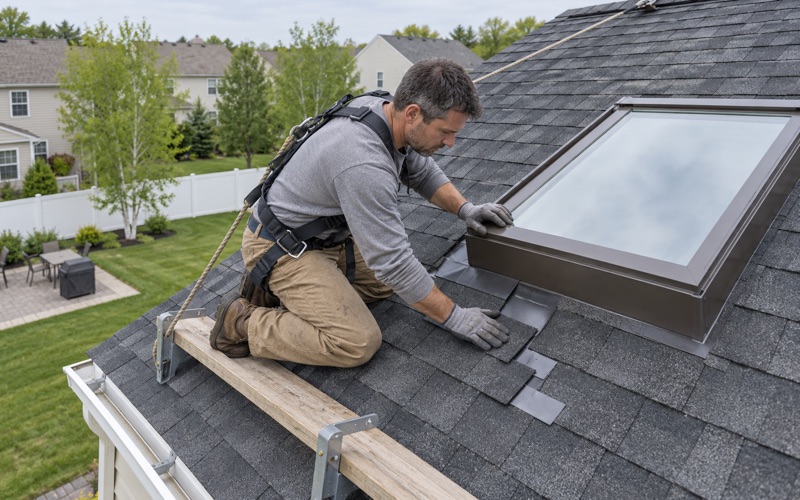
Leaks on a low-slope factory roof often start where something interrupts it: a plumbing vent, a furnace flue, a skylight, or the joint where an addition meets the original home. Each one is a hole in the roof that stays dry only as long as its seal does. Those are the details we rebuild with new boots and flashing rather than sealing over the old ones.
At the eaves, a proper drip edge and a strip of self-adhering ice and water barrier meeting ASTM D1970 keep water from wicking back under the edge. Where gutters are added, they are sized and pitched with the roof so runoff lands away from the skirting and the neighbor’s lot.
Scheduling Roof Work Around Neighbors and Rule Hours
Working Within the Set Hours
The 2026 rules limit routine maintenance and repairs to 8 a.m. to 6 p.m. on weekdays, 8 a.m. to 4 p.m. on Saturday and 9 a.m. to 4 p.m. on Sunday. Construction is not allowed at all on New Year’s Day, Memorial Day, Independence Day, Labor Day, Thanksgiving Day or Christmas Day.
We plan the day backward from those windows. Tear-off, dry-in and cleanup all have to fit before the cutoff, so a job that would run late on a Saturday is split into two days rather than rushed or left open. We also keep the holiday list in mind when a job runs up against a long weekend.
Access Across a Neighbor’s Lot
Reaching every side of a manufactured home sometimes means standing on the lot next door. The rules give the owner that right of access to all sides of the home, with notice given not less than 48 hours before the work, and no notice needed for emergency work. In practice that means a conversation with the neighbor well before the crew arrives.
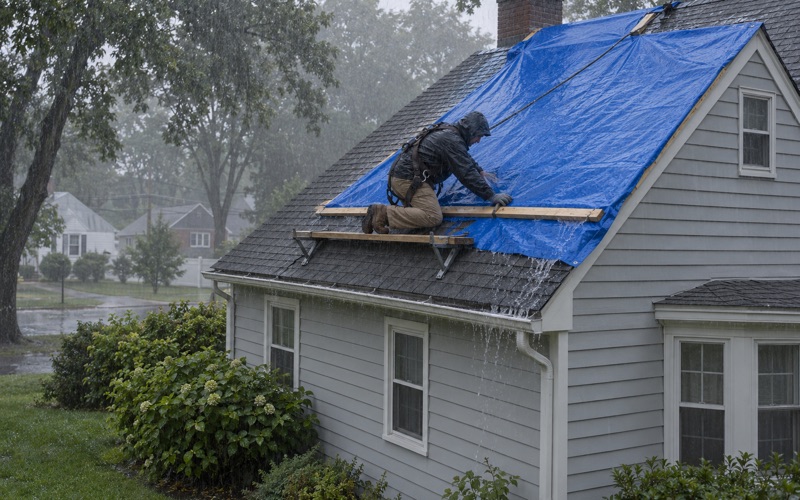
We give you the dates early enough to pass that notice along, and we walk the neighboring lot with you before setting ladders or a debris tarp on it. Whether the ladder stands on your lot or the next one, our crews work under OSHA fall protection, which applies from 6 feet up. If a storm opens your roof overnight, we tarp it first and plan the full repair once the weather and the rule hours allow.
Leaving the Lot Clean
At the end of every work day we clean the driveway, yard and gutters and run a magnet sweep for roofing nails, which matters more when a neighbor’s lot sits right beside yours. Storm damage gets photographed and written up for your own insurance claim, and we will meet the adjuster on site if you want us there.
If you are selling your home, we can also write a roof condition report to hand to the buyer’s inspector, so the roof is a known quantity rather than a surprise late in the sale. Call us, and the first visit will tell you what the roof needs and what it does not.
- 20+ Years on the Roof
- Free Written Estimates
- NJ and PA Contracts