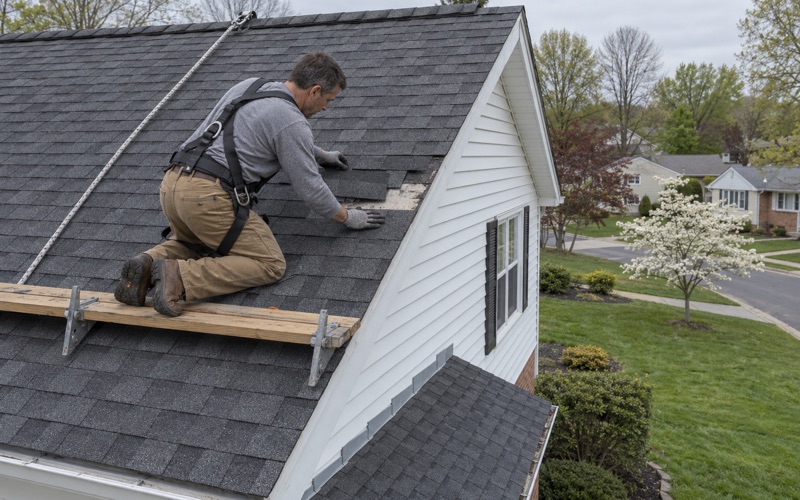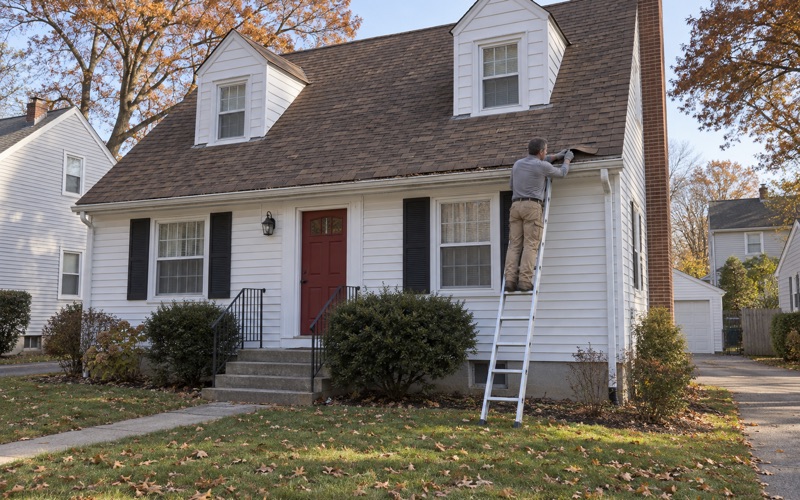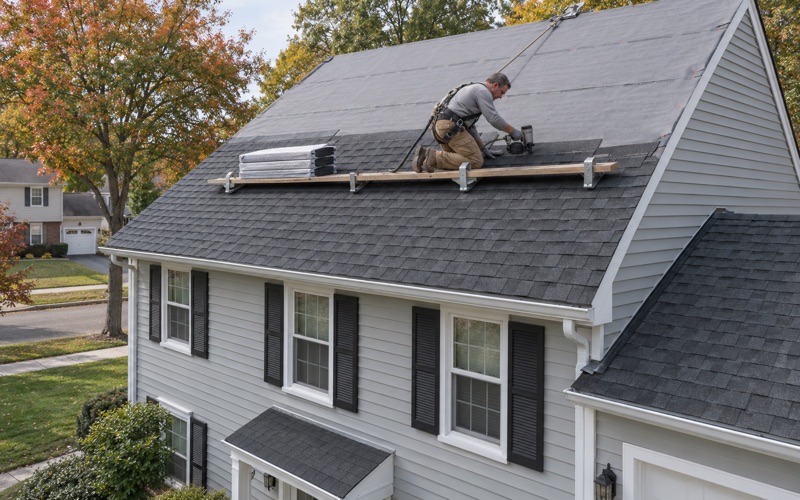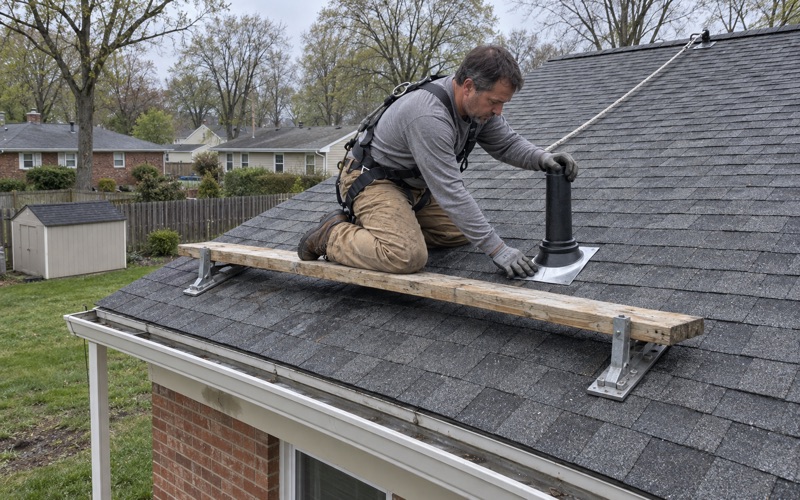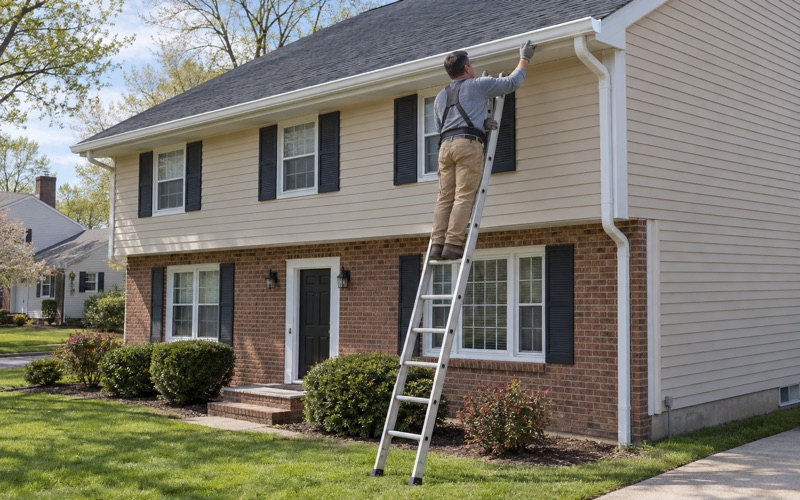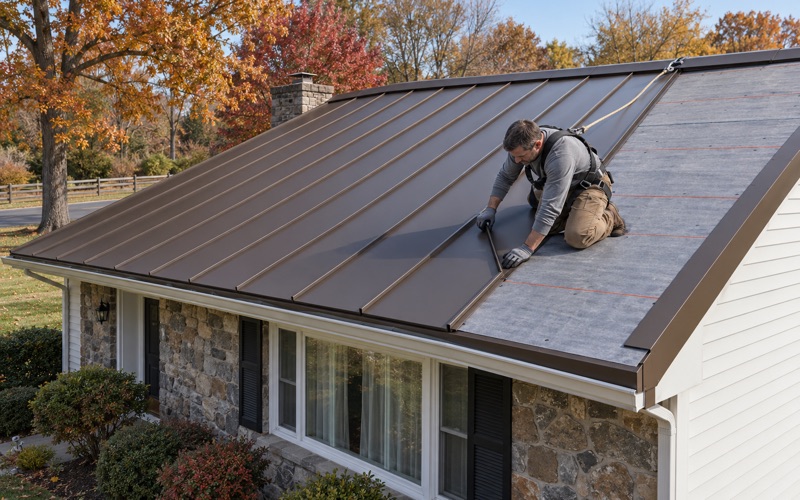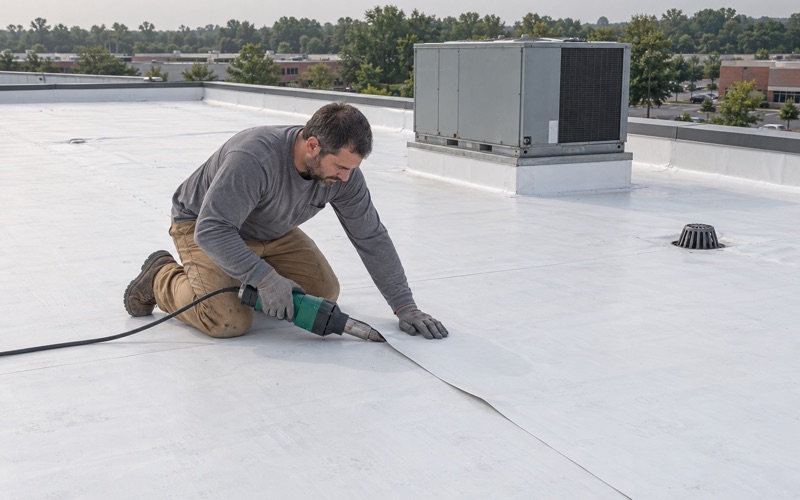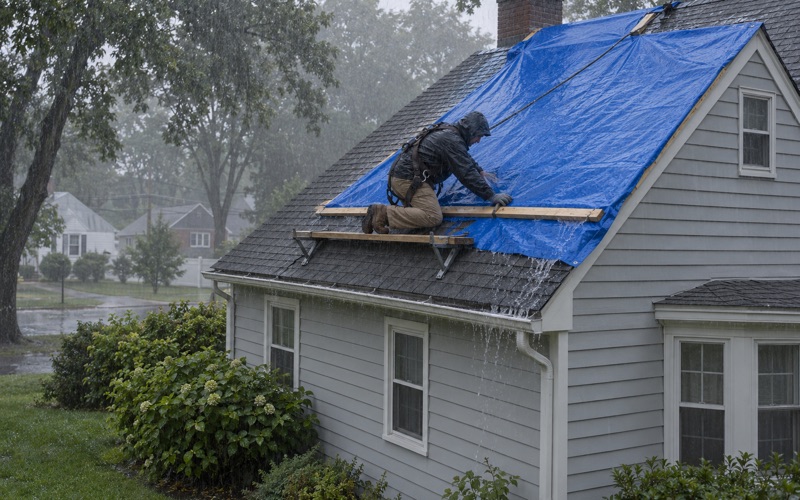
Hamilton Elite Roofing has handled roofing in Readington for homeowners who want a clear answer before they spend money, backed by more than 20 years on New Jersey roofs. Every job starts with an inspection that covers the attic as well as the shingles, so a leak is traced to the point where water actually gets in. If the roof can be repaired, we say so plainly, and replacement only comes up when a repair would be money wasted.
Our estimates are written so they can be laid beside a competitor’s and checked line by line. Tear-off, decking, underlayment, flashing, ventilation and gutters each get their own entry, along with the per-sheet price we charge if rotten decking turns up once the old roof is off. Any sheet we replace is photographed and shown to you first, so nothing on the final invoice comes as a surprise.
Contracts follow New Jersey’s home improvement rules, including the three-business-day cancellation notice. On a detached one- or two-family house, replacing the roof covering is ordinary maintenance under N.J.A.C. 5:23-2.7, so the shingle work itself needs no construction permit. Below, we explain what makes a roof in this township different, from open-field exposure to long drives and the eave protection question.
Roofs Beside Preserved Farmland in Readington
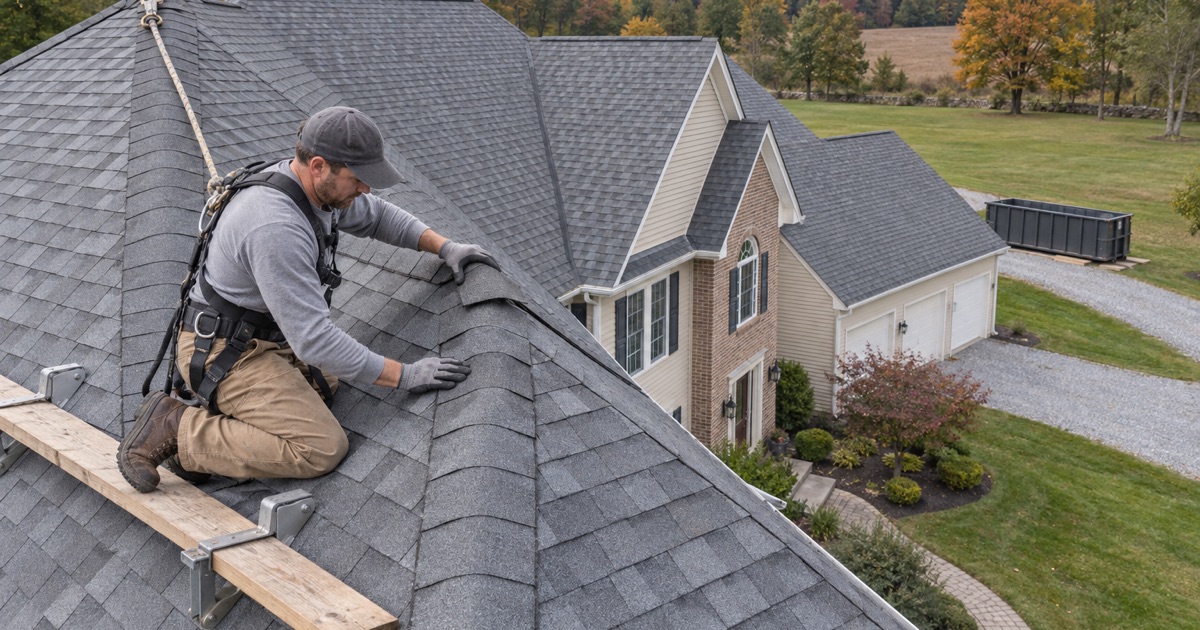
Readington has set aside an unusual share of its land from development. The township’s Open Space Advisory Board counted approximately 74 preserved farms and approximately 9,500 acres preserved as open space or farmland in its February 2025 update. Preserved farmland on its own reached 4,815 acres in March 2024, when the Barrettstown Joy Farm became the 74th farm, and the 2018 Open Space Master Plan aims for 12,000 preserved acres by 2050.
What a permanent field next door means for a roof
For a homeowner, that means the field or woodlot beside the house is likely to stay exactly as it is. A roof that faces open ground today will still face it in thirty years, when the next replacement comes due. We plan materials, fastening and edge details for the exposure the house actually has, rather than assuming new neighbors will eventually shelter it.
That permanence works in both directions. A hedgerow on a preserved edge will keep growing, and branches that brush the roof now will hang further over it later. During an inspection we note where trees on or near the property line already drop debris into valleys and gutters, so you know what upkeep the roof will need between replacements.
Housing around Whitehouse Station and the rural roads
Most homes here are detached houses. Census estimates for 2024 count 4,852 detached homes out of 6,491, plus 912 one-unit attached homes, and more than half the housing was built between 1970 and 1999. Many of those roofs, around Whitehouse Station and along the township’s rural roads, are now on their second covering or ready for one.
Attached homes follow different rules. The ordinary-maintenance exemption covers detached one- and two-family dwellings, so a townhouse roof may need a conversation with the Readington Township Construction Department before work starts. We plan those roofs with the shared wall and the neighbors’ sections in mind, and in an association community we check the governing documents to confirm who holds the roof before writing an estimate.
Looking for roofing closer to Middlesex? See Middlesex Roofing.
Open Fields, Wind and Tree Lines on Preserved Edges
A house set back from the road with crop fields on two sides takes wind differently than one tucked into a subdivision. There are no neighboring roofs or garages to break a gust before it reaches the eaves and rakes. We cannot promise any roof will shrug off every storm, but we can install one whose edges and fastening match the exposure it faces.
Shingle ratings that matter on an exposed lot
Architectural shingles such as GAF Timberline HDZ, Owens Corning Duration and CertainTeed Landmark carry wind ratings under ASTM D3161 Class F or ASTM D7158 Class H when installed to the maker’s instructions. Those instructions matter. The nail count, nail placement and starter strip at the eaves and rakes decide whether a shingle stays down long before the rating on the wrapper does.
On a lot that faces open ground, we pay close attention to drip edge along the eaves and rakes and to the sealed starter course beneath the first row. Those details carry much of the load when wind gets under the roof edge. A rake that sees the full sweep of a field gets the same care as the most visible front slope of the house.
Tree lines, debris and the valleys they feed
Preserved edges are often lined with mature hedgerows and woodlots, and the leaves, needles and twigs they drop end up in valleys and gutters. A clogged valley holds water against the shingles and underlayment longer than the roof was designed for. Gutters packed with debris overflow at the fascia, which is where rot often starts on older trim.
We size and pitch gutters and leaders as part of the roof, not as an add-on, and seamless aluminum runs remove the joints where debris catches. Where a tree line sits close to the house, we may suggest guards or a larger downspout. We will also point out limbs that should come back from the roof, though the tree work itself is a job for an arborist.
Storm damage on the open side of the house
When a storm does lift shingles or drop a limb, we photograph the damage and write it up so you can file your own claim. If you would like us there, a crew member will meet the insurance adjuster on site and walk the roof with them. That record helps most when the damaged slope is the one facing the field and hard to see from the ground.
Getting a Crew and a Dumpster Down a Long Rural Drive
Readington covers 47.83 square miles, almost 11% of Hunterdon County’s area, and many homes sit at the end of long gravel or paved drives. That shapes a tear-off more than most homeowners expect. Where the dumpster goes, how the materials truck turns around and where shingles are staged all get settled before the first bundle arrives.
Planning the drive, the lawn and the cleanup
We walk the drive during the estimate and look at its width, soft shoulders, overhead wires and branches, and any septic field or well that should stay clear of heavy wheels. If the dumpster has to sit near the road, we plan a chute and a tarp path rather than dragging debris across the lawn. Plywood under the container protects a paved surface.
Long drives also mean more ground for stray nails to land on. At the end of every work day we clean the driveway, yard and gutters and run a magnet sweep, which matters on a property where children, pets or equipment cross the same ground. The site should look the same at night as it did in the morning, minus the old roof.
Older farmhouses in Stanton, Three Bridges and Readington Village
Not every home here dates from the 1970s or later. The same Census estimates count 745 homes built in 1939 or earlier, and older settlements such as Stanton, Three Bridges and Readington Village are where the township’s history is most visible. Older houses often carry several roof layers, plank sheathing instead of plywood, and chimneys that were never flashed to modern standards.
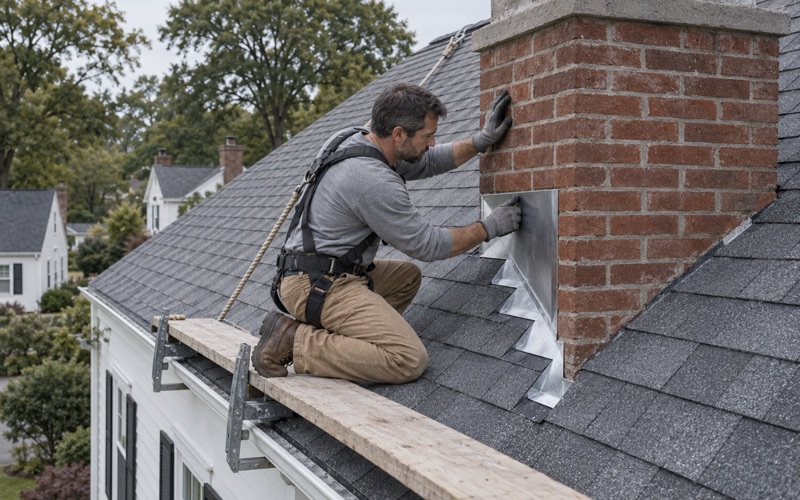
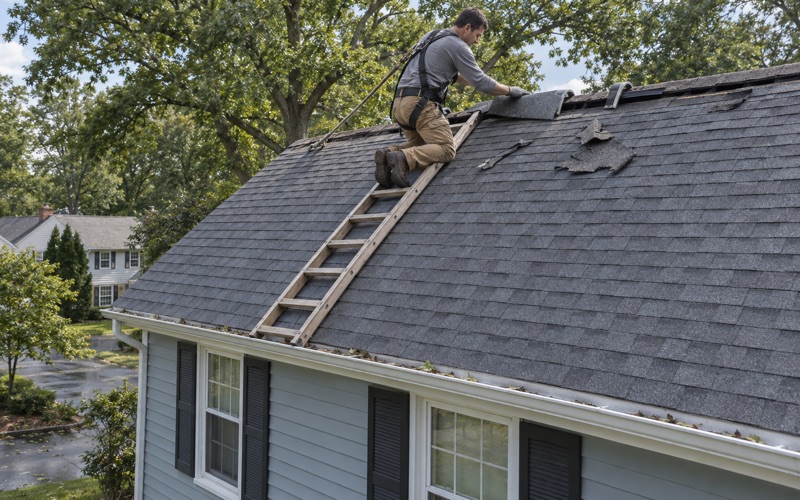
New Jersey’s rehabilitation subcode calls for a tear-off when a roof already has two or more layers, or when the existing covering is slate, wood shake or tile, so a full strip is usually where these jobs begin. We replace step, counter and chimney flashing with the new roof rather than reusing the old metal. If painted trim or fascia on a pre-1978 house will be disturbed, we follow the EPA RRP lead-safe rule.
Chimneys and crickets on older homes
Wide chimneys on older farmhouses frequently lack a cricket, the small peaked saddle that sheds water around the upslope side. The residential code calls for one behind chimneys wider than 30 inches. When we find a wide chimney without a cricket, we build one into the replacement and check the crown and cap while we are up there.
Ice Dams in Hunterdon County: What Code Does and Does Not Require
Homeowners are often told that an ice and water membrane at the eaves is mandatory everywhere in New Jersey. For most of the state, including this township, that is not the case. The state’s own guidance draws the line at a measured January temperature, and Hunterdon County falls on the warmer side of it.
What DCA Bulletin 07-3 actually says
The Department of Community Affairs Bulletin 07-3 requires an ice barrier in areas where the average daily temperature in January is 25 degrees or less, and it names Sussex County as the only such area in New Jersey. Hunterdon County is not named. The NOAA 1991-2020 normal at Flemington 5 NNW puts the January average at 29.2 degrees.
That station sits in Hunterdon County, outside Readington, so we treat it as a county reference rather than a reading taken at your house. Still, it places the area above the threshold. An eave ice barrier here is a manufacturer recommendation, often tied to a shingle warranty, rather than something a code official will demand.
When an eave barrier is still worth adding
A recommendation is not a reason to skip it. Self-adhering membrane meeting ASTM D1970 at the eaves, in the valleys and around penetrations costs little compared with a ceiling repair. On a roof that drains into shaded gutters along a tree line, or sits over a poorly ventilated attic, we usually advise it and show it as its own line on the estimate.
Ventilation is the real ice dam fix
Ice dams start when attic heat melts snow on the upper roof and the water refreezes at the cold eave. A membrane limits the damage, but balanced ventilation keeps the roof deck cold in the first place. We check intake at the soffits and exhaust at the ridge on every replacement, since a roof that cannot breathe ages from underneath.
If you are selling a home, we can also provide a written roof condition report covering the shingles, flashing, ventilation and gutters. Sellers hand it to the buyer’s inspector so the roof does not turn into a last-minute negotiating point. Whether you are planning a sale, chasing a leak or replacing an aging roof near Whitehouse Station, the first visit is the same attic-and-roof inspection.
- 20+ Years on the Roof
- Free Written Estimates
- NJ and PA Contracts