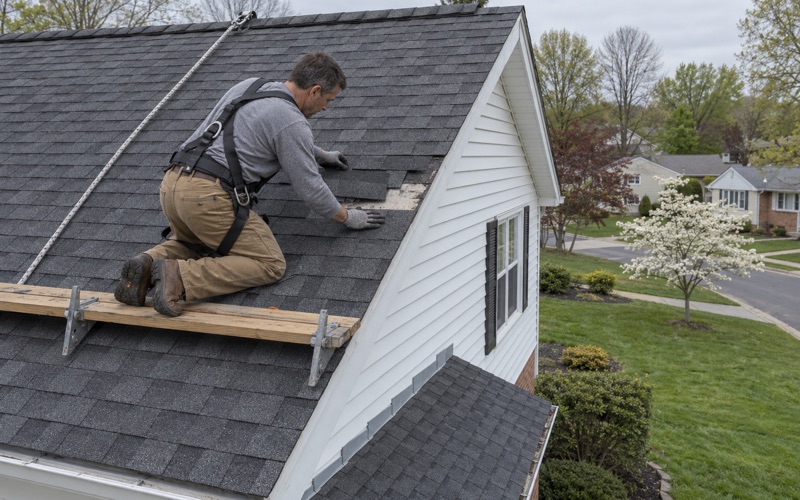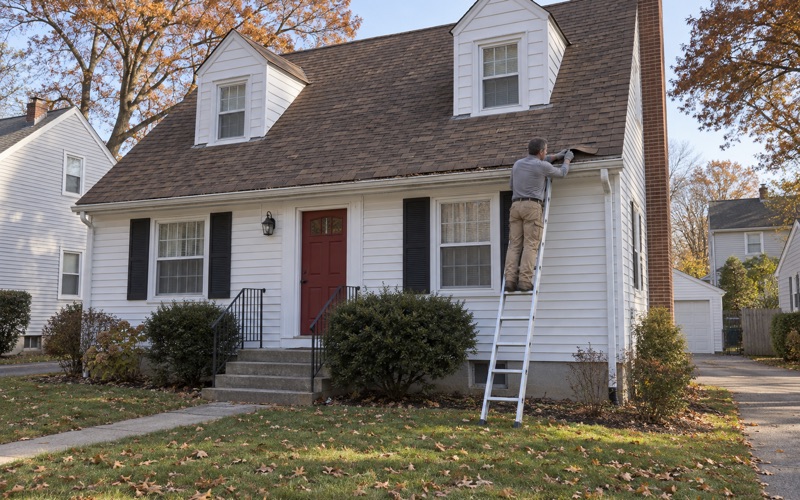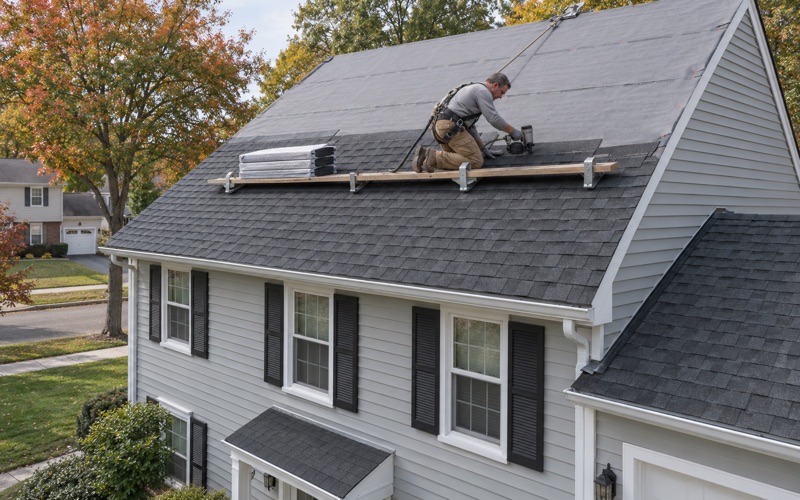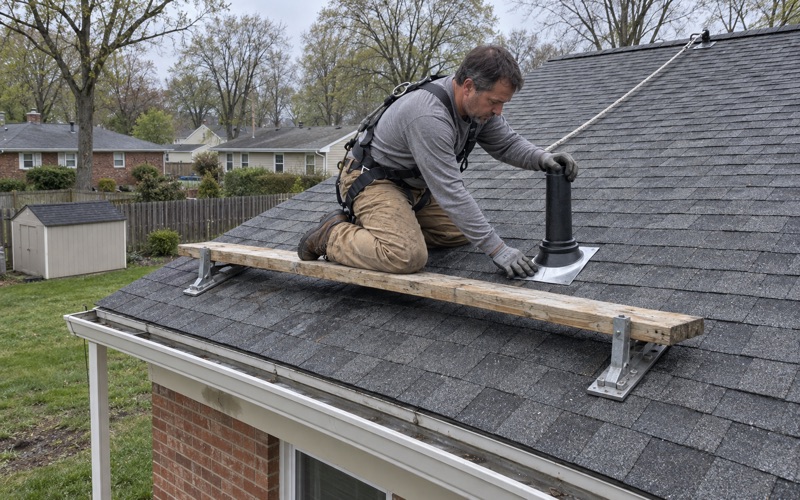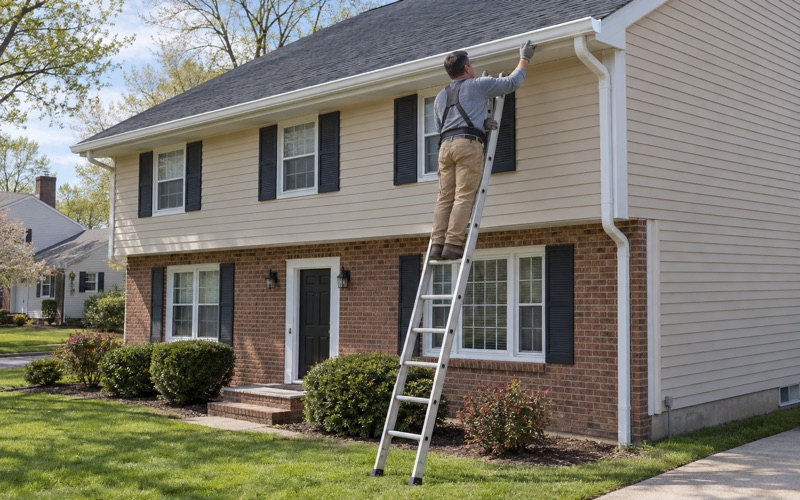
Hamilton Elite Roofing brings more than 20 years in the trade to roofing in Mount Holly, and every job starts the same way: we work out what the roof actually needs before anyone talks about price. On a leak call that means going into the attic as well as up on the roof, so the water is followed back to the spot where it really gets in.
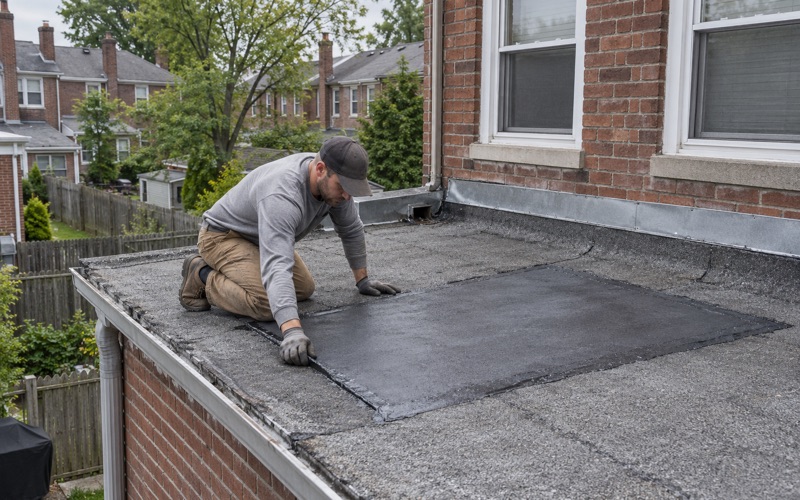
You also get a straight answer on whether the roof can be repaired. Replacement only comes up once repair has been honestly ruled out, and when it does, the written scope lists tear-off, decking, underlayment, flashing, ventilation and gutters as separate lines. Two estimates laid side by side can then be compared item by item instead of by a single total.
For a house inside the township’s historic district there is one more layer to plan around. Whether the roofing material changes, and whether the building looks different afterward, decides which review track the job falls on and whether a certificate of appropriateness enters the picture. We settle that question with you before a single bundle is ordered.
Mount Holly’s Historic District and Its Roof Rules
What the district takes in
The Mount Holly Historic District covers 260 acres around the 1796 Burlington County courthouse. It was entered on the National Register of Historic Places in 1973 and counts 39 contributing buildings. The 1972 nomination describes brick and frame houses dating from 1723 into the 1830s, with gabled roofs, box cornices, gabled and round-roofed dormers and inside end chimneys.
The courthouse itself carries a hip roof topped by an octagonal cupola, and the nomination also notes an 1865 Victorian home with a mansard roof. On Garden Street it lists one house with four gabled dormers and another with dormer windows lighting the attic. What the nomination does not record is roofing material, so what sits on any given house today is something we confirm in person.
Three tracks in the township code
The published township code, in a copy amended through 2014, sorts exterior roof work three ways. Repair or replacement using the same materials, where the architectural appearance of the building does not change, is exempt from Historic Preservation Commission review. Replacing the roofing material with one of a listed set of alternatives is treated as a minor project.
A minor project can be approved administratively. After reviewing a technically complete application, the commission chairperson may approve a certificate of appropriateness on what the code calls a fast-track basis, possibly on the written recommendation of the commission’s consultant and after a site inspection. Anything that changes the design of the building goes to the full commission instead.
Emergency repairs come first
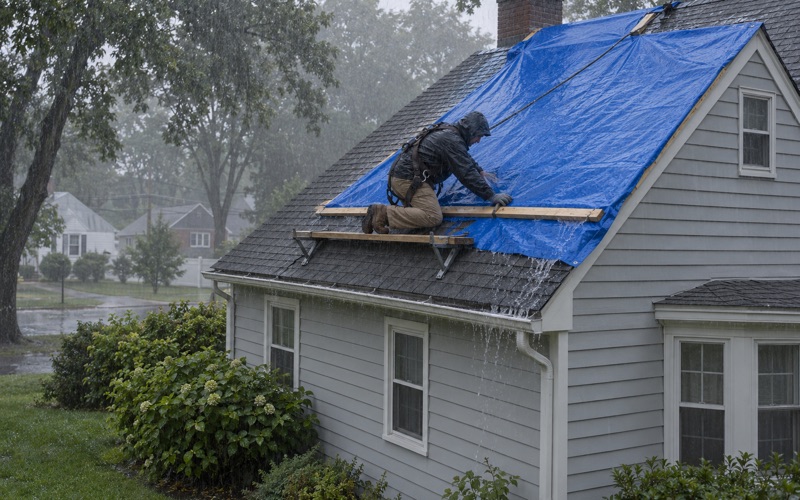
The code also says emergency repairs needed to keep a building habitable may be made without first obtaining review, with the application filed as soon as possible afterward. A tree limb through the roof or a storm-torn section does not have to wait on paperwork before it is dried in.
When we answer that kind of call, the damage is photographed and written up for your own insurance claim, and our crew will meet the adjuster on site if you ask. The temporary work stays temporary, so the permanent repair can still follow whichever track it belongs on.
Looking for roofing closer to Lumberton? See Roofing Services in Lumberton.
Same Material, Same Look: Work the Code Exempts
What like-for-like means on the roof
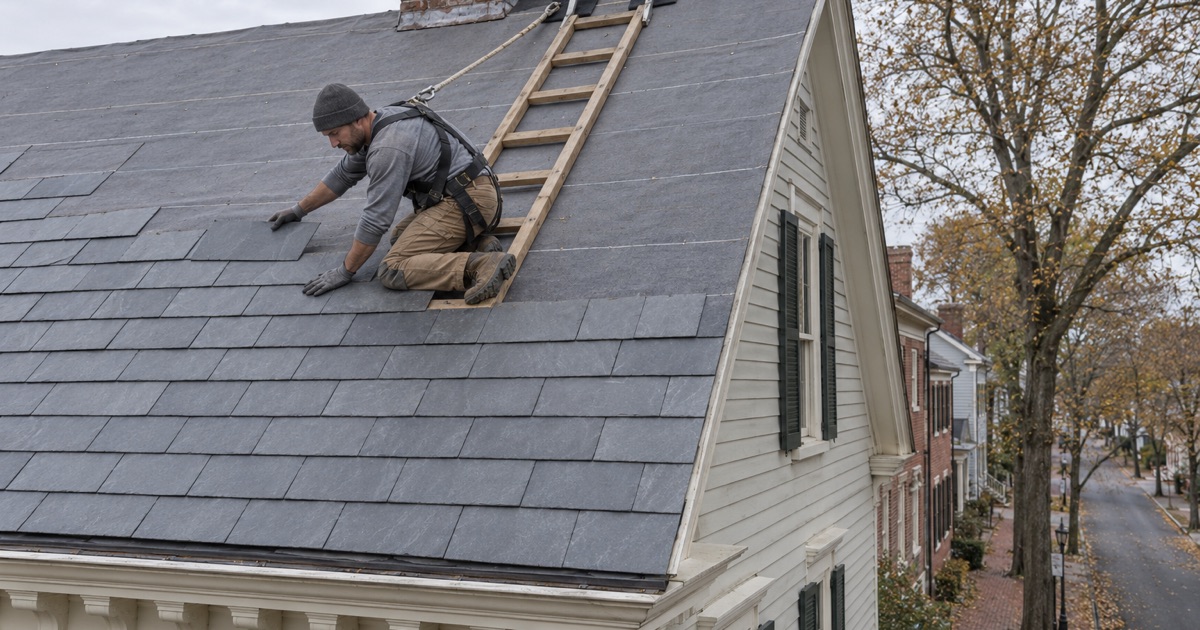
If the house wears architectural shingles today and gets architectural shingles of a similar color and profile, the material and the appearance both stay the same. That is the plainest case of work the code exempts from commission review. The same reasoning covers patching a slate roof with matching slate.
The gray areas are where the look shifts while the product name stays put. A much darker color, a heavier shadow line or new trim at the eaves can change how a building reads from the street. Where we see that risk, we flag it so you can ask the township before the order goes in rather than after.
Flashing, underlayment and other parts nobody sees
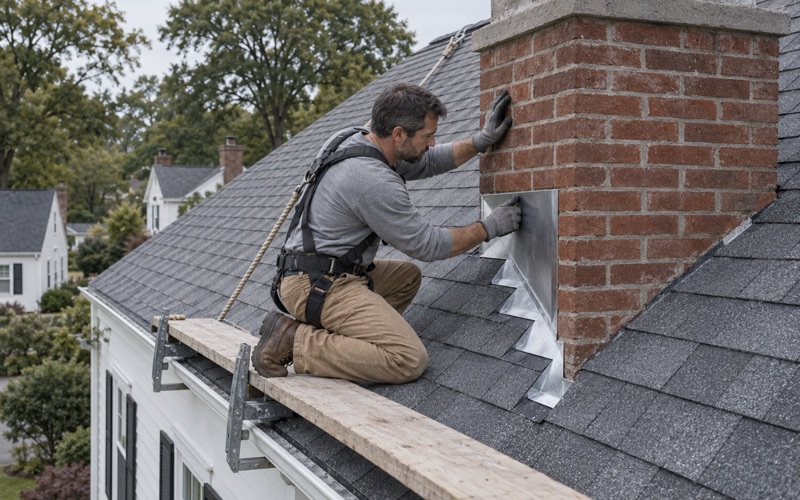
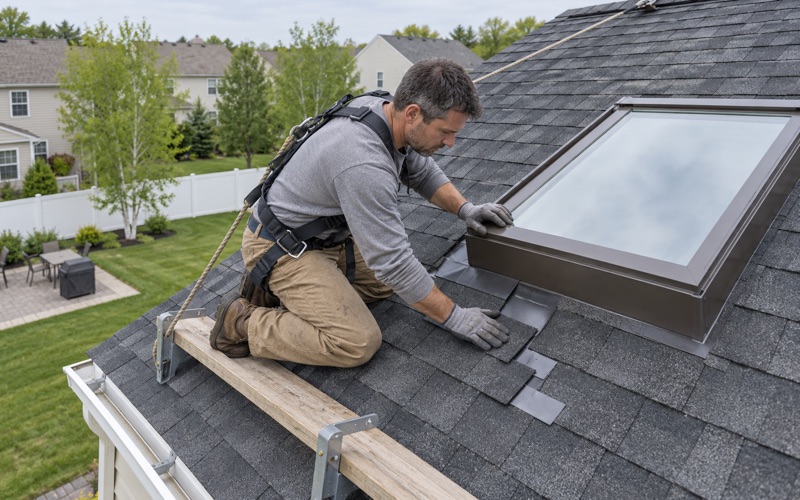
Much of what makes a new roof last never shows from the sidewalk. We replace step, counter and chimney flashing with the roof instead of reusing old metal under new material, and we lay self-adhering ice and water barrier rated to ASTM D1970 at eaves and valleys with synthetic underlayment rated to ASTM D8257 across the deck.
Attic ventilation gets checked on every replacement, because a roof that cannot breathe ages from underneath. Hidden fixes such as clearing blocked soffit intake change nothing visible. Adding a ridge vent alters the line of the ridge, though, so on a district house we treat it as a question for the township rather than a routine add-on.
Decking found once the old roof is off
On houses this old, the condition of the wood under the shingles is the real unknown. Damaged decking is photographed and shown to you before it is replaced, at a per-sheet price already written into the contract, so a soft spot found at tear-off does not turn into an open-ended charge.
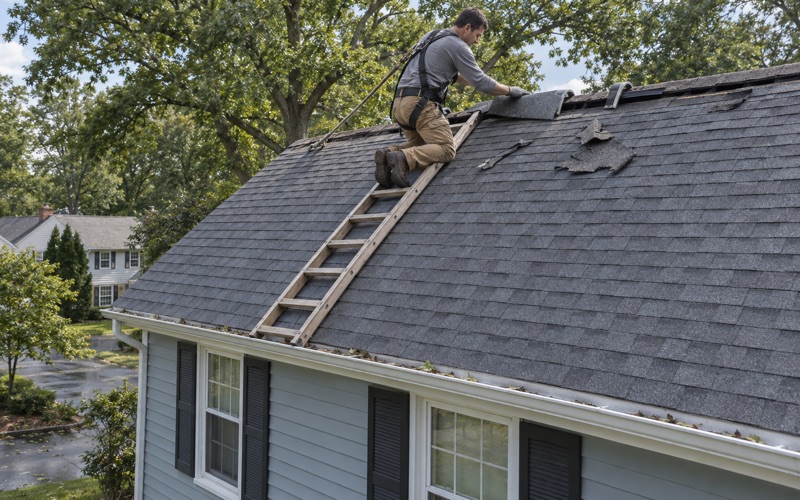
Tear-off is also where the building code steps in. A new covering cannot be laid over slate or over a roof that already has two or more layers, so those roofs come down to the deck. The box cornice and the dormer framing are checked while the deck is open.
Changing the Roofing Material on the Administrative Fast Track
The materials the code names
The code’s list of minor projects includes replacing any roofing material with architectural dimensional shingles, standing seam metal roofing, synthetic slate, real slate, synthetic cedar shakes, wood shakes or another material that would be architecturally appropriate for the building in question. Any of those is a candidate for the administrative route rather than a full hearing.
That list is broad, but it is not a blank check. As written, the chairperson still decides whether the choice suits that particular building, and a technically complete application is what starts the clock. Spec sheets, color samples and photos of the existing roof belong in it.
Choosing among them on an older house
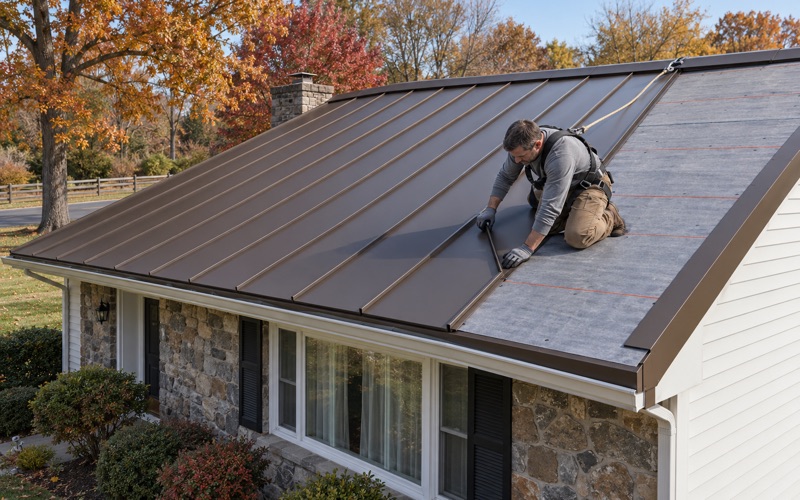
Standing seam metal runs in long vertical panels joined at upright seams over concealed fasteners, and it changes the texture of a roof more than any shingle does. Synthetic slate gives the look of slate at a fraction of the weight. Real slate is the choice when a house already has it, and we repair it with copper nails and slate hooks rather than tearing off sound stone.
Some of the town’s older houses still have slate overhead. A brick house on High Street was listed for sale with a slate roof, stained glass windows and a wraparound porch. For a house like that inside the district, matching what is there usually keeps the work on the simplest track, while a switch to another material is the kind of change the fast track was written for.
Cupolas, dormers, chimneys and gutters
Repairing or replacing existing roof structures such as cupolas, dormers and chimneys with the same materials, without altering the exterior appearance, is also listed as a minor project. So is replacing gutters and downspouts in a way that is architecturally appropriate for the building.
Chimneys deserve a careful look on the oldest houses. One owner on Garden Street has written that acid from coal heat eroded the brick chimney on his 1830 house until it collapsed with part of the wall sometime after 1911. We check the crown, cap and mortar joints, add a cricket behind chimneys wide enough to need one, and size and pitch gutters and leaders together with the roof.
Confirming the Process With the Township First
Where the commission stands
The machinery above is how the code is written; whether it is staffed right now is another matter. A Mount Holly Reporter editorial dated January 2, 2025 reported that the Historic Preservation Commission had no appointed members, and quoted a 2024 consultant report recommending that historic preservation be deleted from the township master plan.
The same editorial noted that the township’s permit application still refers to a certificate of appropriateness. We cannot tell you which way the process runs this month, and nobody should guess. Before you order a different roofing material for a district house, call the township and ask how a material change is being handled today.
What we put in your hands for that call
We give you a written scope that names the existing material, the proposed material, the color and profile, and any change to vents, gutters or trim. Photos of the current roof go with it. The application is yours to file, and a clear scope makes the question easy for the township to answer.
If the answer is that like-for-like work is the simpler path, we price that option too. Having both the matching replacement and the material change on paper lets you weigh cost against the time the review may take.
Contracts, timing and selling a home
Our contracts follow New Jersey’s home improvement rules, including the three-business-day cancellation notice. Material is ordered only after you have your answer from the township, so nothing arrives on site for a roof that may not be approved in that form.
If the house is going on the market, we can write a roof condition report for you to hand to the buyer’s inspector. Mount Holly also requires a certificate of approval from its Housing Code Enforcement Officer before a dwelling changes ownership or occupancy, and the property maintenance code it enforces expects a roof and flashing that are sound, tight and free of defects that admit rain.
- 20+ Years on the Roof
- Free Written Estimates
- NJ and PA Contracts