Hamilton Elite Roofing has spent more than 20 years on roofing in Middlesex and across central New Jersey, and our work here starts from a question most homeowners never ask out loud: is this roof actually in good repair? We answer it from the attic as well as from the shingles, tracing any leak to where the water really gets in before a price is written. Only then do we talk about what the roof needs.
Most of the calls we take are not about a roof at the end of its life. They are about a drip over a bedroom window, a gutter pulling away from the fascia, a leader that empties against the foundation, or a soft spot at the eave. Each of those is a defect with a specific cause, and each one can usually be fixed without tearing out anything that still works.
When a repair is the right answer, we say so plainly, and replacement does not come up until that question is settled. When replacement is the honest answer, the written scope breaks the job into separate lines you can hold against any other estimate. Either way, we treat the roof, the gutters and the leaders as one system, because that is how water moves off a house.
A Borough Code That Puts the Roof and Gutters in One Sentence
Middlesex’s 1979 Property Maintenance Code
Middlesex has its own property maintenance code, separate from the state construction code that governs how new work is built. Adopted on December 27, 1979 as Ord. No. 844, its Use and Care Standards are known as the Property Maintenance Code of the Borough. The article is about keeping existing buildings sound over time, not about approving anything new.
That distinction matters when you plan roof work. The code is a maintenance standard rather than a permit rule, so it does not tell you when to replace a roof or which material to choose. It describes the condition a house is expected to stay in, year after year, whoever happens to live there.
Roof, Gutters and Leaders in the Same Line
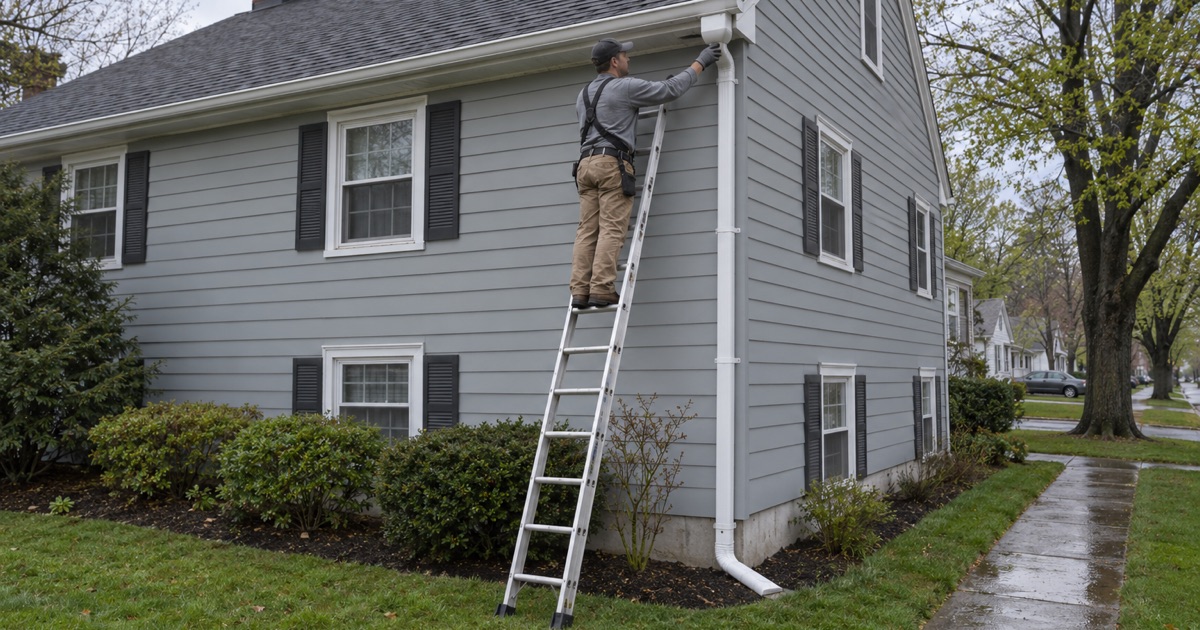
The key line is short: “Exterior walls, sidings, gutters and leaders and roof shall be kept structurally sound, in good repair and free from defects.” The borough did not write one rule for drainage and another for shingles. Gutters and leaders sit in the same sentence as the roof, and we think that is the right way to look at a house.
A roof sheds water only as far as the eave. From there the gutter has to catch it, carry it at the right pitch and hand it to a leader that moves it away from the walls. A sound roof over a sagging gutter still soaks the fascia, and a new gutter hung on rotted fascia will not stay level for long.
Why We Plan Them Together
We size and pitch seamless aluminum gutters and leaders as part of the roof plan rather than leaving them for a later visit. On a replacement, the gutter line, the drip edge at the eaves and the fascia behind them are checked in the same walk-through as the decking and the flashing. On a repair, we follow the water after it leaves the shingles, because that is often where the damage actually shows.
Leaders matter as much as the gutter they hang from. The borough’s sewer use regulations bar roof drainage from being discharged to the sanitary sewer, so a leader should never be tied into a cleanout or floor drain. We look at where each leader empties and whether the ground there carries water away from the foundation.
Looking for roofing closer to Aberdeen? See Roofing in Aberdeen.
What “Free From Defects” Means on a Roof
Deterioration, as the Code Defines It
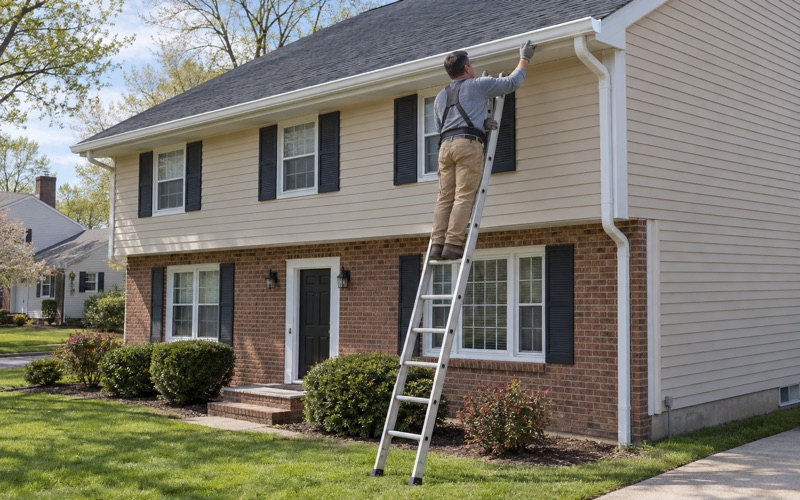
The code gives decay a concrete meaning. It defines deterioration as holes, breaks, rot, crumbling, cracking, peeling, rusting or other evidence of physical decay or neglect. That list reads almost like a roofer’s inspection sheet, and most of it can be found in a single afternoon on a ladder.
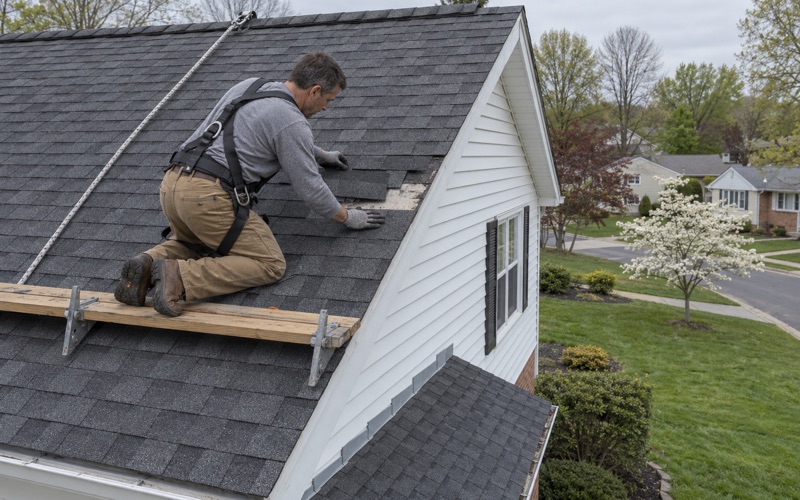
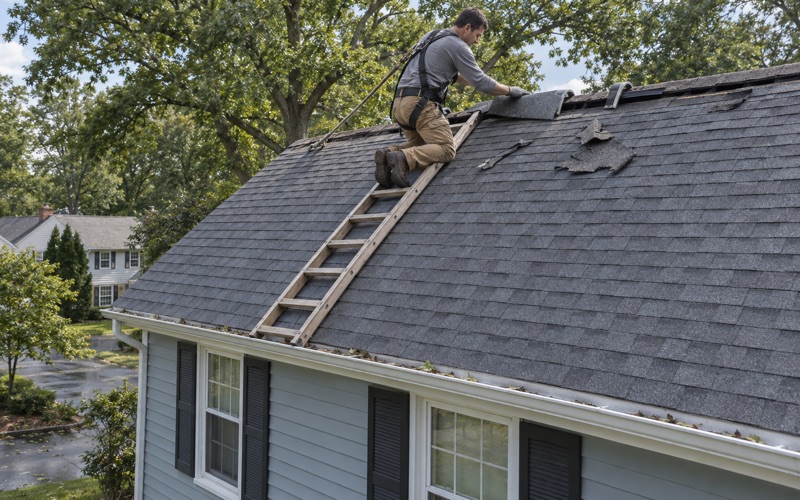
On a shingle roof, cracking and breaks show up as split tabs, lifted edges and shingles missing after a wind event. Rusting shows up on old step flashing, valley metal and exposed nail heads along the ridge. Rot usually stays hidden until someone presses on the fascia or the first course of decking at the eave and feels it give.
Where Defects Hide on a Typical House
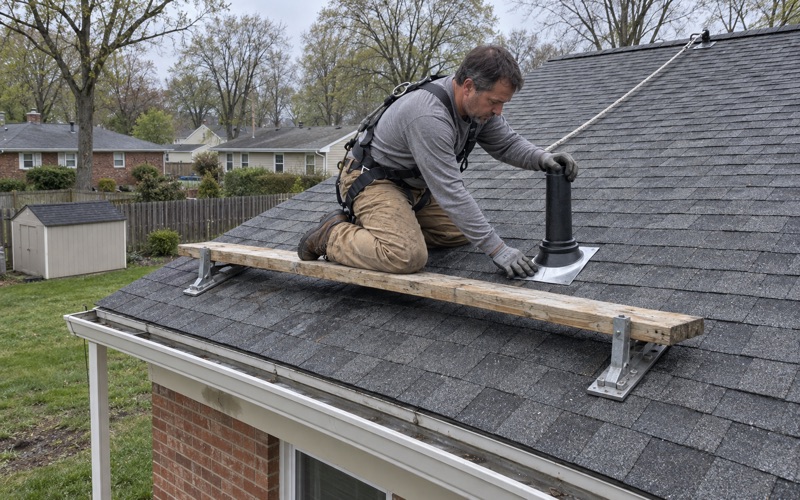
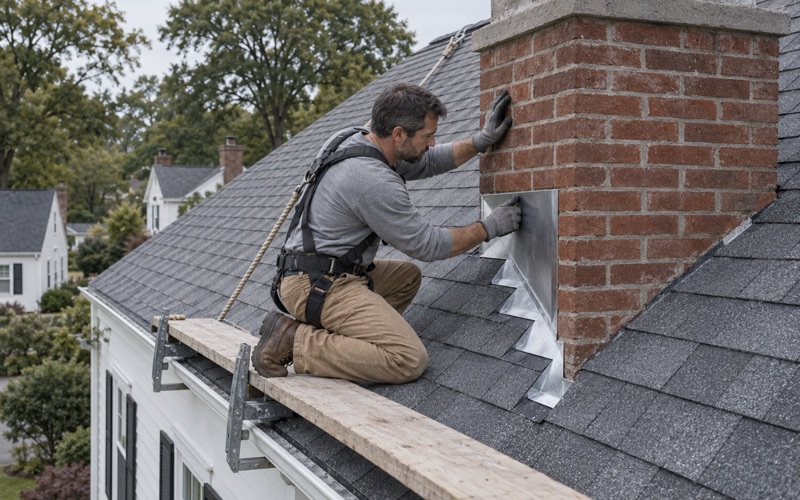
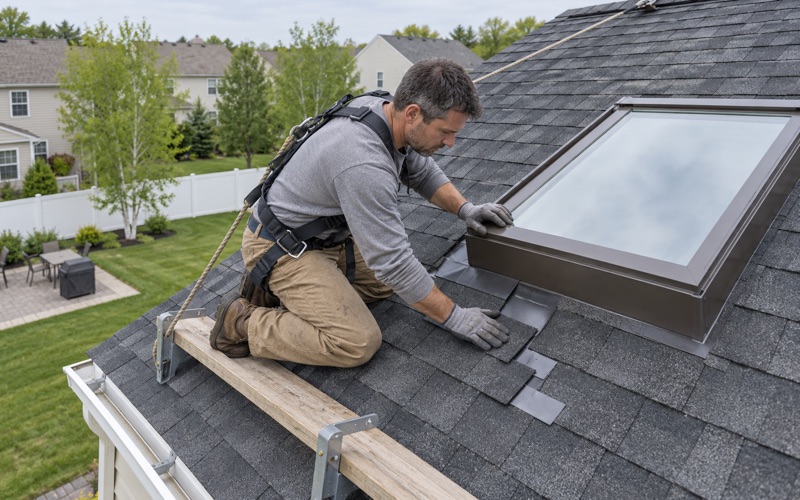
The places that fail first are rarely the open field of shingles. They are the joints: the step flashing where a roof meets a sidewall, the counter flashing at a chimney, the pipe boots around plumbing vents and the apron flashing where a lower roof meets a wall. Rubber pipe boots crack in the sun long before the shingles around them wear out.
Gutters and leaders have their own list. Seams separate, hangers loosen, and a gutter pitched the wrong way holds standing water against the fascia board until it softens. A leader that is crushed or disconnected at the bottom empties a whole roof section onto one spot beside the foundation.
Looking From the Attic as Well as the Roof
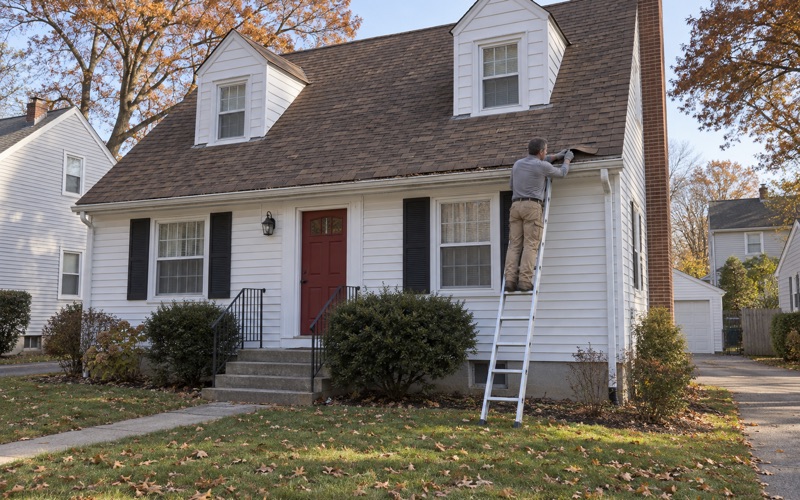
Many defects are easier to see from inside. Daylight around a vent pipe, a dark ring on the underside of the decking or a damp patch in the insulation tells us where water is entering, which can be several feet from where the ceiling stain appears. We go into the attic on every leak call so the repair lands where the water actually starts.
The attic also tells us whether the roof can breathe. A roof with blocked soffit intake or too little ridge vent ages from underneath, with the decking and shingles baking in summer and holding moisture in winter. That is why we check ventilation on every replacement we write.
A Duty for the Family House, Not Only the Rental
Owners and Occupants Share the Standard
The borough code says that owners, operators and occupants share the duties and responsibilities it sets. It does not carve out the owner-occupied home. In Middlesex that is most of the housing: 4,227 of 5,718 occupied homes, or 73.9 percent, are lived in by their owners, according to Census figures.
So the standard is not mainly a landlord’s concern. It applies to the detached house a family lives in exactly as it applies to a two-family house with a tenant upstairs. A known leak, a sagging gutter or a rotted stretch of fascia is a borough maintenance matter under that sentence, not a matter of taste.
Rental Units and Landlord Registration
Rental property carries a separate chapter as well. The borough’s landlord registration rules bar occupancy of any rental unit that is not registered, and that chapter refers back to the Property Maintenance Code. For an owner who rents out a unit, the roof and drainage standard sits alongside the registration requirement.
We do not speak for the borough on how its code is applied, and we will not guess. What we can do is bring the roof, the gutters and the leaders into good repair and hand you a written scope that records what we found and what we did.
Attached Homes and Shared Walls
Not every home in the borough stands alone; Census counts show 542 attached single-family units. On those roofs, work on one side affects the flashing and drainage of the neighbor’s side, so we plan around the shared wall and the adjoining roof from the start. Where an association may hold the roof, we check its documents before any estimate is written.
Most owner-occupied homes here are detached, with 3,740 owner-occupied detached houses in the Census count, and for those a roof decision is the household’s own. The attached units are different because one roof line serves more than one household. A leak at the party wall can come from either side, so we look at both before we price a repair on one.
Fixing Defects Before They Become a Maintenance Issue
Repair First, When Repair Is Honest
The code sets no replacement schedule, and neither do we. A roof with a cracked pipe boot, a few blown shingles and a loose gutter run is a repair, and we will tell you that before replacement is mentioned. Small defects handled early are what keep a roof structurally sound for its full service life.
A repair is also where the code sentence does the most practical good. Resetting a loose gutter, replacing a cracked boot or swapping a rotted length of fascia keeps the house in good repair without committing to a full roof, and it buys time to plan a replacement on your schedule instead of after the next storm.
When the decking under the shingles is soft across a wide area, or the shingles are cracking and shedding granules everywhere, patching stops making sense. At that point we explain why, show you what we found, and write the replacement as an itemized scope.
What an Itemized Scope Looks Like
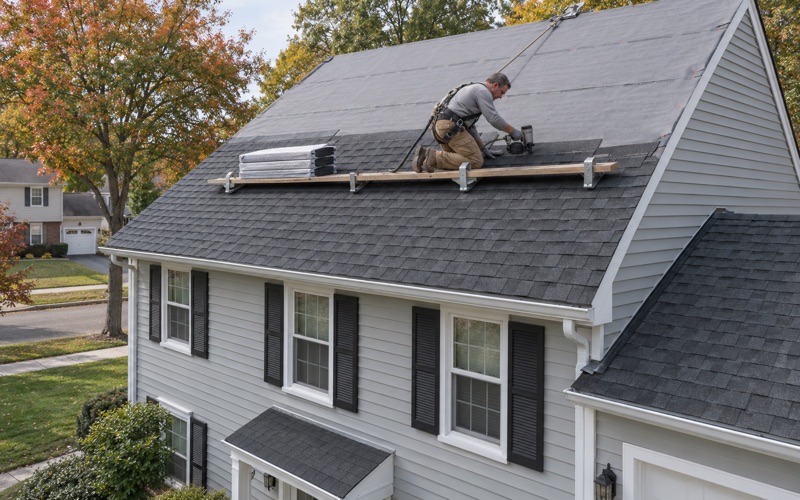
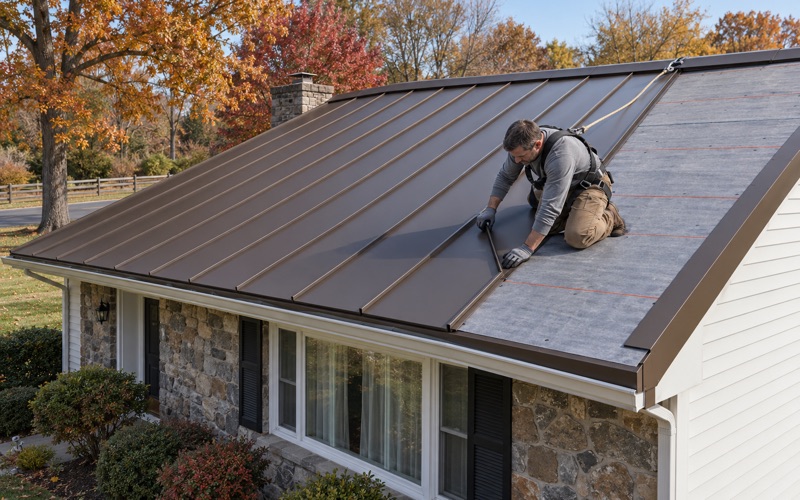
Our written scopes list tear-off, decking, underlayment, flashing, ventilation and gutters as separate lines. That lets you compare two estimates item by item instead of total against total. If damaged decking turns up once the old roof is off, we photograph it and show you before any sheet is replaced, at a per-sheet price already set in the contract.
Step, counter and chimney flashing is replaced with a new roof rather than reused under fresh shingles, since old metal is where rust and cracking start. Our contracts follow New Jersey’s home improvement rules, including the three-day cancellation notice.
Storms, Claims and the End of Each Work Day
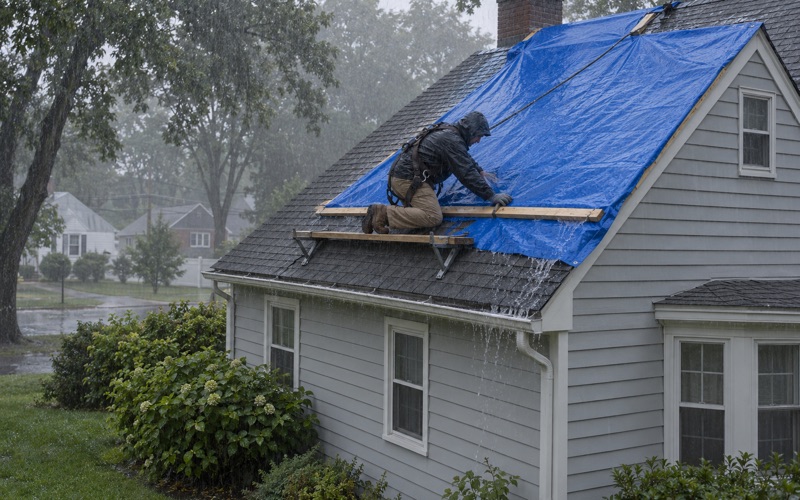
Middlesex sits in National Weather Service forecast zone NJZ012, covered by the Mount Holly office, and the borough police relay severe thunderstorm warnings to residents. A warning relayed on July 3, 2026 forecast 70 mph gusts with damage likely to roofs; that was a forecast, not a damage report, but it shows why a lifted shingle should not wait. After a storm, we photograph the damage and write it up for your own claim, and we will meet the adjuster on site when you ask.
Every work day ends with the driveway, yard and gutters cleaned, including a magnet sweep for roofing nails. A roof that has just been brought back into good repair should not leave a hazard in the lawn or a gutter full of debris behind it.
- 20+ Years on the Roof
- Free Written Estimates
- NJ and PA Contracts