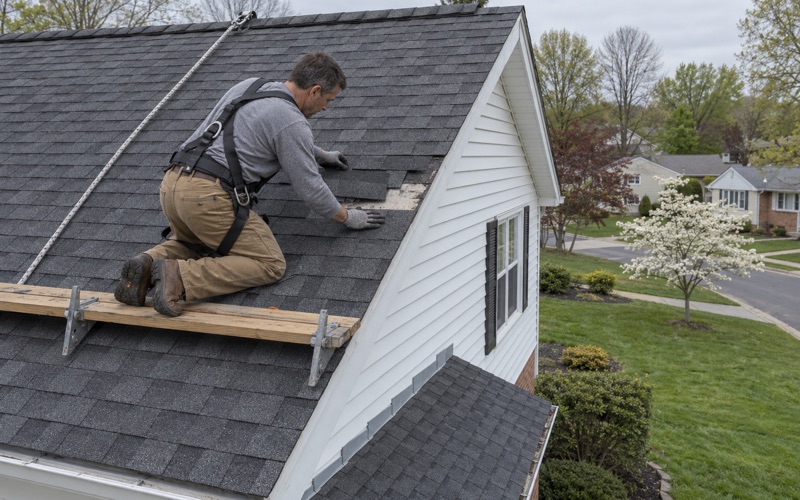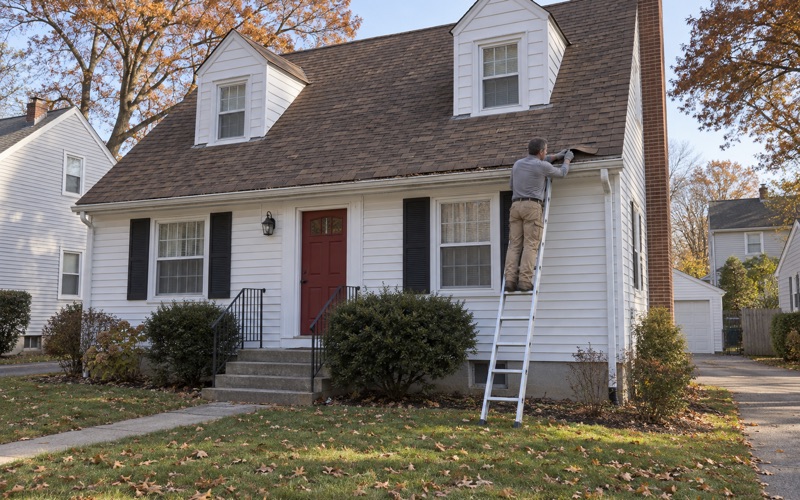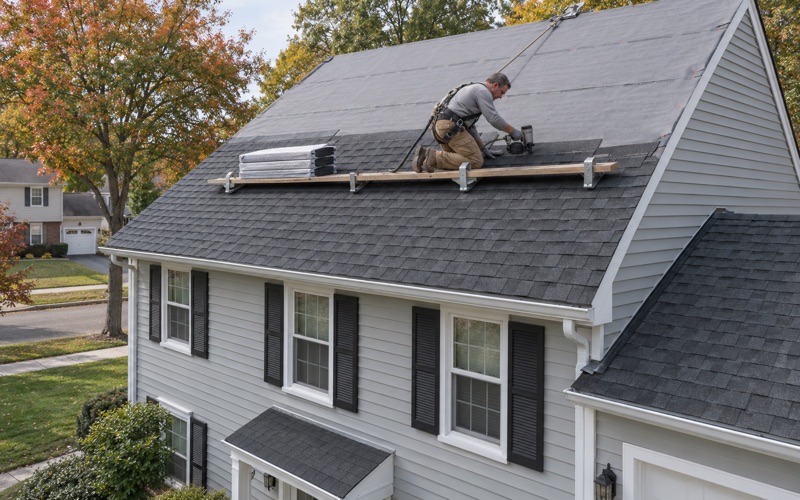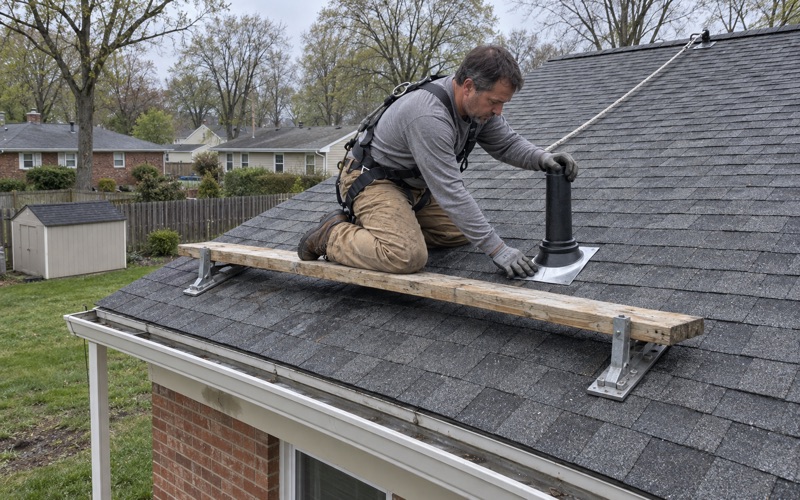
Hamilton Elite Roofing has spent more than 20 years on roofing in Manville and across central New Jersey, and the first question we ask on an older house here is not about shingle color. It is about what the roof is made of, layer by layer, before anyone pulls a single course off. That question matters more in this borough than almost anywhere else we work, and this page explains why.
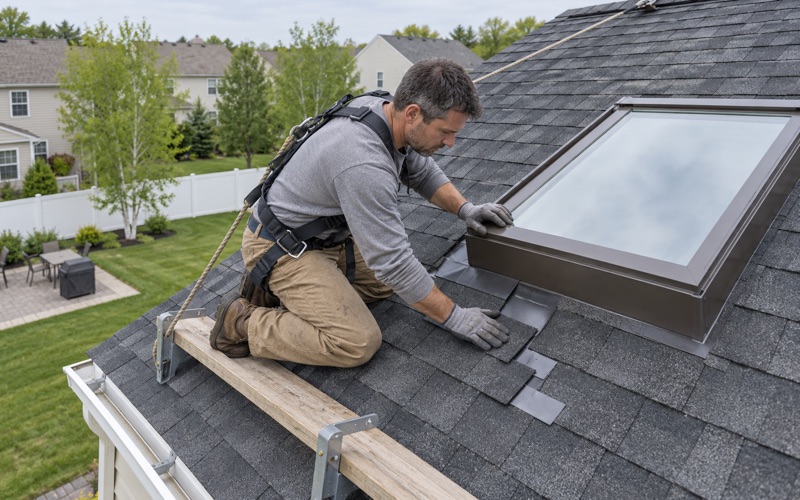
Most of what we do here is ordinary roof work: leaks, worn shingles, failed flashing, tired gutters. Every leak call starts with a look in the attic as well as up on the roof, so we find where water actually gets in before we put a number on anything. If the roof can be repaired, we say so plainly, and replacement only comes up when repair would mean spending money on a covering that is finished.
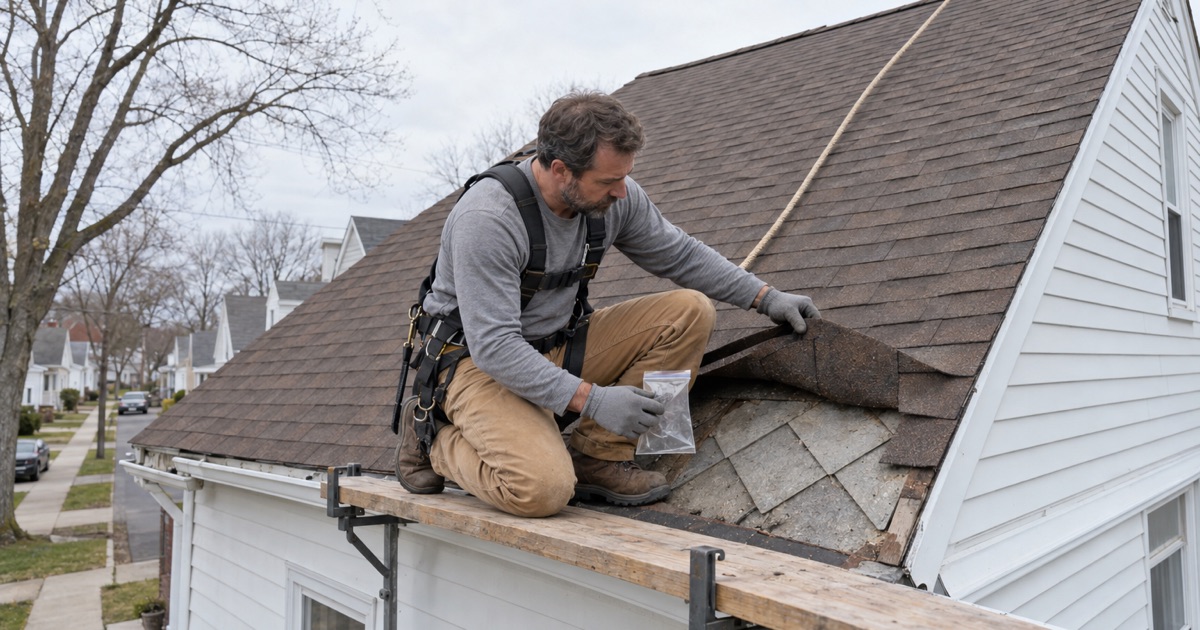
When a tear-off is the right call, the plan for an older house includes one extra step: deciding whether the old material should be sampled and sent to a lab first. We do not test or remove asbestos ourselves, and we will not guess at what is on your house. What we do is build that decision into the schedule, so it is made calmly at the estimate rather than in a hurry on the morning the crew arrives.
A Borough That Grew Up Beside the Johns-Manville Plant
Named for the company in 1929
Manville’s own borough history is direct about its origin. The Johns-Manville Products Corporation, which that history calls the world’s largest producer of asbestos, chose this spot for its plant because of the nearby waterways, railroads and highways. Homes and stores went up quickly in the areas next to the plant, and when a 1929 referendum created the borough, it was named officially after the company.
That history is not a footnote for a roofer. Much of the housing here was built during the decades when the plant was the reason the town existed, and when asbestos was a common ingredient in building products sold across the country. When we quote a re-roof on one of those houses, the year it was built is the first thing we ask about.
What the plant made, and what that does not prove
A history of the plant says it ran from 1912 until the mid-1980s and produced asbestos insulation, roofing materials, brake linings and textiles. Residents living near it also reported asbestos dust settling on their homes like snow. That history comes from a secondary source rather than the company’s own records, so we treat the product list as supported, not settled.
None of that tells us what is on any particular roof. No source we have read says Manville houses carry asbestos roofing, and no survey of the borough’s roofs exists. A shingle three blocks from the old plant site may be an ordinary asphalt product from any manufacturer. The honest position is that the age of the house raises the question, and only a lab can answer it.
A housing stock that mostly predates 1960
Census estimates count 4,639 housing units in Manville, and 2,828 of them were built before 1960. The largest single group, 1,215 units, dates from the 1950s, with another 848 built in 1939 or earlier. The original roof from those years is long gone on most houses, but an older layer sometimes remains under a newer one, and siding from the same era is often still in place right below the roofline.
Looking for roofing closer to Highland Park? See Roofing Services in Highland Park.
Roofing Materials From the Asbestos Era
Shingles, felts and roll roofing
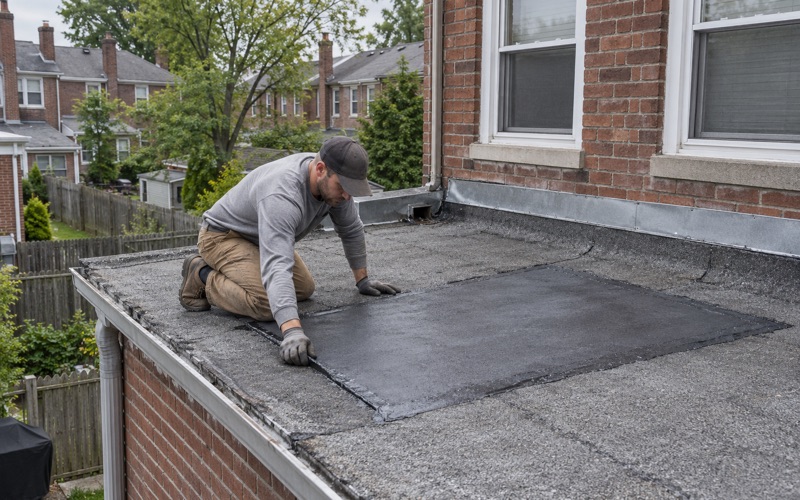
Through much of the twentieth century, asbestos was mixed into a range of roofing products: some asphalt shingles, saturated felts used as underlayment, roll roofing on porches and low-slope additions, and cement-based shingles that look nothing like asphalt. Federal rules name asphalt roofing products containing more than 1 percent asbestos as their own category of nonfriable material.
Nonfriable means the material, intact, does not crumble to powder under hand pressure. Tearing it off, cutting it or grinding it is a different matter, and that is the moment the question stops being academic. Old felt in particular tends to tear and flake as it comes up, which is why we look at it closely before the dumpster arrives.
Layers we find under newer roofs
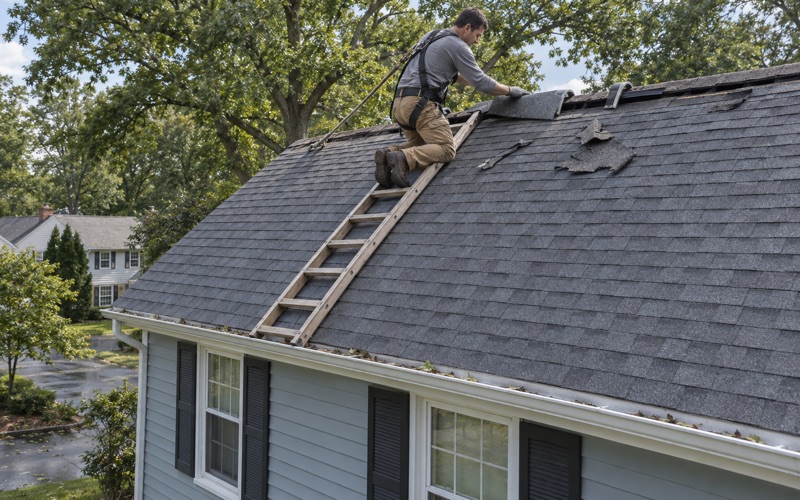
On older houses we regularly open a roof and find more than one covering underneath. A 1990s architectural shingle may sit over a three-tab from decades earlier, which sits over felt laid when the house was framed. Each layer is its own question, and the top one tells you nothing about the ones below it.
Our written scopes list tear-off, decking, underlayment, flashing, ventilation and gutters as separate lines, and on an older Manville house we note how many layers we expect to remove and what we know or do not know about each one. Two estimates can then be compared on the same terms. If another contractor’s quote is silent on the lower layers, that silence is worth asking about.
Siding and trim at the roof edge
Roof work touches more than the roof. Drip edge, fascia and the top course of siding all get disturbed during a tear-off, and cement-based siding shingles were sold in the same decades many of these houses were built. Painted trim on a pre-1978 house also brings the EPA lead-safe rule into the job, which we plan for separately from any asbestos question.
Sampling an Old Roof Before Tear-Off
Why only a lab can tell
There is no way to identify asbestos by looking at a shingle, smelling it or checking its weight. Under the federal rules, the asbestos content of a roofing product is determined by polarized light microscopy, a laboratory method that examines a small piece of the material. A visual inspection, ours or anyone else’s, is a guess.
That is why we do not offer an opinion on whether your roof contains asbestos. We can tell you how old a layer appears to be, what kind of product it looks like and where a sample could be taken, but the answer comes from the lab report. Owners sometimes ask us to break off a corner and judge it by feel, and we decline for the same reason.
When we recommend a sample
We suggest sampling when a house predates 1960 and an original or early layer is still in place, when we find cement-based shingles or old roll roofing, or when the owner simply wants to know before committing to a tear-off. On a house that has clearly been stripped to the deck in recent decades, the question usually does not arise. We would rather raise the question at the kitchen table than have the crew raise it from the roof.
The sample is taken and analyzed by people who do that work, not by our crew. We schedule around the result, so the tear-off date is set once the owner has an answer in hand. If the report comes back clean, the job proceeds exactly as written, with no change to the scope or the price.
What changes if a result comes back positive
A positive result changes who removes that layer and how, and that decision belongs to the owner working with a qualified asbestos professional. We do not quote removal of asbestos material and do not tell owners what the rules require for it, because that is outside our work.
Once the material is dealt with, we pick up the job from the deck. Any damaged decking is photographed and shown to you before it is replaced, at the per-sheet price written into the contract, and the new roof goes on over sound wood. Underlayment, drip edge and ventilation then go on exactly as the scope lists them.
Federal Asbestos Rules and Two-Family Houses Near the Old Plant
What the federal rule covers
The federal asbestos rules for demolition and renovation apply to what they call a facility, and the definition expressly excludes residential buildings having four or fewer dwelling units. A detached house, a twin or a two-family home in Manville falls outside that definition. The same definition takes in larger residential buildings, including condominiums, so the line falls at five units.
That exclusion is a statement about one federal rule and nothing more. It does not mean no other rule applies to removing old roofing, and we never tell an owner that it does. What it does mean is that this federal rule does not make the sampling decision for you on a house this size, so the choice rests with you and with us.
Two-family houses and the owner’s decision
Manville has a large share of two-unit buildings: 1,122 of its housing units sit in two-unit structures, alongside 2,992 detached units. Of the occupied units in those two-unit buildings, about half are owner-occupied. Where an owner lives in one unit and rents the other, a tear-off affects two households for the length of the job.
We talk through sampling with the owner before the contract is signed, and the contract itself follows New Jersey’s home improvement rules, including the three-day cancellation notice. If the owner wants a sample, the schedule says so in writing. For a house being sold, we can also give the seller a written roof condition report that notes what is known and unknown about the older layers, for the buyer’s inspector to read.
Working on older blocks near the former plant
Residential development grew up right beside the plant, and on older, closely built blocks there can be little room for a dumpster and a material drop. We plan staging with the neighbors in mind, keep debris contained, and clean the driveway, yard and gutters at the end of every work day, finishing with a magnet sweep for nails. If a dumpster cannot fit, we plan smaller loads hauled off through the day instead.
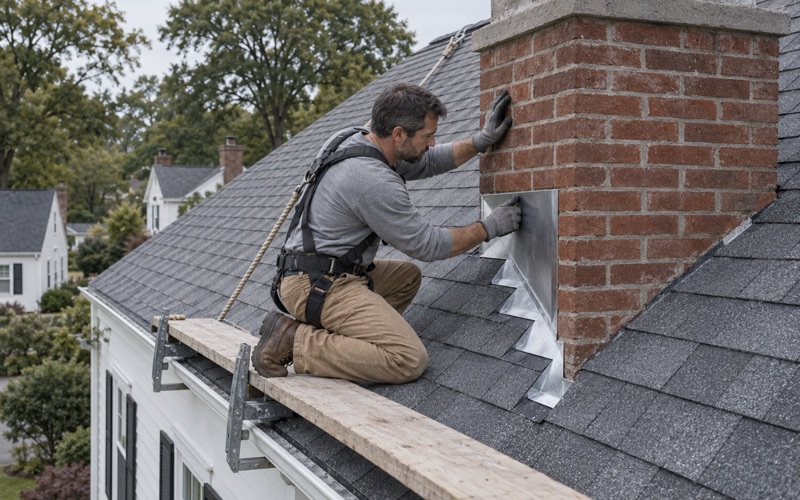
Step, counter and chimney flashing comes off with the old roof and is replaced rather than reused, and we check attic ventilation on every replacement, since a roof over an attic with no intake ages from underneath. An older Manville house deserves a new roof built as a whole system, starting from an honest answer about what came off the old one.
- 20+ Years on the Roof
- Free Written Estimates
- NJ and PA Contracts