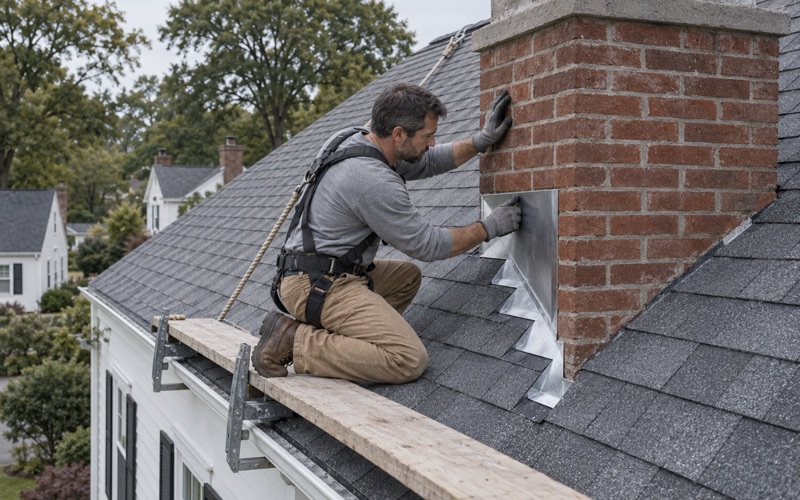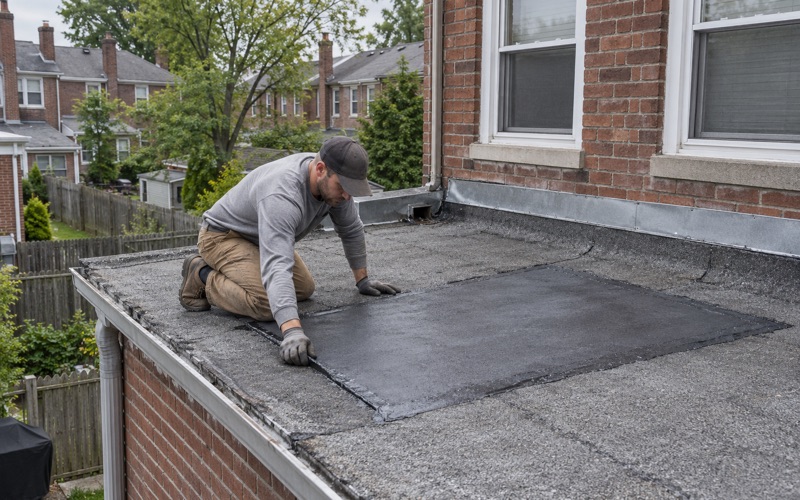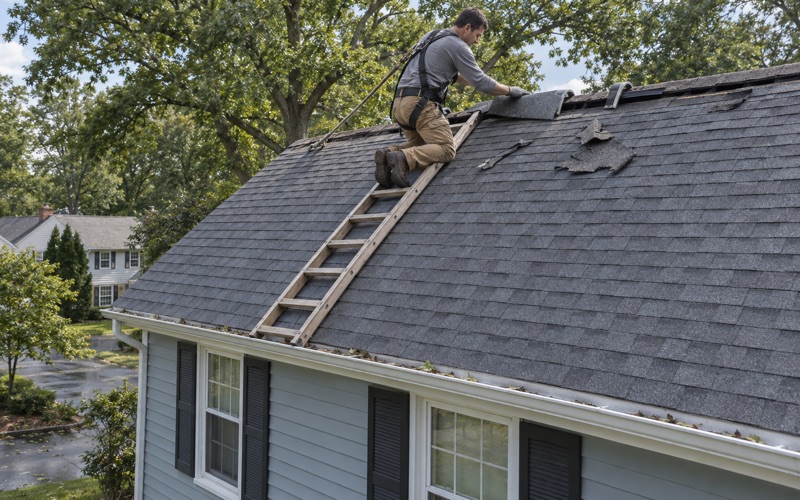
Hamilton Elite Roofing has spent more than 20 years on roofing in Lumberton and the rest of our service area, and the jobs here keep teaching us the same lesson: a roof is only half of a drainage system. Shingles shed water, but the gutters, downspouts and leaders decide where that water goes next. When a storm drops more rain than they can carry, the overflow finds the fascia, the siding and the foundation long before it finds a weak spot in the shingles.
So when we look at a house, we look at the whole path. A leak call gets a trip into the attic as well as onto the roof, so we can trace the water to the place it actually enters before we price anything. If the roof can be repaired, we say so plainly, and replacement only comes up when a repair would not hold.
Our written scopes break the job into separate lines for tear-off, decking, underlayment, flashing, ventilation and gutters. That lets a homeowner set our number beside another contractor’s and see exactly where the two differ, including whether the gutters were part of the plan or an afterthought.
Rancocas Creek Downpours and What They Ask of a Roof
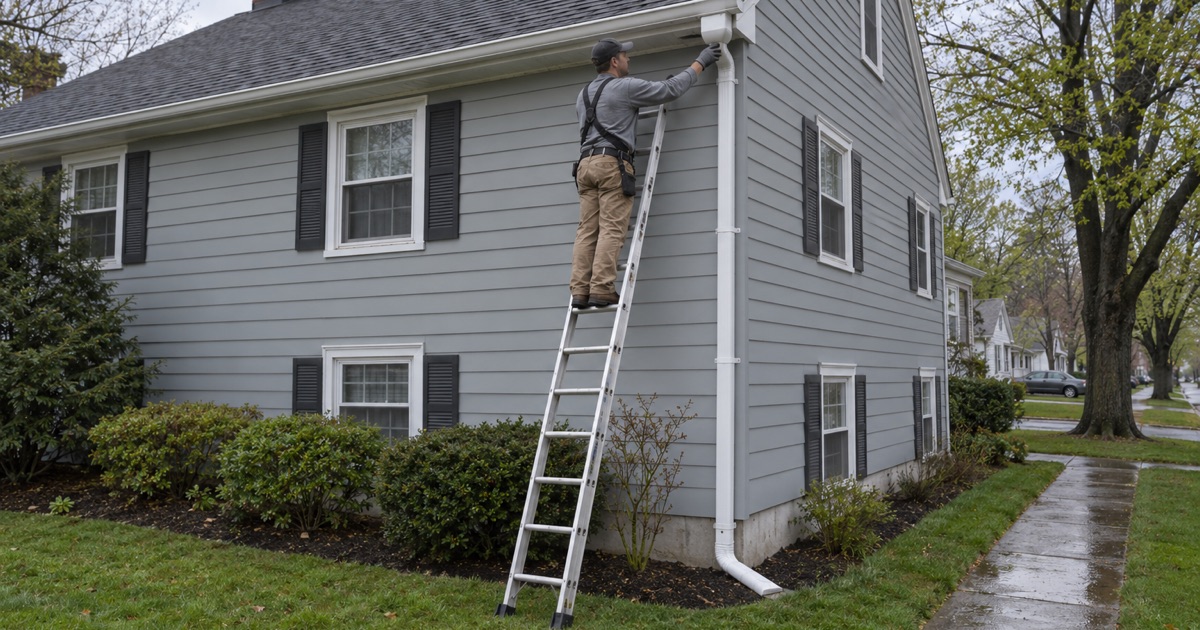
Lumberton Township sits on the Rancocas Creek in Burlington County, inside a basin that has shown more than once how fast rain can arrive. The roofs here are not unusual. What is unusual is the record of cloudbursts in the surrounding watershed, and that record is worth knowing before deciding what a gutter system needs to handle.
The July 2004 storm in the basin
On July 12 and 13, 2004, a USGS rain gage in the Rancocas basin, most likely the one at New Lisbon in Pemberton Township, recorded 5.19 inches in a single hour and 8.77 inches over four hours. The National Weather Service office in Mount Holly measured about 13 inches at Tabernacle and described the storm as a one-in-one-thousand-year event. Across Burlington County, 44 dams failed or were damaged.
Dam failures and stream flooding destroyed seven homes across Lumberton and Southampton Townships combined, and flood damage reached about 1,000 homes in total. Those numbers describe a flood rather than a roof failure, but they show how much water this basin can produce in an evening.
June 2019 on Main Street
The creek came up again on June 20, 2019. The next day, residents along Main Street were pumping out basements, a county engineer checked the Main Street bridge before it reopened, and a downed tree blocked Church Street. One resident told reporters it was not as bad as 2004, which says something about the scale of that earlier storm.
No source we know of records a roof or gutter failure in either event, and we will not pretend otherwise. The point is narrower: in a town where basements already take water when the creek rises, roof runoff dumped beside the foundation only adds to the load.
Why rain intensity matters more than totals
A gutter does not care how much rain falls in a day. It cares how much falls in the worst few minutes. A steady inch spread across an afternoon drains without trouble, while the same inch in a short burst can fill a trough faster than its outlets can empty it.
That is why we size gutters and downspouts for the hard bursts rather than the average shower, and why we treat them as part of the roof rather than a separate trade bolted on at the end.
Looking for roofing closer to Upper Southampton? See Upper Southampton Roofing.
Gutters and Downspouts Built for a Cloudburst
Most gutter problems we find come down to three things: the trough is too small for the roof area feeding it, there are too few downspouts, or the pitch carries water away from an outlet instead of toward it. Any one of these can look fine on a dry day and fail in the first heavy storm.
Matching gutter size to the roof above it
A long, steep roof plane collects more water than a short, shallow one, and a valley can concentrate the runoff from two planes into one short run of gutter. We measure each plane and look at where the valleys empty before choosing between a standard and an oversized seamless aluminum gutter.
Seamless aluminum gutters and leaders are formed on site to the length of each run, which removes the joints where sectional systems tend to drip. Fewer seams also means fewer places for leaves and grit to snag and start a clog.
Enough outlets, and the right pitch
A single downspout at the end of a long run forces all of that water to travel the whole length before it can leave. Adding an outlet near the middle, or near the point where a valley empties, cuts the distance and keeps the trough from backing up when rain comes in sheets.
Pitch is the quiet part of the job. A gutter hung dead level, or sagging between hangers, holds standing water that rots the board behind it. We set a steady fall toward each outlet and fasten the hangers into solid backing so the line holds under a full load.
Drip edge and the joint between roof and gutter
The drip edge at the eave carries water off the shingles and into the gutter instead of letting it wick back onto the fascia. On a replacement we install new drip edge at eaves and rakes rather than reusing old metal, and we set the gutter so the drip edge lands inside it.
Rotted fascia found behind an old gutter is replaced before the new gutter goes up, because a hanger is only as strong as the board it screws into. We show the owner the damaged section and write the replacement as its own line.
When a roof is replaced, we treat the gutters the same way we treat the flashing: as part of the system, checked and sized with it. If the existing gutters are sound and properly sized, we say so and leave them alone.
Clogged Outlets, Overflow and Where the Leaders Let Water Out
Even a well-sized gutter overflows when its outlet is plugged. And even a clear gutter can cause trouble if its leaders empty right beside the foundation. Both problems show up at the edges of a house long before anyone sees a stain on a ceiling.
How overflow damages fascia and soffit
When water spills over the back edge of a gutter, it runs down the fascia board and into the soffit. Painted wood fascia soaks it up, the paint blisters, and the board softens until the hangers lose their grip. On older homes with painted trim, that repair also has to follow the EPA lead-safe rules for pre-1978 houses.
We look for the signs: peeling paint just under the gutter line, dark streaks on the siding, a gutter pulling away at one end, and soil washed out in a line beneath the eave. Each one points to water leaving the gutter where it should not.
Gutter guards and leaf load
Gutter guards help on a house under heavy tree cover, but they are not a cure for an undersized system. A guard that sheds leaves can also shed water during a hard burst, sending it over the front of the trough. We recommend guards where the leaf load justifies them and only after the gutter itself is sized and pitched correctly.
Cleaning still matters with or without guards. An outlet packed with spring seed pods or late-fall leaves is a common reason a gutter overflows in a storm it was built to handle, and clearing it costs far less than replacing a rotted fascia board.
Getting the leaders away from the foundation
A downspout that ends in a short elbow drops the whole roof’s runoff in a pile against the foundation wall. That water soaks straight down beside the basement, and a house near the creek that already takes water in a bad storm does not need more of it there.
We extend leaders far enough to carry water onto ground that slopes away from the house, using extensions and splash blocks that send the flow outward. Where an underground drain line exists, we check that it actually runs clear before we connect anything to it.
What to Check After a Heavy Rain
The best time to learn how a roof drains is during and right after a hard storm. A few minutes of looking from the ground can tell a homeowner more than a dry-day inspection, and it gives us something specific to look at when we arrive.
A homeowner’s walk around the house
Once the rain eases, look along each gutter line for water spilling over the front or back edge, and at each downspout for water shooting out at the seams. Check for puddles or washed-out mulch near the foundation, and for any gutter section that now hangs lower than it did before the storm.
Inside, a quick look in the basement and in the attic is worth the time. Damp sheathing, a wet spot on the insulation or a stain on a rafter tells us the water got past the roof itself, which is a different problem from water that overflowed a gutter outside.
Shared gutter runs on attached homes
Lumberton has a large share of attached houses, 1,130 one-unit attached homes in the latest Census estimates, and on a townhouse row the gutter line often runs continuously past several owners’ roofs. A clog two doors down can back water up along the run.
Before we write an estimate on an attached home, we check the association’s documents to see who holds the roof and gutters, and we plan the work with the neighbors’ roofs and the shared wall in mind.
When to call us, and what we do on the visit
If something looks wrong, we come out, walk the roof and the gutters, and go into the attic to find where the water actually travels. If a storm caused real damage, we photograph it and write it up so the homeowner has it for their own insurance claim, and we can meet the adjuster on site if asked.
At the end of each work day we clean the driveway, the yard and the gutters, and we run a magnet over the ground for roofing nails. If the fix turns out to be a cleared outlet and a longer leader rather than a new roof, that is the answer we give.
- 20+ Years on the Roof
- Free Written Estimates
- NJ and PA Contracts