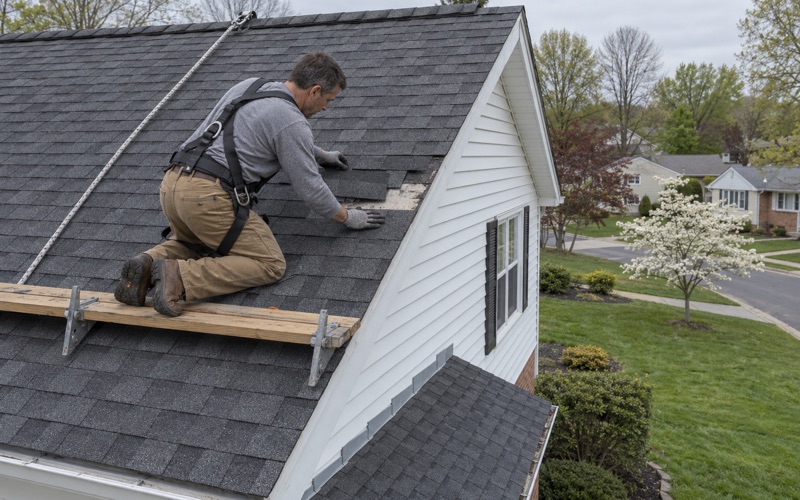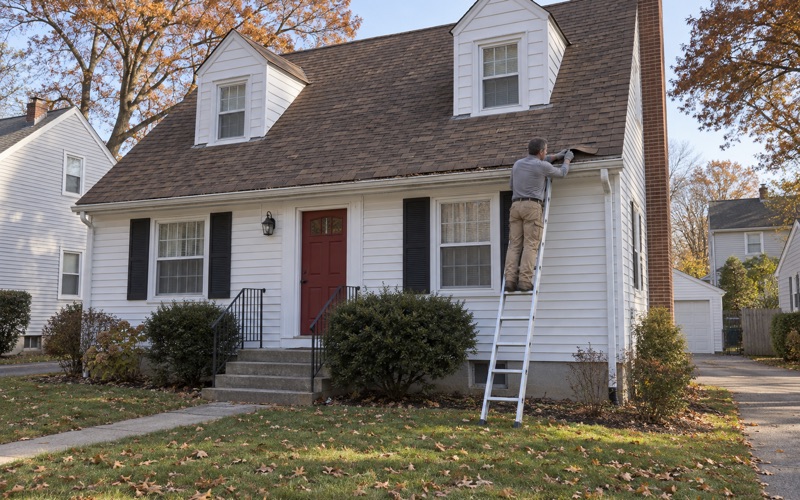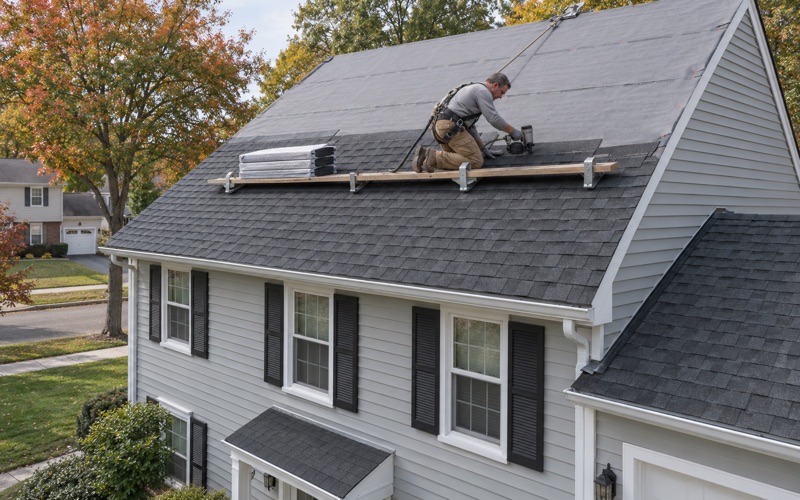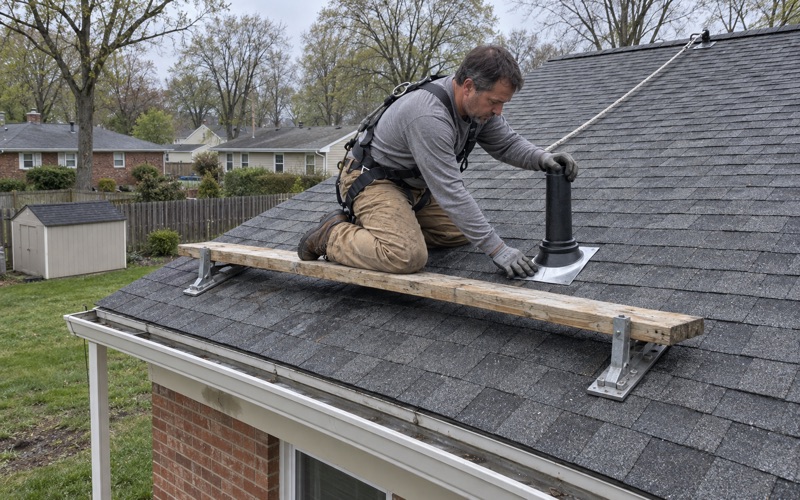
Hamilton Elite Roofing has spent more than 20 years on roofing in Lower Moreland and across the Pennsylvania side of our service area, and the first conversation we have here is rarely about shingle color. It is about what the job actually is. A roof that only needs new shingles is one kind of project in this township, and a roof whose wood deck has to come off is another, with different paperwork attached.
We start every estimate the same way: a look at the roof surface and a look from the attic, so a leak is traced to where water really enters before anything is priced. You get a straight answer on whether the roof can be repaired before replacement comes up at all. When replacement is the right call, the scope we write breaks tear-off, decking, underlayment, flashing, ventilation and gutters into separate lines.
That itemized scope matters more in this township than in most. The line between a simple re-shingle and structural work decides who you need to talk to before the crew arrives, and a clear scope makes that line visible on paper instead of on the morning of the tear-off.
Re-Shingling Needs No Lower Moreland Permit
Lower Moreland Township answers the most common roofing question directly. Its Building Department page lists re-shingling a roof among the jobs for which permits are not required, in the same sentence as painting or wall covering, general landscaping, cabinets or counter tops and siding. For a homeowner replacing worn shingles on a sound roof, that is a published township position, not a contractor’s opinion.
What the township’s list actually says
The same page states that a permit is needed for most general construction, plumbing and electrical projects. It also names signs, new or replacement fences, sheds, gazebos, pergolas, sidewalks, driveway aprons and swimming pools over 24 inches as needing a permit. Re-shingling sits on the other side of that line, with the cosmetic and surface jobs.
What the page does not do is mention tear-off, layers, sheathing or rafters. It names no code edition and sends fee questions to the Township Code. We read the exemption exactly as written: it covers re-shingling, and it does not stretch to cover everything else that can happen on a roof.
This is Lower Moreland’s rule, not Pennsylvania’s
Pennsylvania does not set one statewide answer on re-roofing permits. Each township makes its own call, and Lower Moreland’s exemption describes Lower Moreland only. A homeowner who has re-roofed in another township, or who reads advice written for a neighboring municipality, should not assume the same rule carries across the boundary.
That is why our contracts for homes here are written to Pennsylvania’s Home Improvement Consumer Protection Act, including the three-day cancellation notice, and why the scope names the township whose rules apply. The permit question gets answered for this address, not borrowed from somewhere else.
Why skipping a required permit costs more
The Building Department is plain about the downside: work performed without obtaining a permit first can result in the doubling of fees. A job that slides from re-shingling into permitted territory without anyone filing can end up paying twice for paperwork it would have needed anyway.
The practical fix is to settle the question before the dumpster is dropped. If a scope includes anything beyond shingles, underlayment and flashing on an existing sound deck, we flag it so the call to the township happens while the job is still on paper.
Looking for roofing closer to South River? See South River Roofing.
Where Re-Shingling Ends: Decking and Structure
The exemption covers re-shingling, and the township page stops there. It does not say whether replacing sheathing, sistering a rafter or rebuilding a section of roof framing still counts. That boundary is our reading of the page, not a line the township draws, and we treat it with care.
What a 2019 Lower Moreland job shows
A May 6, 2019 agenda of the township’s Historical Architectural Review Board took up a new roof covering at 2448 Ayresdon Avenue in Huntingdon Valley. The application described replacement of portions of the existing decking along with the shingles. That is a real Lower Moreland roof where the work reached below the shingle layer.
It shows that decking work is not hypothetical here. About 45 percent of the township’s housing units were built between 1950 and 1969, and another 402 date to 1939 or earlier, according to the Census Bureau’s 2024 five-year estimates. Roofs on houses that age have often been covered more than once, and the boards underneath are where water damage hides.
How we handle decking we find
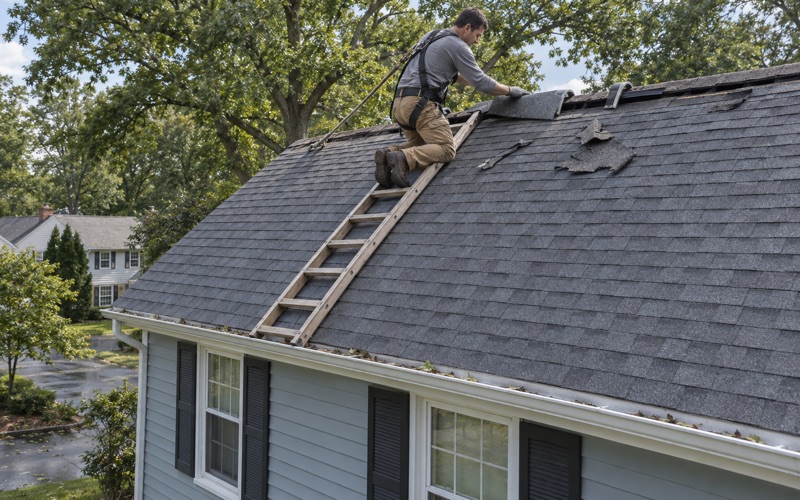
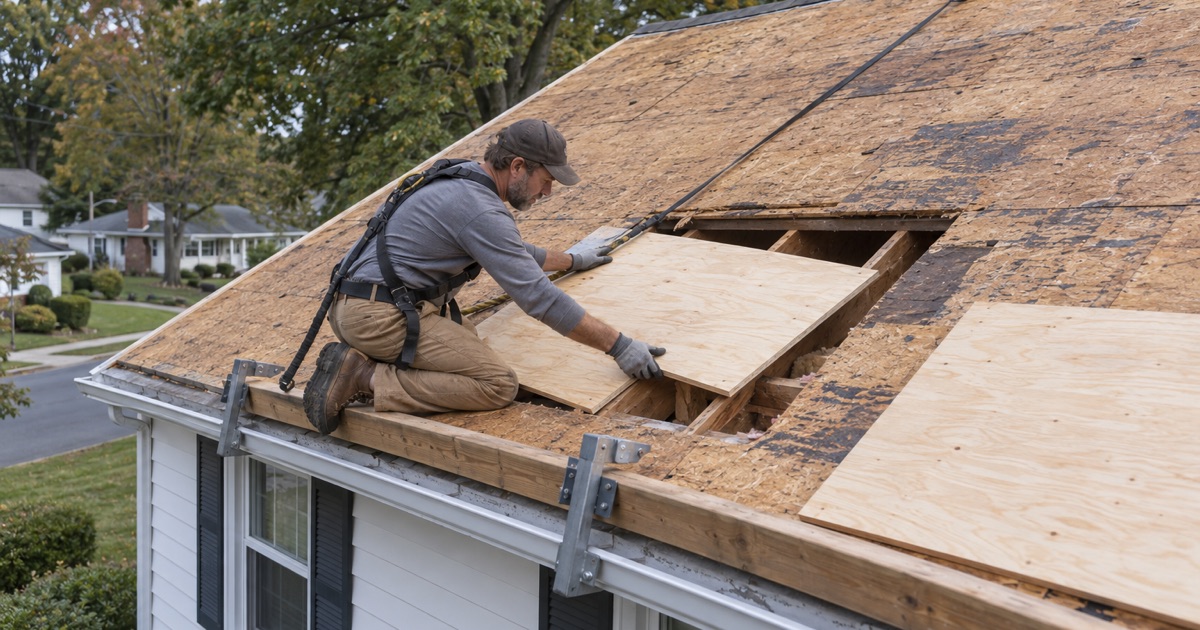
Nobody can see every sheet of sheathing until the old roof is off. Our contract sets a per-sheet price for replacement decking up front, and any damaged boards we uncover are photographed and shown to the owner before they are replaced. You see the rot, the soft spots or the delamination for yourself.
When the damage runs past a few sheets into framing, the job has changed character. At that point we stop and treat it as a question for the township rather than an extension of a re-shingle.
Asking the Code Department before the deck comes off
The township’s own advice is simple: if you are unsure whether a permit is needed, call the Code Department at 215-947-3100. Code Enforcement works out of the Township Building at 640 Red Lion Road in Huntingdon Valley. Lower Moreland has adopted the Pennsylvania Uniform Construction Code as its building code.
We encourage that call before any job where the scope already expects sheathing or structural repair. A five-minute answer before work starts is cheaper than a doubled fee after it, and it keeps the exemption doing what it was written to do.
The Historic District and HARB’s Review of Shingles
For most Lower Moreland homes, the permit exemption is the whole story. Inside the Historic District it is not. The township’s Historical Architectural Review Board names roof shingles among the exterior work it reviews there, alongside windows, shutters and signs, so a re-shingle that needs no building permit can still need a review.
What HARB is and what it reviews
HARB is an advisory board of seven township residents. It reviews applications that affect the Historic District and sends its recommendations to the Board of Commissioners. It does not review every roof in the township; its scope is the district created under Pennsylvania’s 1961 historic district act and mapped by the Board of Commissioners.
The township’s building inventory lists a Huntingdon Valley Historic District at Huntingdon Pike and Red Lion Road and a Fetters Mill Historic District on Fetters Mill Drive. If your house sits in or near either, confirm whether it falls inside the mapped district before you pick a shingle.
Matching material under the Secretary’s Standards
The HARB application states that a project, to be certified, must be consistent with the historic character of the structure and, where applicable, the district. It attaches the Secretary of the Interior’s Standards for Rehabilitation, which say deteriorated features should be repaired rather than replaced wherever possible, and that a replacement should match the original in composition, design, color and texture.
That lines up with how we already work. We look for a repair first, and when replacement is needed we bring product options that respect the existing roof’s profile and color. Architectural shingles such as CertainTeed Landmark, GAF Timberline HDZ or Owens Corning Duration come in a range of tones, and the right choice is the one the board can recommend.
Preparing for a board meeting
The 2019 Ayresdon Avenue application offered three choices of new shingles for the board’s recommendation, and the agenda required a representative for the applicant to attend. That is a useful model: bring options, bring samples and expect to explain the work in person.
We build that timing into the schedule. A Historic District roof is planned around the board’s calendar, so the tear-off date follows the recommendation instead of racing it.
Planning a Roof Around Lower Moreland’s Housing
Lower Moreland is overwhelmingly a township of detached, owner-occupied houses. Of 4,838 housing units, 4,130 are single detached homes, and 4,040 of 4,623 occupied homes are lived in by their owners, per the same Census estimates. Most roofing decisions here are made by the person who will live under the roof.
Older detached homes and what sits under the shingles
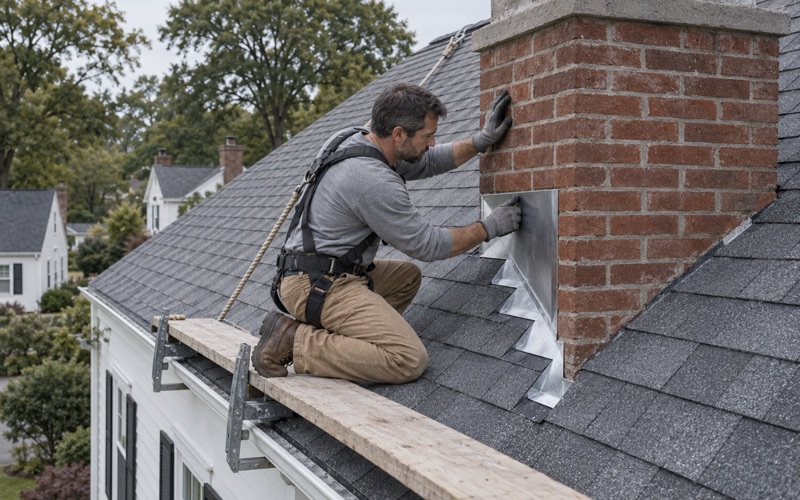
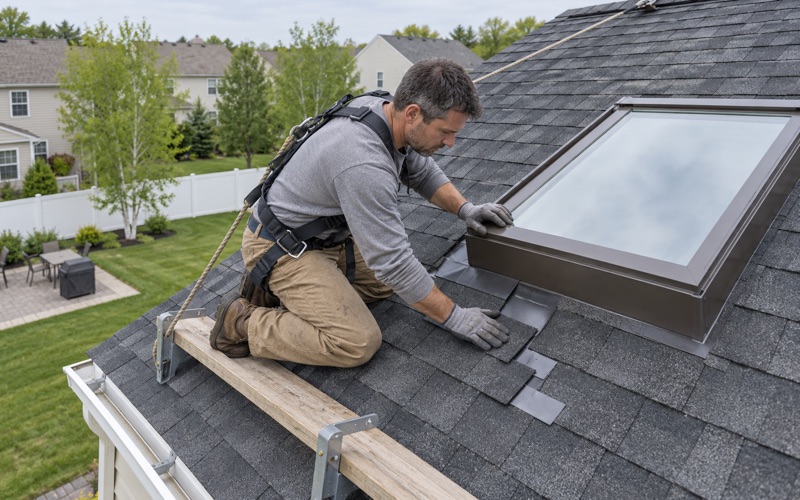
A 1950s or 1960s house can carry chimney flashing, plank or plywood decking and attic ventilation from several eras of repair. We replace step, counter and chimney flashing with the roof rather than reusing it under new shingles, and we check attic ventilation on every replacement, because a roof that cannot breathe ages from underneath.
On houses built before 1978, painted fascia and trim can involve lead paint, which brings the EPA’s lead-safe work practices into the job. We note that on the scope so it is never a surprise once the ladders are up.
Condominiums, apartments and larger buildings
About 10 percent of the township’s units sit in buildings of 50 or more units. The township page names re-shingling and says nothing about what a large multifamily or commercial roof needs, so we never stretch the exemption to cover one. Those projects are a conversation with the Code Department from the start.
For owners in a condominium or association, the first question is who holds the roof at all. We check the association’s documents before writing any estimate, so an owner is not quoted for a roof the association maintains.
Cleanup, gutters and selling a home
At the end of every work day the driveway, yard and gutters are cleaned, with a magnet sweep for roofing nails. Gutters and leaders are sized and pitched with the roof rather than left as an afterthought, and seamless aluminum gutters are part of the same itemized scope.
If you are selling, we can prepare a written roof condition report you can hand to the buyer’s inspector. It gives both sides the same facts about the roof’s age, the flashing and the deck, and it answers the questions that usually surface in the last week before closing.
- 20+ Years on the Roof
- Free Written Estimates
- NJ and PA Contracts