Hamilton Elite Roofing has handled roofing in Burlington and across this part of New Jersey for more than 20 years, and the job we plan most carefully here is the one where a roof sits over more than one kind of life. A shop on the ground floor, a family upstairs and an owner somewhere else all depend on the same few hundred square feet of covering.
That changes how we work from the first visit. We trace a leak to where the water actually gets in before we price anything, we tell you plainly whether the roof can be repaired, and we only talk about replacement when repair will not hold.
When replacement is the answer, the written scope breaks tear-off, decking, underlayment, flashing, ventilation and gutters into separate lines. You can lay our estimate beside anyone else’s and compare the two item by item, which matters even more when a landlord, a tenant and a lender all want to see the numbers.
Storefronts With Apartments Above on High Street
Downtown Burlington still works the way many river towns once did. Along High Street, the business is at street level and people live on the floors above it, so the roof protects a kitchen, a sales floor and a bedroom at the same time.
What the Listings Describe
Recent commercial listings show the pattern clearly. One building at 345 High Street pairs a restaurant on the ground level with two apartments above it, a two-bedroom unit on the second floor and another on the third. At 333 High Street, a ground-floor commercial space sits under a loft apartment on the upper floor.
A third listing, at 467 High Street, describes about 2,650 square feet of commercial space on two floors with room for residential rentals on the second and third floors, and places the building in what the listing calls the C1 zone, mixed residential and commercial. None of these listings records a year built or says anything about the roof, so we never assume a roof type before we have been up on it.
Who Answers for the Roof
In a building like this, the first question is not about shingles or membrane. It is who decides, who pays and who has to be told. Usually the building owner holds the roof, but a commercial lease can shift repair duties to the business, and the apartment tenants have their own expectations about notice and access.
We ask to see whatever the lease or management agreement says before we write a scope, and we address the estimate to the party who actually signs. When the owner lives out of town, we photograph the roof and the attic or top-floor ceiling so the decision can be made from the pictures rather than from a phone description.
Why the Mix Matters in Burlington
Burlington is not a town of storefronts alone. Census figures for the city count 3,756 occupied homes, and 1,432 of them are rented, so a large share of residents live under a roof someone else maintains. Apartments above downtown storefronts are among them.
That makes the landlord’s roof decision a tenant’s daily concern. A slow leak an owner shrugs off can mean a stained ceiling, a wet mattress and a lost month’s rent once the unit has to be emptied for repairs.
Looking for roofing closer to Millstone Township? See Millstone Township Roofing.
Leaks That Reach the Top-Floor Apartment First
In a three-story mixed-use building, the business on the ground floor is usually the last to notice a roof problem. Water lands on the top-floor apartment first, and by the time it shows at the storefront ceiling it has already traveled through two floors of framing.
Tracing the Water From the Inside
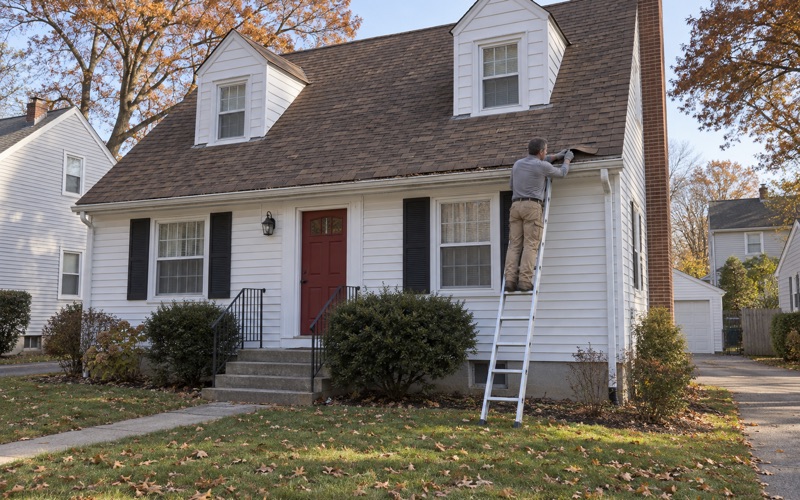
Every leak call starts with a look underneath as well as on top. In an older building that can mean an attic, a crawlspace above the top apartment or simply the ceiling of the highest unit, and we arrange access with the tenant rather than arriving unannounced.
Water rarely drips straight down from the hole that lets it in. It runs along rafters, sheathing seams and pipe chases, so the stain on a bedroom ceiling may be several feet from the failed flashing that caused it. Finding the real entry point first is what keeps a repair from turning into a guess.
Where Older Roofs Usually Let Go
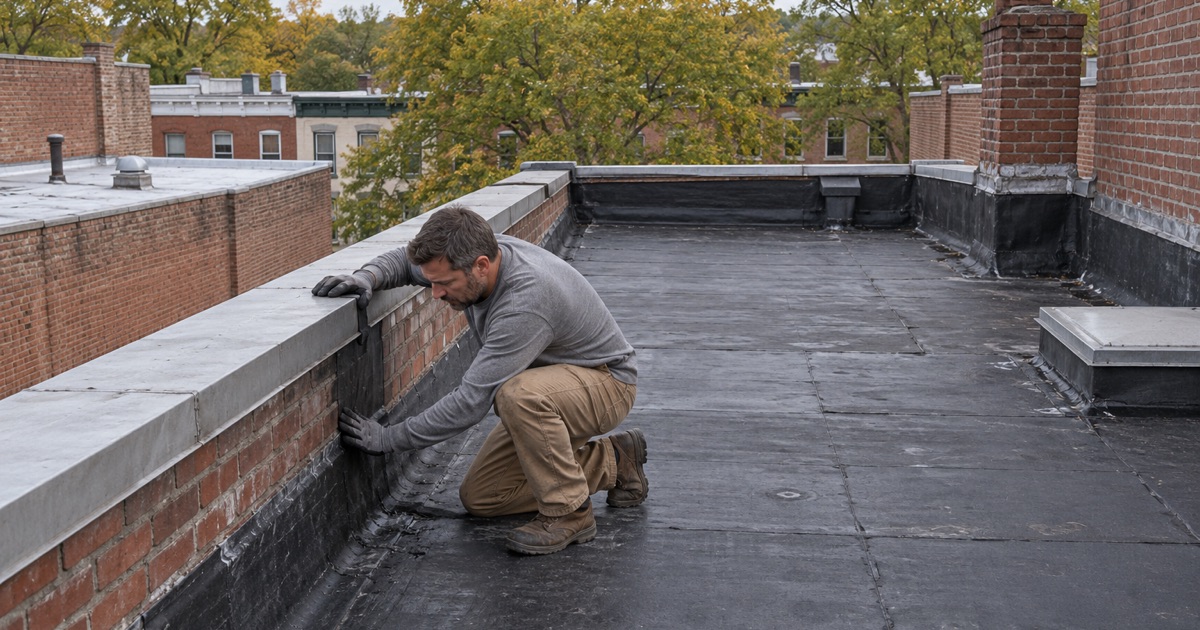
The city’s housing is old: 1,720 of its 4,208 homes were built in 1939 or earlier. Whatever the covering on top, the weak points on roofs of that age tend to be the same ones. Chimney flashing, parapet and wall junctions, drip edge, pipe boots and the seams where one roof section meets another are where we look first.
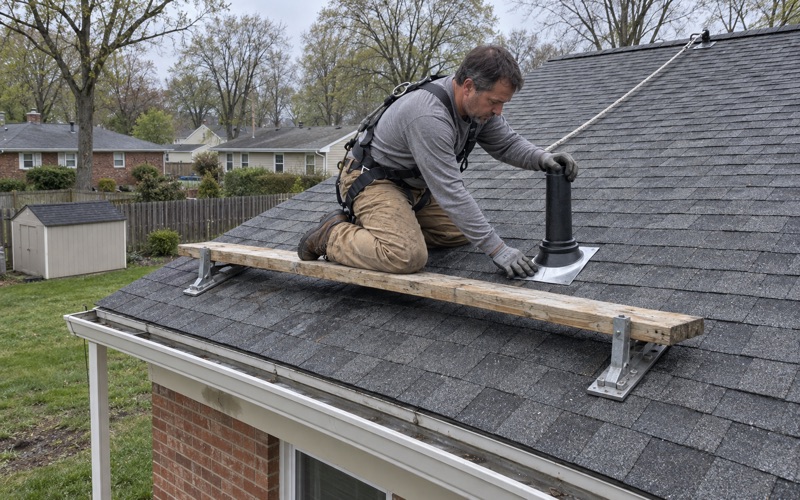
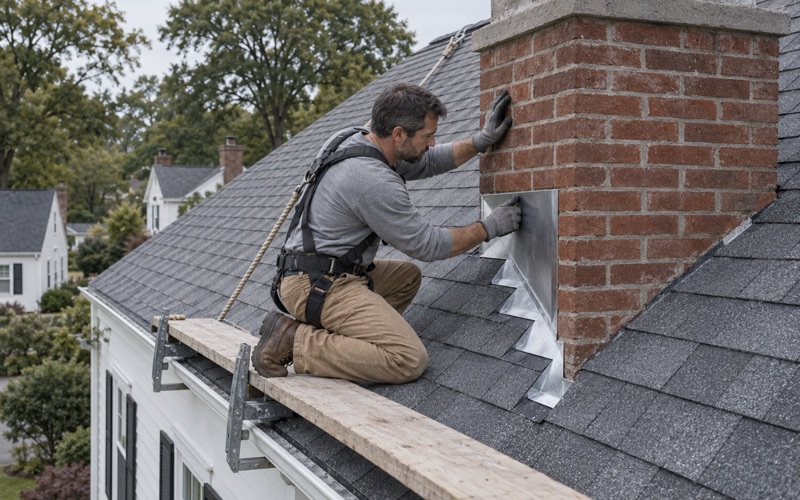
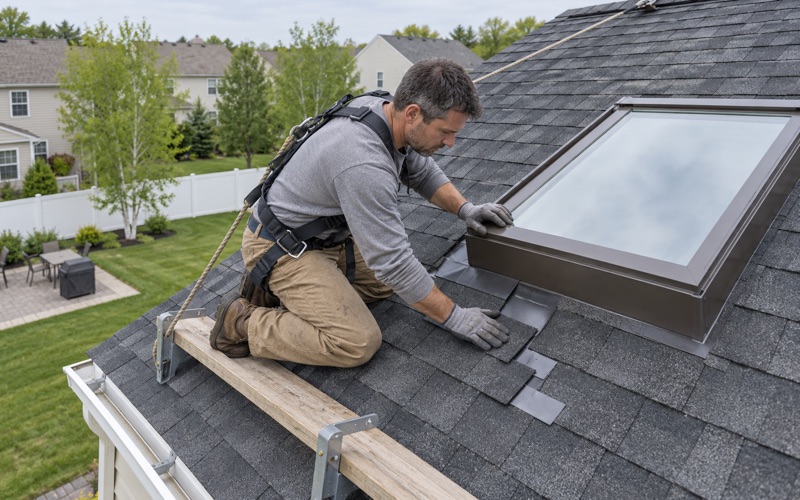
When we do replace a roof, step, counter and chimney flashing are replaced with it rather than reused under new material. Old flashing bent back into place is one of the most common reasons a new roof leaks in its first hard rain, and on a building with tenants upstairs that is a failure nobody can afford.
Repair or Replace, Answered Straight
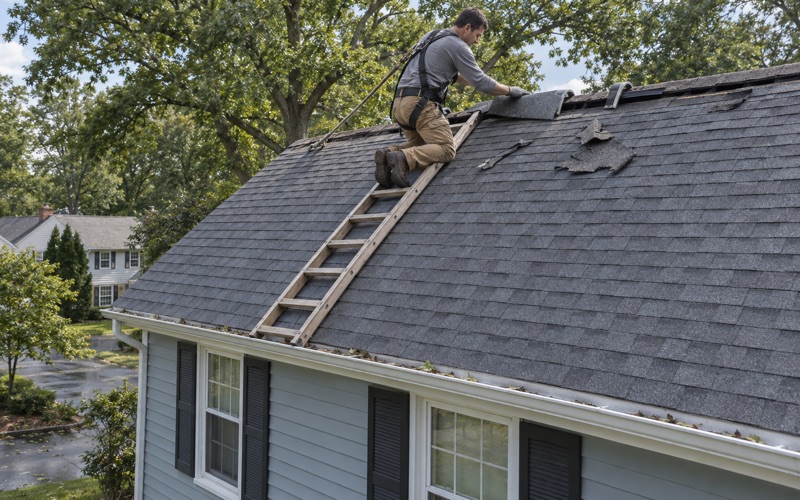
A single failed boot or a lifted section of flashing is a repair, and we will say so even when the owner is braced for a bigger number. If the covering has worn through, the decking has softened or earlier patches keep failing in new places, we explain why repair has stopped being the better spend.
Attic or top-space ventilation gets checked on every replacement. A roof that cannot breathe ages from underneath, and in a building where the top apartment is heated and cooled all year, trapped heat and moisture show up as early wear on the new covering.
Scheduling Roof Work Around an Open Business
A restaurant cannot close for a week because the roof above its dining room is being replaced, and the families upstairs still need to sleep. Planning the job around both is most of the work on a mixed-use building.
Working Above a Sidewalk and a Storefront
On High Street the work area sits directly over a public sidewalk and a business entrance. We stage materials and debris chutes so customers can still reach the door, protect the storefront glass and signage, and keep anything that could fall well away from people walking below.
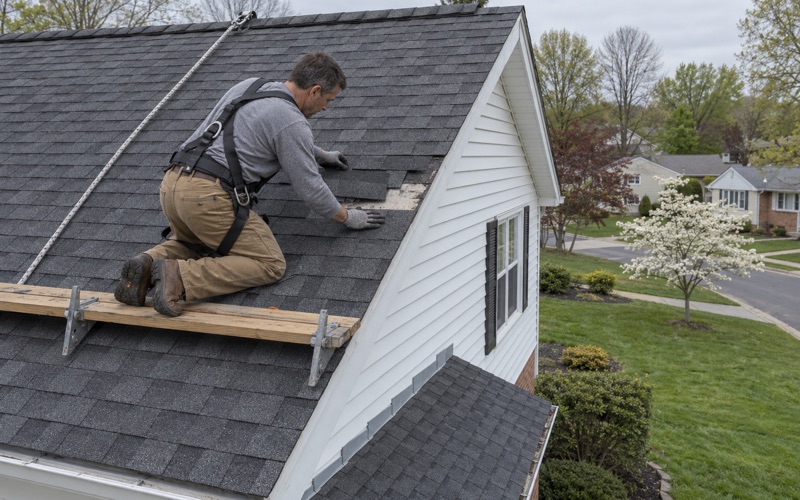
Roofing crews in New Jersey work under OSHA’s fall protection rule for residential roofing, which applies at six feet. On a three-story building that means guardrails, anchors or harnesses set up before tear-off starts, and the setup is part of the schedule we give the owner.
Tear-Off in Sections, Not All at Once
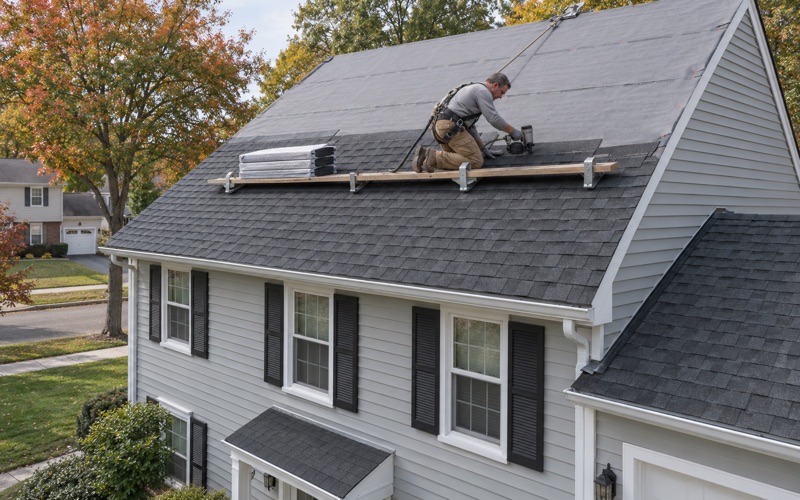
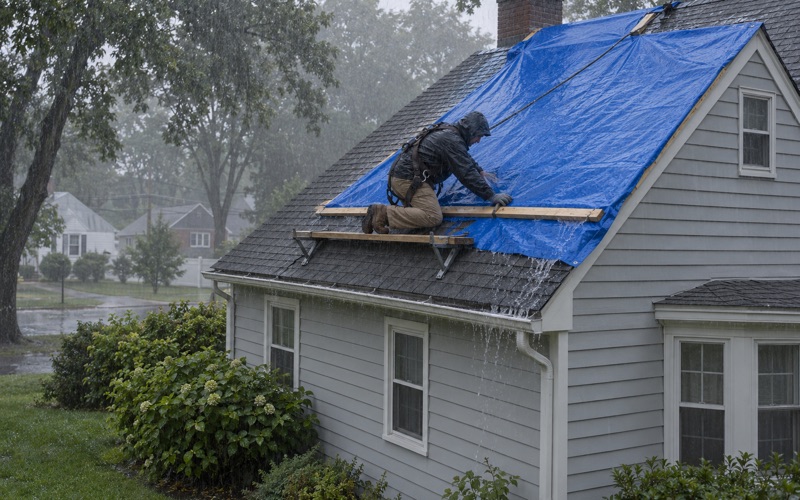
With tenants living under the roof, we strip only as much as we can dry in the same day. Each section is torn off, inspected, repaired at the deck if needed and covered with underlayment before the crew leaves, so an overnight storm meets a sealed roof rather than open boards.
If the old roof hides damaged decking, we photograph it and show it to the owner before replacing it. The price per sheet is already written into the contract, so a rotten section discovered on day two does not turn into an open-ended argument while a tenant is waiting.
Noise, Smell and the Business Day
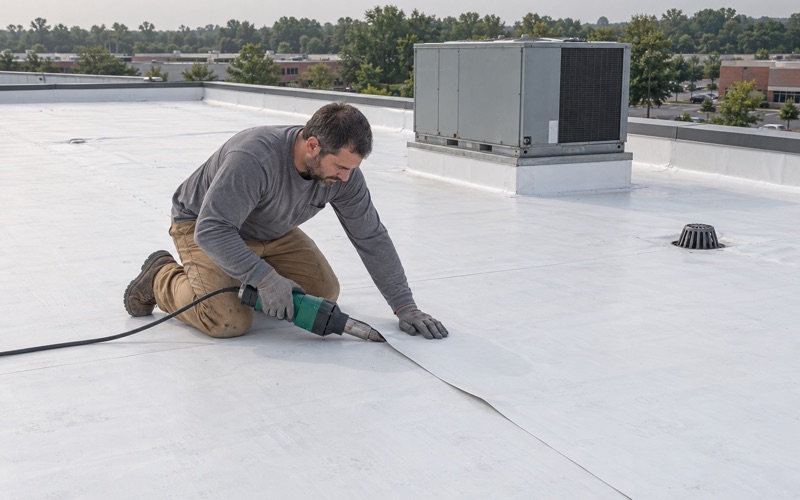
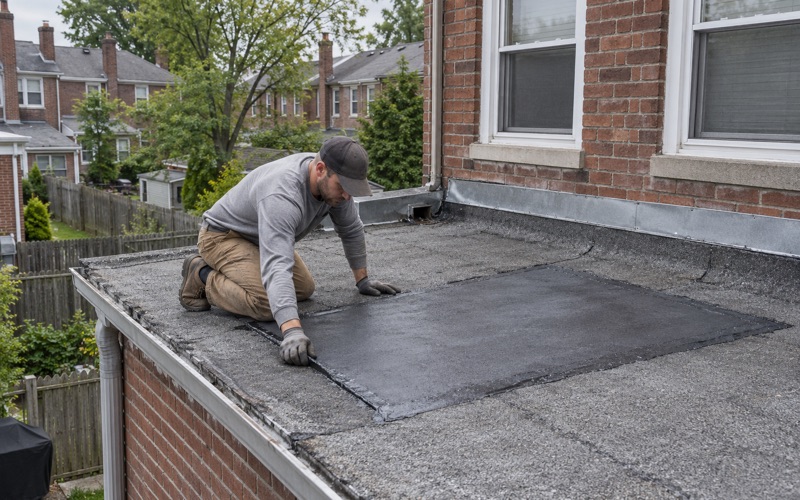
Tear-off is loud, and some low-slope systems such as torch-down modified bitumen involve heat and odor that a restaurant kitchen or a retail shop will notice. Where the building’s roof calls for a membrane, we talk through EPDM, TPO and modified bitumen options with that in mind, along with the hours the business keeps.
The sidewalk, the alley and the gutters are cleaned at the end of every work day, including a magnet sweep for roofing nails. A storefront that opens the next morning to stray nails at its door is a complaint the owner hears about, and it should never happen.
Mixed-Use Buildings and the Construction Permit
New Jersey’s construction code treats replacing the roof covering on a detached one- or two-family house as ordinary maintenance under N.J.A.C. 5:23-2.7. A building with a storefront and apartments is neither, so that exemption does not reach it.
What That Means for the Owner
Re-roofing a High Street building with a business below and apartments above is construction-permit work. We build the permit step into the timeline from the start, so the tenants and the business get dates that account for it instead of a start date that slips.
The state’s rehabilitation subcode also sets re-roofing rules of its own, including when existing layers have to come off rather than be covered over. We check how many layers are on the building before we price, because a second or third layer found mid-job changes both the scope and the cost.
Older Paint and Trim
On buildings built before 1978, painted fascia, trim and cornice work can disturb lead paint. Where our roof work touches that painted wood, it is handled under the EPA’s lead-safe renovation rule, which matters all the more when children may live in the apartments above.
Gutters and leaders are sized and pitched as part of the roof, not left for later. On a downtown building the water has to reach a leader that discharges where it will not sheet across a storefront entrance or freeze on the sidewalk outside it.
Contracts That Fit the Building
Our contracts are written to New Jersey’s home improvement rules, including the three-day cancellation notice where it applies. For a building owner, a commercial tenant and a lender who may all read the same paperwork, an itemized contract with clear payment points saves arguments later.
If you own a building in downtown Burlington, manage one or run the business on its ground floor, we start with a look at the roof and the top floor together. You get a straight answer on repair, a written scope you can compare and a schedule built around the people inside.
- 20+ Years on the Roof
- Free Written Estimates
- NJ and PA Contracts