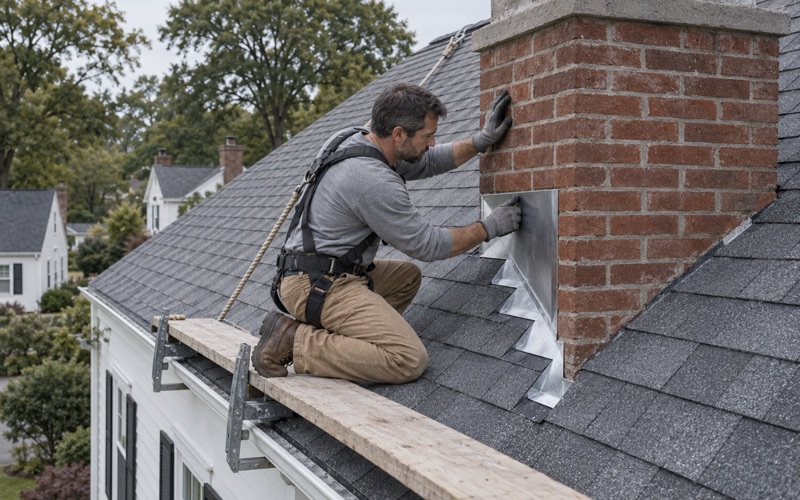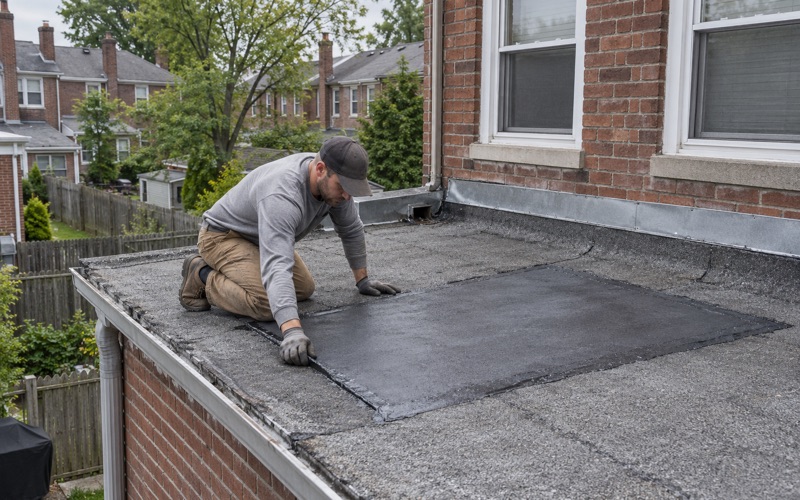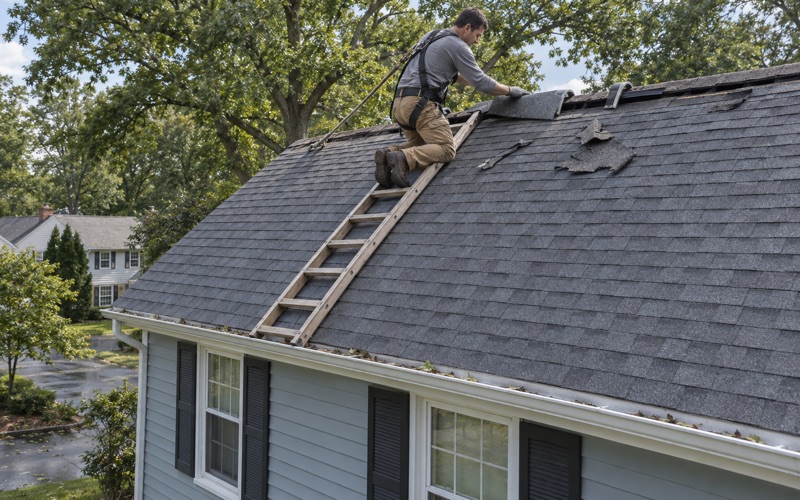
Hamilton Elite Roofing brings more than 20 years in the trade to roofing in Aberdeen, and the calls that matter most tend to follow a storm. A limb comes through the shingles, a gust peels back a run of tabs along the rake, or water shows up on a bedroom ceiling two days after the wind has died down. This page is about that kind of damage: what wind and fallen trees do to a roof, and what an owner should understand before the claim conversation starts.
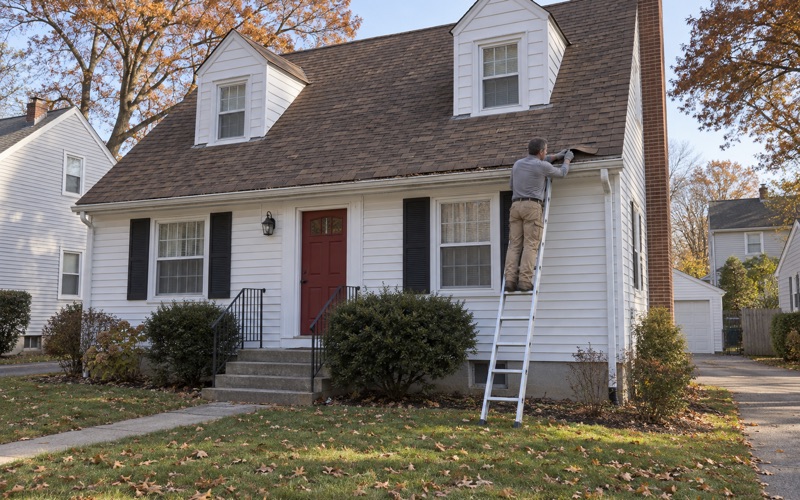
Our first job after a storm is to find out what actually happened. That means a look on the roof and a look in the attic, because the place water appears on a ceiling is rarely the place it got in. Once the path is traced, we tell you plainly whether the roof can be repaired before anyone starts talking about replacement.
We also photograph and write up storm damage so you have something solid for your own claim, and we will meet the insurance adjuster on site if you ask us to. What we do not do is handle or negotiate the claim itself. In New Jersey that work belongs to the policyholder, or to a public adjuster licensed under N.J.S.A. 17:22B, and reading what a given policy pays is between you and your insurer.
Sandy Came Through Aberdeen by Wind as Well as Water
Most people remember Hurricane Sandy in Aberdeen as a flood story, and along the Raritan Bay shoreline it was. The township’s own record is broader than that. Its Strategic Recovery Planning Report, prepared by T&M Associates in January 2013, says the storm brought “both storm surge and wind damage,” and the wind half of that sentence reached homes nowhere near the water.
Trees and Power Lines Down Township-Wide
The same report states that “Trees and power lines throughout the Township also fell,” and that outages ran for more than seven days. A week without power is a week when a punctured roof sits open or under a hurried tarp, and when no one can run a dehumidifier in a wet attic. That stretch is often where a manageable repair turns into wet insulation, stained drywall and a soft deck.
Among the properties the township counted as substantially damaged, two sat south of the Garden State Parkway, well away from the bayfront flooding. The report attributes one of those to a house fire and the other to a fallen tree. It is a small number, but it shows that a single trunk can do as much harm to a house as rising water.
What the Record Does and Does Not Say
The recovery report counts damaged properties, not roofs, and it names no wind speed measured in Aberdeen. We are careful about that line. The National Weather Service Mount Holly office, whose forecast area covers Aberdeen in zone NJZ013, Western Monmouth, reported its highest Sandy gust at 89 mph in Surf City in Ocean County, with many areas seeing gusts over 50 mph.
That office also wrote that “Many trees and power lines were taken down as a result of these gusty winds,” and that parts of the region saw their highest gusts since Hurricane Hazel in October 1954. None of that is a reading taken in Aberdeen, and we do not present it as one. It describes the storm the township was sitting inside.
Looking for roofing closer to Metuchen? See Roofing Services in Metuchen.
What a Fallen Tree Does to a Roof Deck and Rafters
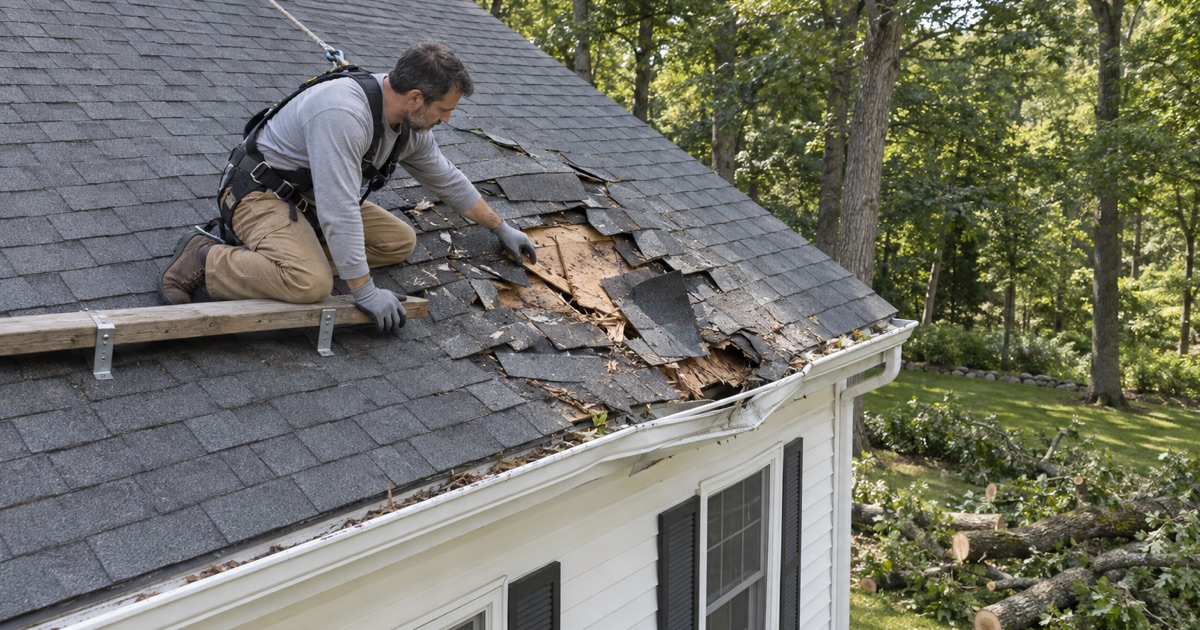
A wind claim and a tree claim look similar on paper and very different on the roof. Wind usually lifts and tears the covering. A falling limb is a point load, and it can carry straight through the shingles into the structure underneath.
Shingles, Underlayment and Decking
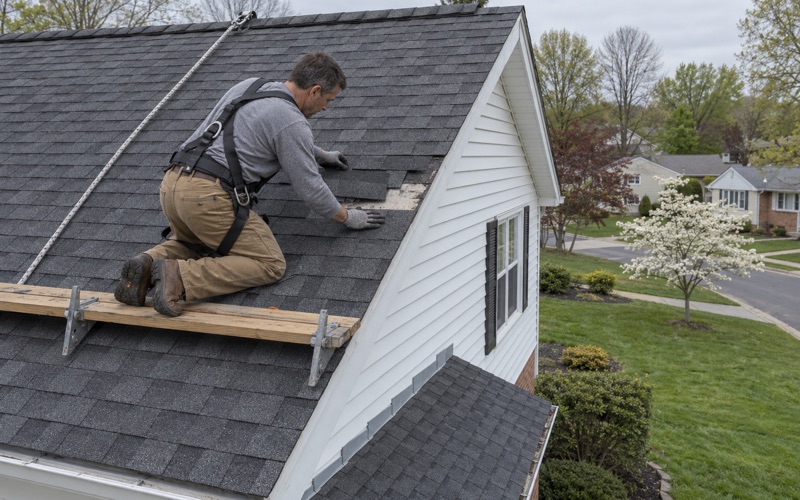
When a limb lands flat, the shingles take the scrape and the decking takes the blow. Plywood or plank sheathing can crack along the grain or punch through between rafters, and the underlayment tears with it. From the ground the roof may look scuffed rather than broken, which is why we check the deck from the attic side as well.
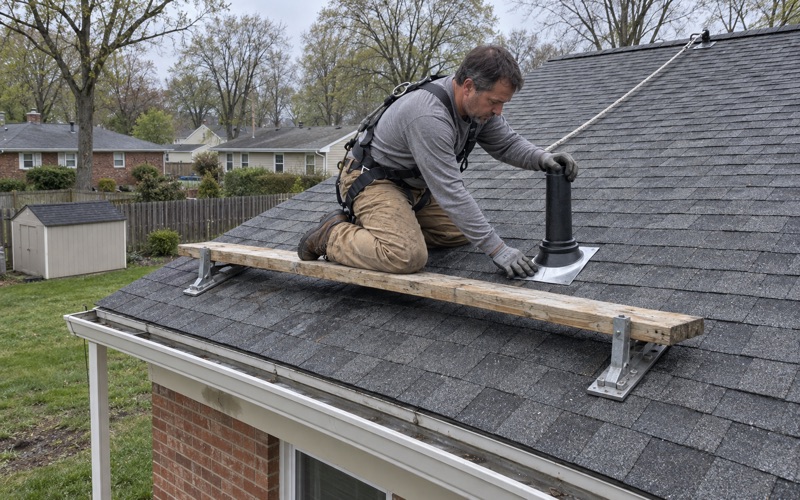
Once the damaged area is opened up, any decking that has to go is photographed and shown to you before it is replaced, at the per-sheet price written into the contract. Around the repair we look at drip edge, pipe boots and any flashing the limb dragged across, because a torn boot or bent step flashing will leak long after the obvious hole is closed.
Rafters and Ridge Framing
A heavy trunk can crack a rafter, split a ridge board or push a section of roof out of plane. That is framing work rather than roofing, and the repair order matters: the structure has to be sound before new sheathing and covering go back on. We tell you what we find in the framing so it can be dealt with properly instead of buried under fresh shingles.
Sagging between rafters, daylight around a nail line, or a crack in a ceiling directly below the impact are all signs the damage went deeper than the covering. If you see any of them, keep people out of that room until the framing has been looked at.
Emergency Tarping After a Strike
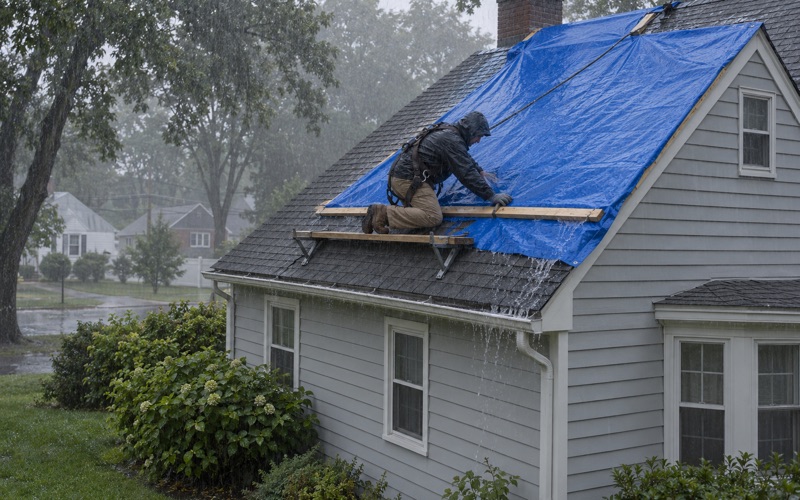
Getting the tree off the roof comes first, and that is usually a job for a tree crew with the right rigging. Once the weight is gone, we can tarp the opening so rain stays out while the claim and the repair are sorted. A good tarp is fastened over the ridge and battened at the edges so the next gust does not turn it into a sail.
Before the tarp goes on, we photograph the opening, the broken decking and the attic below it. Those pictures are hard to recreate once the hole is covered, and they are often the clearest record of what the tree actually did.
When a New Jersey Hurricane Deductible Applies
After a coastal storm, the first question most owners ask is which deductible applies. In New Jersey the answer is set by a state rule, not by what the news called the storm, and it is narrower than many people assume.
The 74 mph Sustained-Wind Test
Under N.J.A.C. 11:2-42.9, insurers and the FAIR Plan may file to use mandatory hurricane deductibles of up to five percent and optional ones of up to 10 percent. The policy language the Department of Banking and Insurance requires sets the trigger. Bulletin 11-16, issued August 29, 2011, quotes it: the deductible applies “in the event of a hurricane named by the National Weather Service” from which “sustained hurricane force winds of 74 miles per hour or greater have been measured in New Jersey.”
Both halves have to be true. The storm has to be a hurricane named by the National Weather Service, and the NWS has to measure 74 mph sustained winds somewhere in New Jersey, whether or not those winds reach the insured house. For Hurricane Irene in 2011, the NWS did not report New Jersey winds meeting all of the criteria, so no hurricane deductible could be applied.
Why Sandy Claims Took the Ordinary Deductible
Sandy struck New Jersey from October 28 through October 30, 2012, and Executive Order 107, signed by Governor Chris Christie that November, addressed the deductible directly. It notes that the National Weather Service had categorized Sandy as a post-tropical storm before landfall. On that basis the order made it a violation for any insurer to apply a mandatory or optional hurricane deductible to Sandy property claims.
The practical difference was large. A state Department of Health release from November 2, 2012 described a hurricane deductible as typically two to five percent of a property’s insured value, against standard deductibles in the $500 to $2,000 range. For an owner with a tree through the roof, that classification decided which number came off the check.
What We Can and Cannot Tell You
Whether a particular Aberdeen policy carries a hurricane deductible depends on the ZIP code list in the regulation and on what the insurer filed, and we have not checked that list for the township. We never tell an owner what their own policy pays. What we can do is explain the state test, so the question you put to your agent or carrier is the right one.
In general, a wind or fallen-tree roof claim after a coastal storm is settled under the ordinary deductible unless that test is met. Your declarations page and your insurer are the authority on the rest.
Documenting Wind and Tree Damage Before the Next Coastal Storm
Aberdeen has about two miles of Raritan Bay shoreline, and the next storm off the bay will bring wind along with any water. The owners who fare best afterward are usually the ones who knew their roof’s condition before it arrived.
Photograph the Roof While It Is Healthy
A few dated photos of each roof slope, the chimney flashing and the attic sheathing make a useful baseline. After a storm, they help separate new damage from old wear, which is often the first thing an adjuster wants to establish. Keep them somewhere that will not lose power when the house does.
Look up at the trees as well. Large limbs hanging over the roof, dead branches and trunks leaning toward the house are worth raising with an arborist before the season turns, since a fallen tree that could have been pruned is still a hole in the roof.
What Our Storm Write-Up Includes
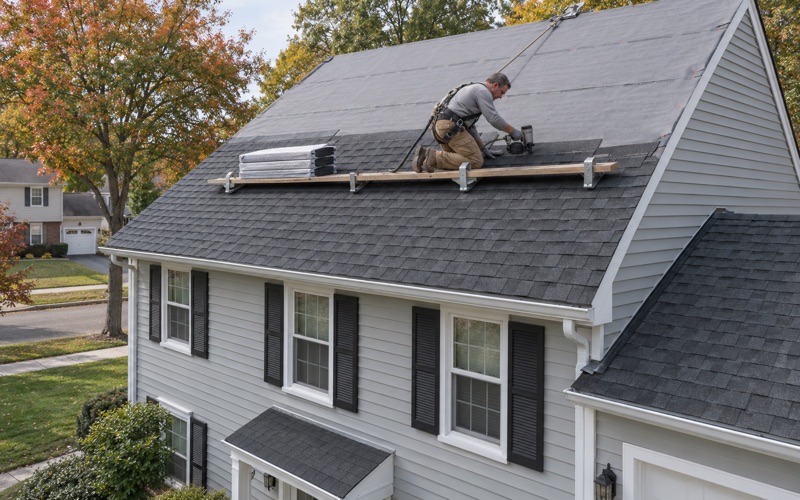
After a storm, our write-up covers what we saw on the roof and in the attic, with photographs of the covering, flashing, decking and any framing damage. The repair scope lists tear-off, decking, underlayment, flashing, ventilation and gutters as separate lines, so your adjuster or a second contractor can compare it item by item.
If replacement turns out to be the right call, step, counter and chimney flashing is replaced with the roof rather than reused, and attic ventilation is checked as part of the job. On a detached one- or two-family house, replacing the roof covering is ordinary maintenance under N.J.A.C. 5:23-2.7 and needs no permit, which keeps a post-storm repair from waiting on paperwork.
Townhomes, Apartments and Shared Roofs
Aberdeen’s housing is not all detached houses. Census estimates count 754 attached units in the township, plus more than 1,600 units in buildings of ten or more, and those roofs are planned differently. On an attached home we work out the shared wall and the neighbors’ roofs before anything comes off, and in a townhouse community we check the association documents to see who holds the roof before an estimate is written.
Apartment and multifamily roofs fall outside the detached-house ordinary-maintenance rule, so the paperwork there looks different. Whatever the building, the yard, driveway and gutters are cleaned each day, magnet sweep included, so a storm repair does not leave nails behind for the next one.
- 20+ Years on the Roof
- Free Written Estimates
- NJ and PA Contracts